
The Oppo Find X10 is the standard model in Oppo’s newest flagship series, and it may be the one most people should buy.
On paper, it is a sensible update to last year’s Find X9. You get a new LTPO display, a reworked triple camera system with a larger telephoto sensor, and a bigger battery. It all fits in a body that is noticeably easier to hold than the Find X10 Pro Max.
The Pro Max costs £1,499. The Find X10 costs £1,099, which is still a lot of money, but you no longer feel like you give up much to save £400. Last year, the cheaper model had a less efficient display. This time, it uses the same LTPO tech as its bigger sibling.
Some compromises remain. The 2.8x zoom on the telephoto camera is an odd choice. The Snap Key is frustratingly limited. The phone also cannot hold peak performance for long in demanding games. After using it as my main phone, I think this is the Find X10 Pro in all but name.
Oppo Find X10 Full Specs
Oppo Find X10 Design
There is not much new to say about the design, at least in terms of new features or changes from the Find X9. The two phones look very similar. You get flat aluminium edges, flat glass on the front and back, and the same rounded corners. It is a bit smaller and easier to hold than the larger Pro Max.
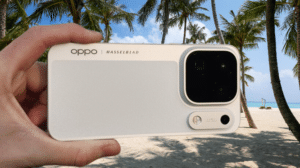
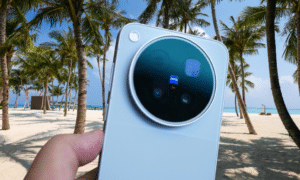
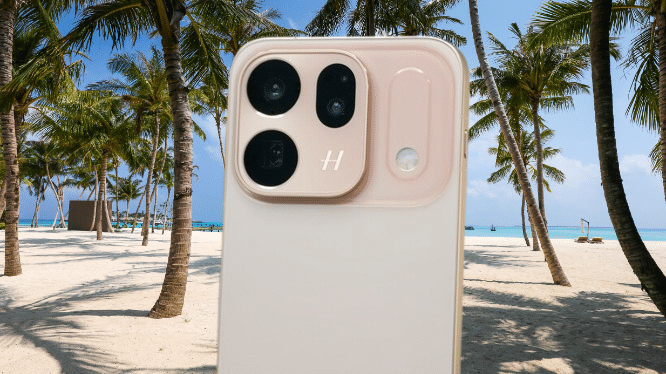
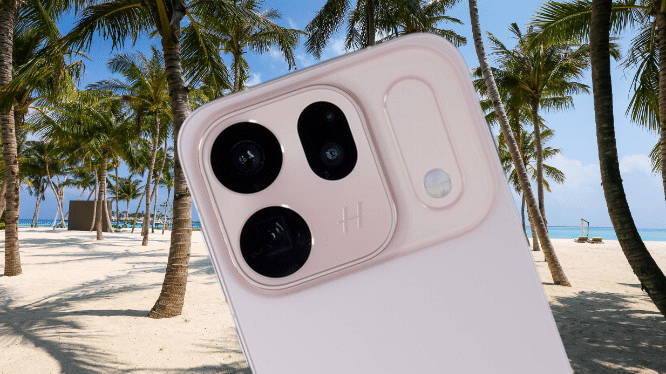
The camera island has been refreshed. The square camera hump now sits inside a larger rectangular island that ramps smoothly up from the back glass. Oppo has removed the round LED ring light from the hump and put a larger, full LED flash inside the rectangular island, just off to the right.
You may also like: Oppo Reno 16 Review: Great Cameras, Middling Battery
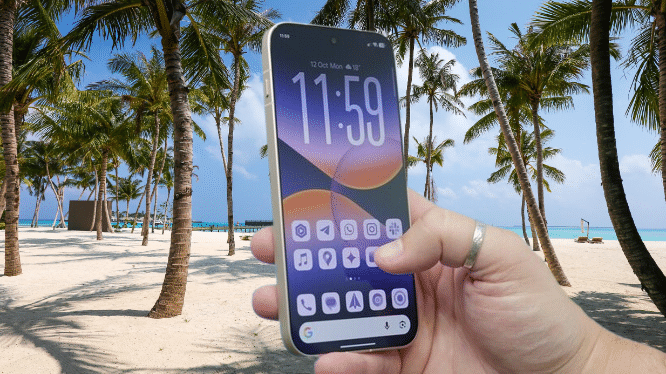
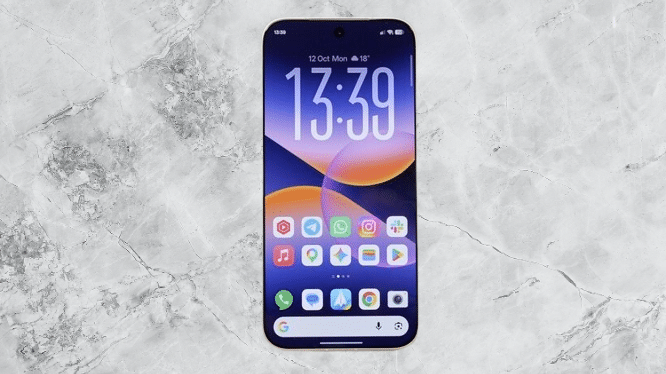
It is still a very good-looking phone, especially in the new pinkish color Oppo calls Glow Coral. I think it is delightful. It looks elegant without trying too hard, neither too busy nor so minimal that it becomes boring.
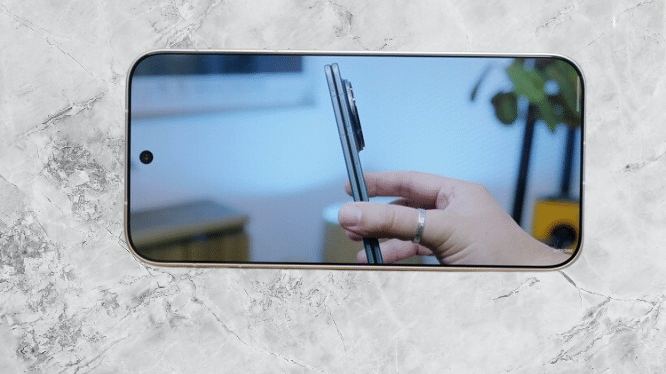
I will cover the display in a moment, but the hardware engineering impresses me here too. The bezels are under 1mm thick on every side, which adds to the immersive feel of the panel. That black frame looks impossibly slim.
As before, the phone resists water and dust about as well as any phone can. The dual IP68 and IP69 rating means it can survive a dunk in water and a blast from high-pressure water jets.
Oppo cut costs a little last year by using Gorilla Glass 7i on the front. The Find X10 uses Gorilla Glass Victus 2 instead, which improves scratch and impact resistance.
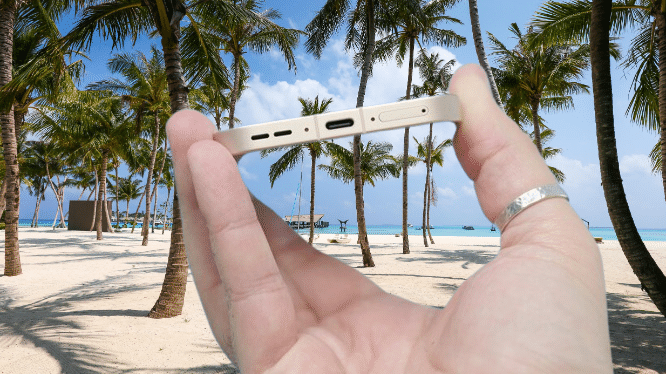
The buttons are the same as before. You do not get the touch-sensitive camera control area found on the Find X9 Ultra. You do get the Snap Key on the side, which you can program to run a handful of preset functions.
The idea is good, but I still feel it could be more versatile. You cannot set it to launch an app of your choice, or even a specific shortcut inside an app. It is nowhere near as flexible as the shortcut button on Vivo phones or the last few generations of iPhone.
You may also like: Google Pixel 11 Pro XL Review: Great AI, Weak Gaming Chops
Overall, the phone gets the balance right. It is slim and comfortable to use without making big compromises to get there. It could be thinner and lighter, but that would cost performance, especially battery life. Oppo has made good use of the space inside and outside this phone.
Oppo Find X10 Screen
Oppo has put some of the best displays available on its flagship phones in recent years, and the Find X10 continues that. If you only skim the specs for brightness, pixel density, and refresh rate, it looks like a small step up from the Find X9.
There is one key difference, though. This phone has an LTPO panel, which lets the refresh rate move up and down in small steps. If you watch a video that needs only 25 to 30 refreshes per second, the screen drops to that. If you read a static page, it falls to an even lower rate. That saves battery.
You cannot see this with the naked eye, but you can feel how smoothly the screen shifts from one refresh rate to a higher one. The older panel sometimes stuttered when it jumped between 60Hz and 120Hz. The Find X10 does not. It also reaches 144Hz in games that support it.
The resolution sits between 1080p and 1440p, with 1272 pixels across the shorter side. By default, the phone picks a resolution automatically based on what is on screen. You can also force it to the maximum resolution for the sharpest image. I found that setting gave the best scaling and font sizing, even though it costs a little battery life.
Oppo’s color tuning leans toward natural and realistic, and I think that is a good thing. You get three main color modes, and none of them push saturation hard. In my eyes, the choice came down to three looks. One is muted and natural. One has a little more saturation and a cooler tone. The third has the same bump in saturation with a warmer tone.
You may also like: Google Pixel 11 Pro Review: Great Software, Weak Chip
After years of Android phones with colors so vibrant they look hyperreal, it is refreshing to use one with realistic tones and textures, whatever you are watching.
Games may lose some of their eye-popping candy look. I accept that trade for how the screen handles video, and for how well it works as a monitor when you shoot photos and videos in the camera app.
Oppo Find X10 Cameras
Oppo’s camera system is usually one of its biggest strengths, and that holds here, although the exact setup puzzles me a little.
You get the usual three cameras: a main camera, an ultrawide, and a telephoto zoom. The telephoto has an optical equivalent length of 2.8x, not 3x or higher. The main lens has so many pixels that its 2x crop zoom is already sharp, so those extra 0.8x do not add much. The gap only starts to show when you push toward 6x or 10x.
Oppo deserves credit for the improvement over last year, even with the lower optical figure. The new sensor and lens combination is a clear step up from the Find X9. The sensor is larger and has bigger pixels, so shots above 5.6x zoom, for example, still come out strong and sharp.
It is not the best zoom camera in Oppo’s lineup, though. Close-up shots are where it falls short. If you try to shoot something near the lens, the telephoto is weaker than the one on the Find X10 Pro Max. You will need to use macro mode instead, which relies on a different lens and uses digital cropping and artificial sharpening to produce the photo.
Overall, I have been happy with the photos this camera system takes during the day, and indoors away from bright sunny skies too. Whichever lens you use, you get clean shots with good sharpness and fairly little noise.
The ultrawide is the weakest of the three lenses and sensors, yet it still takes consistent, clean images. For the most part, its color and contrast match the other two cameras. Distortion and warping at the edges and corners do not increase much either.
You may also like: Fairphone 6 Plus Review: Repairable, Not Fast
Oppo’s camera app also gives you plenty of room to adjust the look of your photos. It borrows an idea from Apple. You pick a look, then tweak that preset by dragging a dot to a point on a square grid with four axes.
What matters more, I think, is that you get two ways to take photos. The first is the standard, fully automatic Photo mode. It produces results with fairly heavy artificial processing and machine learning, especially when you use the zoom camera.
Master Mode is the other option. You can use the manual controls, or leave it on auto and get results that look far more like a traditional camera, with much less HDR and AI processing. It limits how far you can digitally zoom, but I do not think that is a bad thing.
I almost always preferred the photos from Master Mode. The textures looked more lifelike and realistic, and scenes and objects felt more real. The standard mode, by comparison, can load photos with heavy over-sharpening and smoothing.
For low light, a night mode algorithm can kick in automatically, or you can pick the dedicated night mode. The night shots show most clearly that the ultrawide is the weakest of the three cameras. Its results are generally a little fuzzier and darker than the other two.
Still, I admire Oppo’s restraint. Many companies use night mode to make night scenes as bright and vibrant as possible, which strips away the feel of night by oversaturating colors and lighting everything up.
Oppo does not do that. Colors, white balance, highlights, and shadows are not over-corrected. The scene ends up looking very close to what I saw with my own eyes, except sharp and in focus.
Some texture processing still looks a little artificial, likely from the correction needed to reduce noise and motion blur. The three cameras do match each other quite consistently.
You may also like: Samsung Galaxy Z Fold 8 Review: Lighter, Smarter Design
Videographers are well served too. In auto mode, you can shoot up to 8K, or 4K at 120fps. The professional video camera also offers Open Gate, which uses the full width and height of the sensor instead of cropping in. That gives you a lot of flexibility, especially if you want to reuse the same footage for both vertical and horizontal clips.
Oppo Find X10 Performance
We run every review phone through a set of graphics benchmark tests. They play a graphically rich game scene at the highest frame rate the phone can manage.
In these tests, the Find X10 usually hit frame rates around 40fps, which is not far from the top performers. The only phones that beat it by a wide margin are dedicated gaming phones with lower-resolution displays.
It struggled in the stress tests, which run the same scene on repeat twenty times. It could only reach that peak a handful of times before it had to throttle and lower the frame rate.
My educated guess is the body size. The phone is fairly compact for one with such a big battery. That battery leaves little room for the most effective cooling, so it cannot sustain the same peaks as the best performers.
Even so, the Dimensity 9600M gives it more than enough power for almost anything. Very few games push it past its comfort zone. I played Destiny: Rising for a solid 20 to 25 minutes and saw no stuttering, no lag, and no drop in resolution.
You may also like: Nothing Phone 4(b) Review: Budget Phone With Real Flair
I ran it on the automatic setting, so I did not push the graphics or frame rates to the maximum. The game still looked sharp and played smoothly. In supported games, the phone can even reach 144 frames per second. This phone does not lack power.
Oppo Find X10 Software
Oppo’s software is ColorOS on Android 17, and several elements clearly take inspiration from recent versions of iOS.
You see it in the liquid glass-like layers on the settings tiles, in the menu for changing the Snap Key function, and in the revamped color style picker in the camera app. All of them look very close to what you would find on an iPhone.
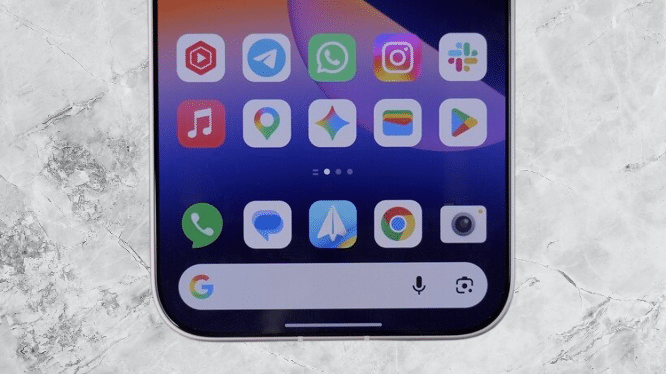
Even so, Oppo’s software is among the best for customisation. From the default launcher, you can change the icon shape and style, the Lock Screen depth, fonts, always-on displays, and fingerprint animations.
One thing still bugs me. Many of the built-in Oppo widgets for its preinstalled apps and services only scale and position properly if your Home Screen uses a 4-column app layout. They cannot adjust to fit a 5-column grid.
The one real disappointment is the update promise. You get only four OS upgrades and five years of security patches. Most phones at this price offer around seven years of both.
Oppo Find X10 Battery Life
Oppo fit a 6.6-inch display with very thin bezels into this phone, and I was just as excited to find an 8,000mAh battery inside a body that does not look or feel huge.
There is a catch. That capacity is only available on the global version sold in Asian markets outside China. European markets get a smaller but still impressive 7150mAh cell.
You may also like: Google Pixel 12 Lineup Leak Reveals Model Numbers and Displays
Either way, battery anxiety should be the least of your worries if you buy one. The bigger battery works with the efficient display refresh and power management to improve on its predecessor. The Find X9 never struggled with battery life, but the Find X10 lasts a little longer.
I am a fairly light user, and the phone handles standby very well. It barely loses any charge overnight on my bedside table. It is efficient under load too. Even heavy users who run battery-draining tasks like GPS navigation all day should make it through a full day without much trouble.
I got through to the end of a second day with no effort. For a typical person, the Find X9 was a 1.5 to 2 day phone at a push. The Find X10 is a solid 2-day phone.
You may also like: Vivo X Fold 6 Launches Globally With 200MP Camera
Charging is surprisingly quick for such a large battery. Our testing shows a half charge in 30 minutes and a full 1 to 100% refill in about 70 minutes. Some Samsung and Google Pixel phones with much smaller batteries take longer than that.
Oppo Find X10 Verdict
The Oppo Find X10 has a huge battery, a superb LTPO display with tiny bezels, and a versatile triple camera. It all fits in a body that is easier to hold than the Pro Max. It cannot sustain peak performance for long in games, and its software borrows heavily from iOS. At £1,099, it is still the Find X10 model most people should buy.
Pros |
Cons |
| Great battery life with fast charging | It’s expensive |
| Display takes up nearly all of the available space | Can’t sustain games at the highest graphical levels for long periods |
| Strong triple camera system on the back and lots of power | Software is a mixed bag, and there is disparity in battery size between EU and Global variants |
Final Thoughts
With prices rising, the full retail gap between this phone at £1099 and the Pro Max at £1499 is hard to ignore. I find it hard not to recommend this one over its bigger, more expensive sibling.
It does not have the faster processor or the better ultrawide camera. It still has everything you would want from a proper flagship phone.
The big battery handles heavy use easily, at least on the global model. The camera system is strong and versatile. You can even add the clip-on teleconverter lens to extend the zoom range. And unlike last year, saving money on the smaller model does not mean settling for a less efficient display.
The screen is smaller than the Pro Max, but not by much, and it is just as good. In my mind, this is the Find X10 Pro in all but name. If I wanted a bigger phone with better cameras.