
By most measures, Sonos got its first pair of headphones right. Not bad at all for a company that nobody really associates with headphones. But good only gets you so far when great is within reach.
Fast forward a couple of years, and here comes the Ace Ultra. Noise cancellation got a real boost, sound quality improved, battery life stretched further, and Sonos kept the same comfortable ergonomics that worked so well the first time.
There was clearly room to grow, and with the Ace Ultra, Sonos took those lessons seriously.
Sonos Ace Ultra Full Specs
Sonos Ace Ultra Design
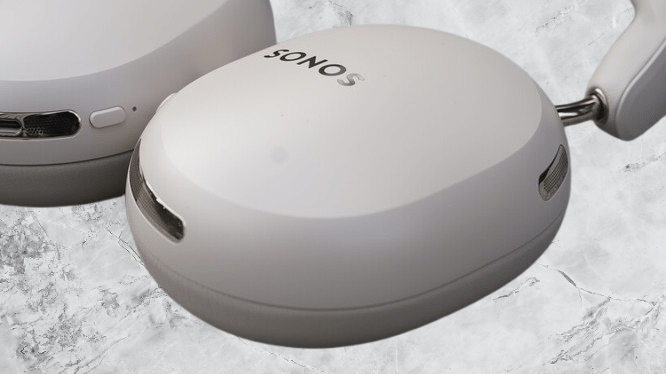
Design-wise, I genuinely can’t spot a difference between the Ace and the Ace Ultra. Unless Sonos changed something structural on the inside, these look and feel like the exact same headphones, slim, and fitting my head almost like they were molded for it.
Just like the original, they wear more like a comfortable pair of slippers than headphones. The comfort isn’t quite as plush as some competitors offer, but they’re genuinely pleasant to wear for extended periods, even as someone who wears glasses.
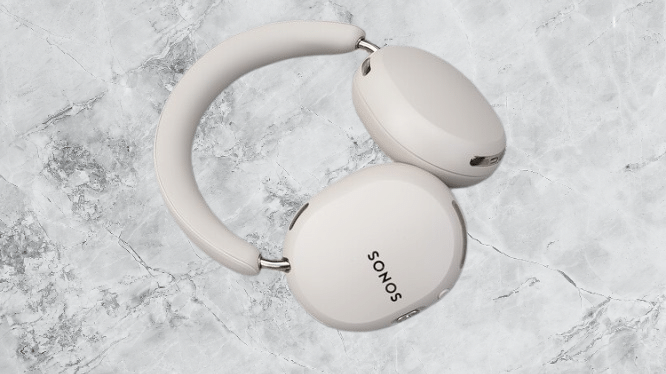
There’s plenty of room for larger ears too, and while the clamping force sits on the tighter end, it never crosses into an uncomfortable area. The fit stays secure thanks to a stepless slider for adjustments. I’ve worn these for hours at a stretch, and the only issue I ran into was some minor pinching when I hadn’t positioned them quite right.
You may also like: Beats 360 Launches With Swappable Cushions and IPX4
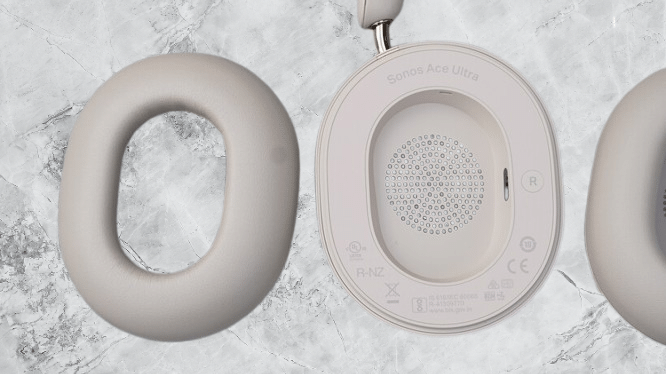
They don’t fold flat for storage, unfortunately, but telling left from right is easy thanks to contrasting colors inside each earcup. The earcups remain detachable, and you can swap in a new battery using the £25 Replacement Battery Kit when needed.
Controls stay unchanged too, sticking with physical buttons rather than touch panels. The Content Key handles most of the work here, covering playback, volume, and calls.
Hold it down, and just like before, it swaps audio between the headphones and a connected Sonos soundbar. Sonos added a new trick this time too, called Headphone Linking; more on that shortly.
The remaining buttons are simple: Power and Bluetooth sit on the left earcup, while the right earcup houses the ANC button for cycling through ambient sound modes. You can customize that ANC button somewhat, though only in terms of which modes it cycles between.
I never got into detail about how the original Ace looked, but I always considered them a genuinely classy pair of headphones. That slim profile and minimal silhouette gave them an elegant, understated look, and that carries straight through to the Ace Ultra.
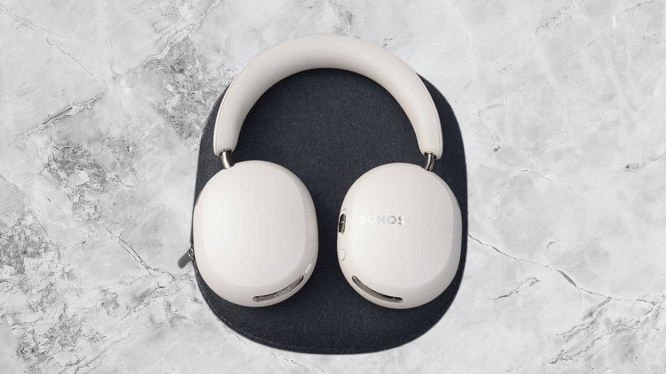
Black and white kept the original pretty subdued, but this time Sonos introduced Agave and Sand finishes, the Sand version being what I’ve been testing. Glossy accents add a premium feel here that most competitors simply can’t match.
You still get a travel case, though there’s a small change this time: every case comes in black now, with the Sonos branding etched in whatever color your headphones are, and the interior matches that color too. The case does pick up scuffs and marks with regular travel use, and the zip remains annoying; it doesn’t always unzip smoothly.
You may also like: Sony Launches WH-CH730N and WH-CH530 Headphones
Sonos kept the smaller internal pouch for cables too, which detaches from and reattaches to the main case using a magnet. Inside, you’ll find a USB-C to 3.5mm cable and a standard USB-C cable for charging or audio, since the Ace Ultra itself doesn’t have a 3.5mm input.
Sonos Ace Ultra Features
Bluetooth hasn’t changed drastically. Wireless support now reaches Bluetooth 6, though you won’t notice much benefit unless your source device supports it too.
Codec support covers SBC, AAC, and aptX Adaptive through Snapdragon Sound, and connection stability held up well while walking through airports and train stations during my testing. To actually get the performance boost Snapdragon Sound offers, though, you’ll need a compatible source device.
Bluetooth multipoint lets you connect to two devices at once, but it’s not switched on by default; you’ll need to enable it manually in the app.
Speaking of the app, Sonos gave it a proper overhaul following heavy criticism around the original Ace’s launch. I won’t dive too deep into the app itself, but it feels noticeably more responsive, and several features that had gone missing are back.
Adjusting the Ace Ultra’s settings requires Wi-Fi access through the app, which feels like an odd restriction at first, but it’s designed to run over Wi-Fi rather than mobile data.
When you are out and without Wi-Fi, you won’t be able to open the app at all. Connect to a different Wi-Fi network, and you can still tweak headphone settings, though you’ll lose access to your broader Sonos setup.
You may also like: Lenovo Headphone Yoga PC Edition
Inside the Headphones section, you can rename the headphones, check battery life, adjust Noise Control, toggle Adaptive ANC, and switch on Sidetone or Voice Boost within Aware Mode.
EQ options go deeper this time too. Previously, you could only adjust bass, treble, left-right balance, and Loudness. Now you can fine-tune the mids, boost bass and treble specifically at lower volumes, and Adaptive EQ adjusts automatically based on how the headphones actually sit on your head.
An Advanced 8-band EQ backs all this up, letting more experienced users dig into gain settings as well.
TV Audio Swap makes a return, letting the Ace Ultra connect directly to a Sonos soundbar over Wi-Fi and pipe audio through the headphones. It worked fine on the original Ace, and nothing’s changed here. Just hold down the Content Key near your soundbar, and audio jumps straight to the headphones.
TrueCinema tunes the sound to match your room, and spatial audio with head-tracking keeps everything sounding correctly positioned even as you move your head around.
What genuinely interests me more is a feature I expected on the original Ace but only now arrives with the Ace Ultra: Headphone Linking, currently in Early Access. This only became possible thanks to platform improvements from the Sonos27 AI upgrade, combined with new hardware in the Ace Ultra itself. It lets you pull audio from a nearby Sonos speaker and send it back and forth to your headphones.
Like TV Audio Swap, you hold the Content Key to trigger the switch, and it works, though I’ll admit the first few attempts took noticeably longer than expected to complete.
You may also like: Audio-Technica ATH-M20xSTS StreamSet Review Specs
The feature relies on line of sight to figure out which speaker is closest, but if you’ve got multiple speakers positioned near each other, it can grab audio from the wrong one.
In my living room, with both a Beam Ultra and an Era 300 present, the headphones pulled audio from Project Hail Mary off the Beam, but when I tried sending it back, it landed on the Era 300 instead. Staying physically close to whichever speaker you want helps avoid this confusion.
Once it settles in, though, Headphone Linking speeds up noticeably. The system learns your speaker layout over time, and the more you use it, the faster and smoother the linking becomes.
Eventually it starts to feel almost like a magic trick, and it genuinely reflects what I predicted before release: this feature taps into exactly what makes the Sonos ecosystem valuable.
Sonos Ace Ultra Battery Life
Battery life on the original Ace landed around 30 hours with ANC running, and testing confirmed that number held up. Sonos claims the Ace Ultra stretches to 35 hours with either ANC or Aware mode active, and once again, Sonos delivers on that promise.
During a three-hour drain test at 50% volume, the headphones lost just 8% of their charge. Do the math, and that works out to roughly 38 hours of battery life, meaning you might squeeze out a bit more than advertised across daily or weekly use.
Fast charging, which Sonos calls Rapid Charging, adds three hours of playback from just a three-minute charge. It’s switched on by default, though you can turn it off if you’d rather not use it. Starting from completely dead, a full recharge takes about three hours.
There’s also a Power Saving Mode buried in the app, though turning it on does limit certain features, including volume range, Noise Control, and head tracking.
Sonos Ace Ultra Noise Cancellation
Here’s the honest truth about the Ace Ultra’s noise cancellation: it’s better than the original Ace, but pinning down exactly why is tricky.
The actual suppression levels feel pretty similar between generations, but there’s something in the tone, for lack of a better word, that cuts through and thins out background noise more effectively this time.
Out in the real world, the Ace Ultra performs genuinely well, muting most of the chaos while walking through busy areas. Wearing them feels like stepping into your own private bubble, and they handle human voices particularly well, with traffic and foot traffic.
They shine on transport too. On a flight, the cabin noise dropped to near silence. On public transport, there were moments I genuinely forgot I had them on, just a steady bubble of quiet surrounding me.
You may also like: JBL Quantum 120: $50 Headset With Flagship Drivers
Aware Mode continues doing what it’s always done well, sounding natural enough that switching between wearing the headphones and taking them off feels seamless. This has consistently been one of the Ace line’s strengths, and picking up announcements remains effortless, no straining required.
One criticism I had of the original model was how awkward conversations felt while wearing them. Sonos added Voice Boost this time, which picks up voices while in Aware Mode, though I still find it hard to follow music and a conversation simultaneously. My workaround is simply pausing the music, and from there, holding a conversation while still wearing them has been easy.
Stacked against the best in the market, the Ace Ultra sits competitively without quite reaching the very top. Both the Sony WH-1000XM6 and Bose QuietComfort Ultra Headphones Gen 2 suppress noise slightly better, though the gap is small. I’d place the Sonos Ace Ultra roughly on par with the Sennheiser Momentum 5 Wireless, and that’s genuinely excellent company to be in for noise cancellation.
A couple of other things worth flagging. During takeoff, some crackling crept in as the plane shook, though I never encountered that issue anywhere else. On a more positive note, wind resistance impressed me; the microphones handle blustery conditions without much trouble at all.
Call quality falls a bit short, though. Similar to the Sennheiser, it prioritizes your voice while still letting background noise bleed through, so you’re competing against your surroundings during calls. The person on the receiving end noted my voice sounded slightly muffled. Sony still holds the edge here.
Sonos Ace Ultra Sound Quality
Sound-wise, Sonos kept the 40mm custom dynamic drivers, though the company describes these as entirely new. I mentioned being able to listen to the original Ace for hours without fatigue, and that holds here too. There’s a genuinely comfortable quality to the sound, helped along by noticeably better detail and clarity compared to the first generation.
One issue I had with the original over time was its tonal character. Comfortable as it sounded, it never felt particularly defined or expressive next to rivals. The Ace Ultra sounds more expressive this time, bringing extra dynamism to tracks and pulling out more detail. These are more insightful headphones and simply better performers overall.
You may also like: Nothing Headphone (a) Price and Release Date Leaked
Bass carries nice weight and tone on a track like Faye Webster’s “Better Distractions,” and the midrange comes through clearly and with good detail. The soundstage feels wide and spacious too, though a bit flat in depth compared to top competitors.
The Sony WH-1000XM6 brings more presence and emotional nuance to vocals in comparison. Sony does sound slightly squashed toward the edges of the soundstage next to the Sonos, but I’d still lean toward Sony overall for its more expressive character. Treble on Isfar Sarabski’s “Swan Lake” sounds a touch blunted on the Ace Ultra too, lacking some of the brightness and detail Sony manages to pull out.
The Ace Ultra still needs a volume nudge to avoid sounding flat in energy and excitement. That’s a deliberate neutral tuning choice on Sonos’s part, but I find Sony and Sennheiser both sound more expressive, fluid, and musical by comparison.
Overall, Sony and Sennheiser feel more natural and nuanced with music than the Ace Ultra. Listening to Phoebe Bridgers’ “Haunted,” both competitors bring out more insight in how instruments and vocals are presented.
It’s not a massive gap, but tonally and in terms of detail, Sonos still trails slightly. Worth remembering though, this is only Sonos’s second headphone. Sony and Sennheiser have years of experience behind them that Sonos is still catching up to.
The Ace Ultra supports lossless audio over a wired connection, though Sonos caps it at 16-bit/48kHz. For comparison, the Bose QC Ultra Headphones Gen 2 manage 24-bit/192kHz.
Tonally, things stay consistent, but the sense of space opens up noticeably, along with sharper detail, clarity, and overall insight. Highs still aren’t the brightest performers here, but the extra resolution genuinely improves things across the board compared to Bluetooth listening.
Want the best sound the Ace Ultra can offer? Connect via USB-C with a high-quality source, and they genuinely shine.
Sonos Ace Ultra Verdict
Sonos took a genuinely strong second swing here, shoring up the weak points from the original while improving on nearly everything else too. Better sound, strong noise cancellation, longer battery life, and tighter integration with a Sonos system all come together into a more convincing package, one that still feels distinctly Sonos throughout.
Pros |
Cons |
| Good comfort and headphone linking | ANC arguably just short of Sony and Bose |
| Excellent noise-cancelling | Sony and Sennheiser sound more musical |
| Better levels of detail than the original Ace and a longer battery life | Call quality is average |
Final Thoughts
I called the original Ace headphones “mostly a success” at the time, and the Ace Ultra builds on exactly that foundation to land as one of the best wireless headphones you can buy right now, at a lower price than the original too.
Sonos didn’t need a complete overhaul here, and to its credit, it didn’t attempt one. What it did tweak and refine adds up to a genuinely more polished overall package. Comfort remains excellent, and the simple physical controls stay just as intuitive.
Noise cancellation now competes with the best in the business, Ambient Mode continues to impress, and battery life got a real boost. The new drivers pull more detail and clarity out of your music than before, and expanded EQ options give you real room to shape the sound to your taste.
That said, some rivals still sound better overall. The Sony WH-1000XM6 and Sennheiser Momentum 5 Wireless both offer a more natural, fluid sound with more musical insight, each in its own way. None of that takes away from what the Ace Ultra does well though; its balanced, detailed approach genuinely improves on the original and holds its own against the competition.
The Ace Ultra represents Sonos hitting its stride, leaning fully into what the company does best, particularly on features. Sonos has clearly figured out headphones now, delivering a far more convincing product the second time around.