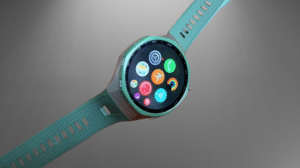

If I had to describe the Garmin Enduro 4 as an ad, I would borrow from the spirit brands and call it Garmin distilled four times. It skips a few things you get on the Fenix. That stripped-back approach turns out to be its biggest strength.
I have used the Enduro 4 for the past couple of weeks. I like it a lot more than I expected to.
Garmin Enduro 4 Full Specs
Garmin Enduro 4 Design
The Enduro 4 surprised me most with how light and comfortable it feels for such a big watch. It is wider and thicker than the 47mm Garmin Fenix 9 Pro I wore for much of the past month or two. Even so, it is lighter and sits better on my wrist.
It weighs 10 to 20 grams less than the Fenix 9 Pro, depending on which band the Fenix has on. It is a full 33 grams lighter than the 51mm Fenix, which is closer in size. That makes it more comfortable to sleep in. It also shifts less during a workout.
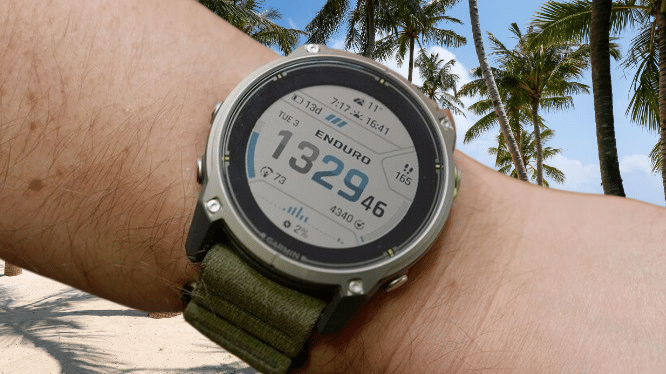
The weight and balance keep it locked on my wrist. The materials help. The case is a fibre-based polymer with a titanium bezel, not a full titanium case. It also skips some of the Fenix hardware features.
You may also like: Whoop vs Garmin Smartwatch: Screen, GPS, and Tracking Accuracy Compared
The Enduro 4 comes with what I think is the best Garmin strap in the box. The fabric is durable but thin, flexible, and breathable, and you can adjust it to any size. That adds to the comfort over long wear. The velcro grips well, so the strap does not pop open by accident.
The rest of the watch is classic Garmin and takes an old-school approach. You get five buttons, a transflective MIP display that also works as a touchscreen, and a built-in flashlight on the top edge.
The built-in light has four brightness levels for white light and one red light option. There is no green light, but it is useful. One evening I went out for a run at sunset. The watch sensed the low light and offered to turn on a strobe automatically, so other people along my route could see me.
Variety is where the Enduro falls short. It is not Garmin’s most mainstream range, and it comes in one size only: 51mm. Smaller wrists get no smaller option. It also ships in one colour with one band for now. You get a dark grey case, a lighter titanium bezel, and a green fabric strap.
The watch is built to last. The sapphire glass lens resists scratches very well, and the 10ATM water rating covers rainstorms and water activities. It does not have the dive-proof buttons of the Fenix range, so it is not suited to diving. The trade-off is that the buttons feel less spongy, with a shallower and clickier press.
Garmin Enduro 4 Display and Features
The Enduro starts to look like a Fenix Lite when you look at the display and smart features. Garmin built it as an expedition watch. It drops the battery-hungry extras, including the bright OLED screen. It has no mic or speaker for phone calls on your wrist, and no cellular or satellite connectivity.
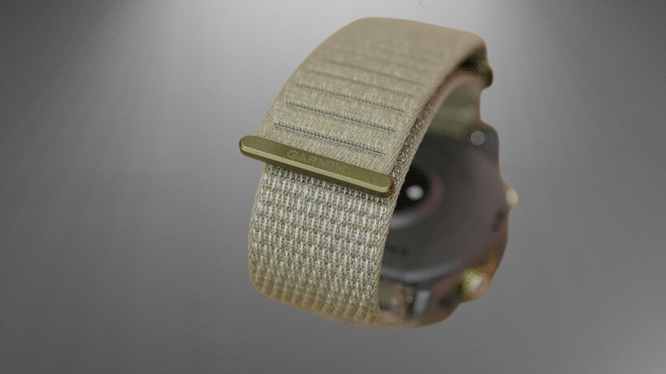
The basic speaker setup also limits audio alerts to simple, tame beeps. They are far quieter than the loudspeaker on the Fenix. On my runs with Garmin’s training plans, the countdown to the next interval was harder to hear.
You may also like: Best Fitness Trackers 2026: Top Picks Tested and Ranked
The interface sits on a 1.4-inch MIP display, which reminds me of older Garmin watches. It is not bright, contrasty, or vibrant like a modern OLED. It works more like E Ink, using the light around you to show the screen. That means it is always on.
The brighter your surroundings, the clearer the display looks. On a sunny summer day in the hills, it is crystal clear. Indoors, it is noticeably dimmer than the OLED models and harder to read.
In a dark space, you can press the light button, as on a classic digital watch. It floods the panel with a cool light for a few seconds.
Even outdoors in daylight, a bright OLED display still wins on visibility. Screens that approach 3,000 nits give you more contrast between the black background and the colourful data on top.
A few other features are missing. The Enduro has Garmin Messenger, but no cellular LTE or satellite connectivity. If you are in the wilderness and need to reach a loved one or emergency services, you have to rely on your phone’s connection. It also has no voice assistant, which I don’t see as a loss.
Beyond that, it has nearly everything you find on other Garmin models. You get Garmin Pay for contactless payments with supported banks and cards. You can also load offline playlists from streaming apps like Amazon, Spotify, and Deezer.
The interface matches the other models too. Garmin calls its data screens Glances, and you use them most. Swipe up from the watch face or press the down button on the left to scroll through the vertical stack. Swipe down on the screen or press the up button to see your phone notifications.
You control what appears in the Glances list. Pick the data you find most useful and put it in the order you want.
Garmin Enduro 4 Health and Fitness Tracking
Health, fitness, sleep, and recovery tracking on the Enduro 4 needs little explanation. It uses the same Elevate Gen 5 sensor for heart rate, SpO2, and other health metrics as most newer Garmin models. It also has the same upgraded processor, RAM, and 64GB of storage as the Fenix 9 Pro series.
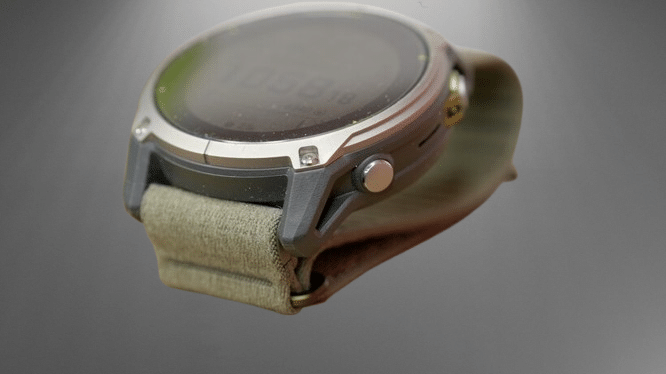
So it is no surprise that it performed almost the same as the Fenix 9 Pro. I swapped the Fenix for the Enduro and kept using it without any trouble.
You may also like: Garmin CIRQA Smart Band: Price, Features, Battery Life
The heart-rate sensor is about as accurate as a wrist sensor can be. Average readings over an activity matched the Fenix 9 Pro and the Apple Watch Ultra 4, and that puts them close to a chest strap. When the readings differ, the gap is one or two beats per minute, and it usually shows up only at the highest peaks.
GPS is just as consistent. It recorded accurate data even on a rainy, overcast day while I ran under tree cover. I saw no sign of badly wrong distances or routes, even on a long run during one of our recent stormy days.
When I compared the Fenix 9 Pro with the Apple Watch Ultra 4, the Apple Watch usually measured a little farther. On a 3 to 5 km run, the gap was about 20 to 30 metres. On an 8 km run, it was about 80 metres.
That works out to roughly 8 to 10 extra metres per kilometre. This sits well within the error you expect from any wrist-worn GPS watch. It is also typical of Garmin versus Apple, because the two brands handle movement and GPS noise differently.
Garmin’s system still suits anyone training for a distance. It gives you a lot of data and presents it well. You can dig into detailed stats if you want. What matters more to me is how that data feeds metrics like training readiness, Body Battery, and performance scores such as endurance and stamina.
You may also like: Amazfit Active 3 Premium Review: Best Budget Running Watch
The numbers on their own do not mean much. Garmin colour codes them, so you can see where you stand on fitness, endurance, and how rested and ready you are. I like that a lot.
I have also used the Garmin Coach plans to get back to a fitness level I am happier with. You run a benchmark session, and the watch judges your fitness from your effort and pace. It then builds a multi-week plan and adjusts it week by week based on how your sessions go.
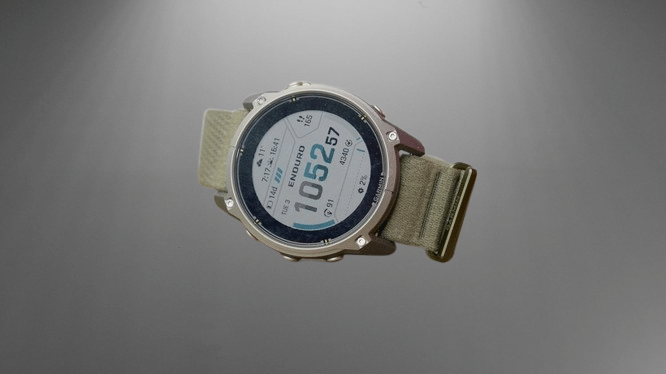
I followed the plan closely, and my training effect stayed in the green “productive” status the whole time. I have also seen real gains in my endurance and fitness stats.
You can use it to train for a first 5K, or to build up to a 10K, a half marathon, or a full marathon. Start a plan and it syncs to the watch automatically, so you get something easy to follow on each run.
I have tried similar plans on Nike Run Club, Huawei, and Runna. Garmin’s has been the most effective for me, because it keeps adapting to my own performance and fitness level. It gives me specific pace targets that match the right effort to stay in the productive zone. That keeps my endurance rising at a sustainable rate.
You may also like: Samsung Galaxy Watch 8 Classic Drops to $369 at Amazon
Garmin says the new processor platform loads apps 30% faster, especially when you pan and zoom. Do not expect instant results. When you scroll to the map screen during a run or hike, it can take a couple of seconds to load.
Maps are where the AMOLED screens on the Fenix series do better. Their richer colours make paths, routes, and terrain easier to see. If you mainly want the watch to guide you back to your starting point, the route it draws during the activity is still clear and easy to follow.
Garmin Enduro 4 Battery Life
The Enduro 4 comes with solar charging, a feature found on a few other Garmin models. In my experience, it makes a real difference to battery life on long activities like summer hikes, when the sun is high and bright.
Testing happened in what is now winter in Chicago, so I had almost no chance to see it work. Most of my activities were wet and windy, and long sleeves covered the watch for much of that time.
Battery life is not your main worry with this watch anyway. The lower-spec display lets it run for a full month of everyday use on one charge, according to Garmin.
My own numbers came close. I tracked GPS activities four times a week. Two sessions ran over an hour, and two ran about 30 minutes. After 9 days, the battery had dropped 41%. At two weeks, it was down 60%, and I expected about another 14 days before it hit empty.
You may also like: Huawei Watch GT 7 Pro First Impressions
If that pattern continued, the Enduro 4 would last 26 to 29 days. That is in the colder, darker months, with almost no help from the sun. In summer, it should last longer. For comparison, that is about twice the battery life of an AMOLED Fenix.
Garmin Enduro 4 Verdict
The Garmin Enduro 4 is a lighter, simpler alternative to the Fenix 9 Pro. It lasts close to a month on a charge and tracks fitness well. Its MIP display is hard to read in dim light, and it skips some of the Fenix’s smart features.
Pros |
Cons |
| Longer battery life | Display is hard to see in dim environments |
| Great, consistent fitness and health tracking | Lacking some of the smarts of the Fenix series |
| Very comfortable to wear despite its size | Only comes in one (51mm) size |
Final Thoughts
Buying the Enduro 4 is a bit like buying a trimmed-down version of the 51mm solar Fenix 9 Pro. It costs a lot less, still lasts for weeks on a charge, and has all the fitness and health tracking you want from a Garmin.
“Stripped down” can sound like a worse watch, but here it works in your favour. Cutting the extras gives you a lighter watch that is more comfortable on long runs and in bed at night. It also gets you a full month between charges.
The Fenix is still the top model. Even so, the lighter build, lower price, and simpler approach make the Enduro 4 a strong alternative, and it may suit you better. That is especially true if you run ultra distances, and even more so now that the Fenix has become so expensive.