
Phones keep promising more cameras, more AI, and more megapixels. The Xiaomi 17T takes a different route. It focuses on doing the basics very well. You get a bright 6.59-inch AMOLED display, smooth everyday performance, a 6,500mAh battery that lasts a full day of intense use, and a 50MP periscope telephoto camera with 5x optical zoom.
I used the Xiaomi 17T as my main phone for more than two months, including my holiday trips. It handled navigation, photos, video, music streaming, and messaging without making me want to switch.
It is not perfect. The design is anonymous, the ultra-wide camera does not always match the main camera’s colors, and the selfie camera is only fine. Even so, it is the kind of phone that quietly makes life easier.
Xiaomi 17T Full Specs
| Specification | Details |
| Display | 6.59-inch AMOLED, 2756 × 1268 resolution, up to 120Hz refresh rate, Dolby Vision, HDR10+, 3,500-nit peak brightness |
| Processor | MediaTek Dimensity 8500-Ultra (4nm) |
| RAM | 12GB LPDDR5X |
| Storage | 256GB / 512GB UFS 4.1 |
| Main camera | 50MP Leica Light Fusion 800, f/1.7, OIS |
| Telephoto camera | 50MP Leica periscope telephoto, 5x optical zoom, f/3.0, OIS |
| Ultrawide camera | 12MP, f/2.2, 120-degree field of view |
| Front camera | 32MP, f/2.2 |
| Battery | 6,500mAh silicon-carbon |
| Charging | 67W wired HyperCharge; up to 50W PPS charging; 22.5W wired reverse charging |
| Build and protection | 200g; 8.17mm thick; Gorilla Glass 7i; IP68 dust and water resistance; plastic frame |
| Software | Android 16 with Xiaomi HyperOS 3; four Android OS upgrades and six years of security updates |
| Colors | Black, Blue, Violet (regional availability may vary) |
| Price | $575 (12GB + 512GB) |
Xiaomi 17T Design and Build
The Xiaomi 17T looks good. So are about seventeen other phones released this year.
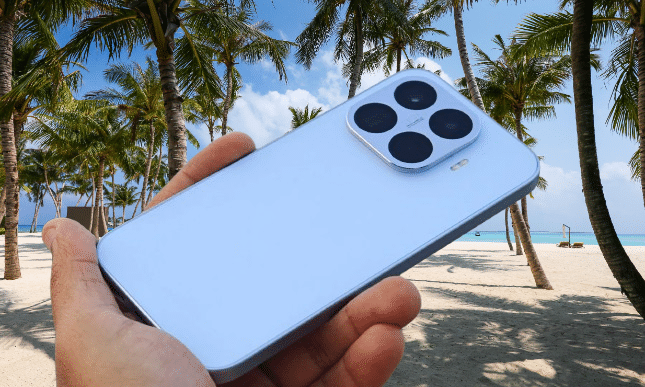
Let me explain. Nothing is wrong with the design. The flat display, clean rear panel, and fairly restrained camera island give it a modern look. At 200 grams and 8.17mm thick, it does not feel like a chunky slab of glass and metal. The blue finish on my review unit looks premium, and the build feels good.
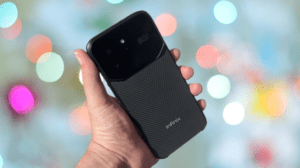
The problem is that the phone has little identity. Put it on a table next to a handful of similarly priced Android phones, and it could easily vanish into the crowd. I have always liked phones that make some effort to look different, and the 17T seems happy to blend in.
You may also like: Xiaomi 17T Pro Review: Big Battery, Familiar Design
The 6.59-inch display strikes a nice balance between screen space and comfort. I am 5 feet 9 inches tall with fairly large hands, and I can still use the 17T without constantly adjusting my grip. That may not sound like an exciting design win, but you notice ergonomics every single day.
The display is flat too, which I appreciate. Curved edges look fancy in product photos, but I would rather have a practical screen than extra reflections and accidental edge touches.
The phone has an IP68 rating for dust and water resistance, and Corning Gorilla Glass 7i protects the display. It also has an infrared blaster so that it can double as a remote for compatible TVs and other appliances.
That sounds like a gimmick until someone loses the real remote. Then the humble IR blaster becomes the hero of the household.
You may also like: Xiaomi 17 Ultra Review: Best Camera Phone of 2026
The one obvious compromise is the plastic frame. It does not make the phone feel flimsy, but buyers spending this much may prefer the more premium materials some rivals use.
Still, I would take a slightly less glamorous frame and a phone that is comfortable to use over a heavy design that cares more about showroom appeal than everyday practicality.
Xiaomi 17T Display
The 6.59-inch AMOLED display is one of the Xiaomi 17T’s most consistently enjoyable features. The resolution is 2756 x 1268 pixels, the refresh rate goes up to 120Hz, and it supports Dolby Vision and HDR10+. The screen is sharp and colorful, and it makes everything from scrolling social media to watching travel footage feel good.
Colors are vibrant, but you are not locked into one look. Xiaomi offers display adjustments if you prefer a more natural presentation, and you can tune the colors to be punchier if you like. The display also supports 12-bit color output.
Xiaomi advertises peak brightness of up to 3,500 nits under specific conditions. That is a peak figure, not a brightness level the screen holds in every app and situation.
You may also like: OnePlus 15T Launch Date: Specs, Battery and Price
What matters more day to day is that the screen stays easy to read outdoors. I had no real trouble using it in bright sunlight, and the automatic brightness adapts well to changing conditions.
The 120Hz refresh rate keeps scrolling and animations smooth, and I did not run into any major issues in daily use. The display also supports high-frequency PWM dimming and DC dimming, so you have options for managing screen flicker.
I like the overall balance. The screen is large enough for maps, videos, games, and multitasking, yet the phone does not feel oversized. It is a very good display without the unnecessary theatrics.
Xiaomi 17T Performance
The Xiaomi 17T runs on MediaTek’s Dimensity 8500-Ultra, a 4nm chipset paired with 12GB of LPDDR5X RAM and UFS 4.1 storage.
On paper, that does not sound as exciting as the silicon in a full flagship. After some time with the phone, the difference starts to feel academic. Apps open quickly, and multitasking feels effortless.
I can jump between navigation, WhatsApp, email, music, and the camera without tapping the screen impatiently, as if I were waiting on a lazy genie.
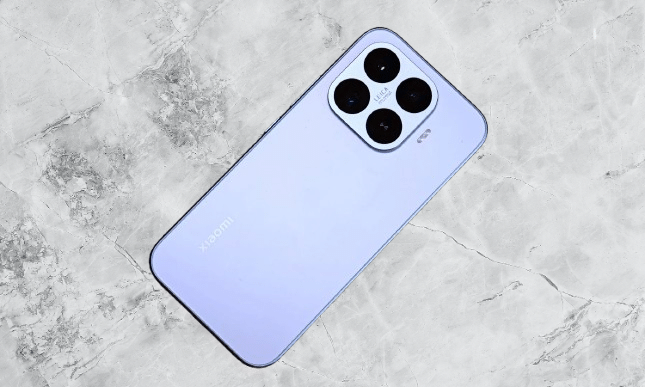
What impresses me most is how consistently responsive it feels. I have used it as my daily driver for more than two months, and I have not hit any major performance hiccups or annoying stutters.
It handles the usual daily chaos without breaking a sweat. That includes checking directions, sending messages, juggling apps, and opening the camera fast to catch a moment before it disappears.
The 17T never reminds me that it sits a step below a flagship. It just gets the job done, which is what a good phone should do.
You may also like: Xiaomi 18 Pro Max Debuts With Dual 200MP Leica Cameras
Gaming performance is solid too, although I would not buy the 17T just to chase top frame rates. I have played a few games on it, and the experience was smooth. I have not run demanding titles for long sessions, so I cannot make big claims about sustained frame rates or thermal throttling.
The phone gets slightly warm during 4K video recording, but nothing I have seen raised a red flag. This is a capable all-rounder, not a gaming phone in disguise.
The benchmark results add some perspective. In 3DMark, the Xiaomi 17T scored 3,553 in Wild Life Extreme and 1,384 in Steel Nomad Light. These graphics tests push the GPU harder than everyday tasks do, so they show how much headroom the phone has for demanding games and visually heavy work.
For context, those scores place the 17T in the capable upper-midrange bracket. The most powerful gaming-focused flagships sit well above it.
I also tested the Xiaomi 17T with Geekbench 7, and there is a caveat before you compare its results with scores from our other phone reviews. Geekbench 7 is a different benchmark version, so its numbers do not line up directly with Geekbench 6 scores.
The phone scored 1,130 in the single-core test and 3,591 in the multi-core test. That gives you a snapshot of CPU performance, but it does not tell the whole story. Benchmarks help set a baseline. They cannot capture what it feels like to use a phone for months without wondering whether it will keep up.
That is where the Xiaomi 17T wins me over. It will not top the benchmark charts, and if you want maximum gaming performance, you will find more powerful options.
For everyday use, though, it feels close to flagship level, with enough power for the things most people do on their phones. Sometimes the best performance feature is the one that never demands your attention. The 17T does that well.
Xiaomi 17T Camera
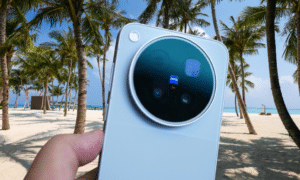
The Xiaomi 17T has a triple rear camera setup. You get a 50MP main camera, a 50MP periscope telephoto with 5x optical zoom, and a 12MP ultra-wide. The Leica branding adds two photo styles, Authentic and Vibrant, along with the color tuning that gives Xiaomi photos their signature look.
It does not only take pretty pictures in perfect light. I was happy to rely on it while traveling.
You may also like: Xiaomi Redmi Note 17 Pro Max Review: Best Battery Ever
The main camera is dependable, the 5x telephoto is a real highlight, and even the ultra-wide has its moments. Some familiar Xiaomi quirks remain. Images can be sharpened a bit too enthusiastically, and the cameras do not always agree on color. Those are caveats on a capable setup, not reasons to leave the phone behind when you go out to shoot.
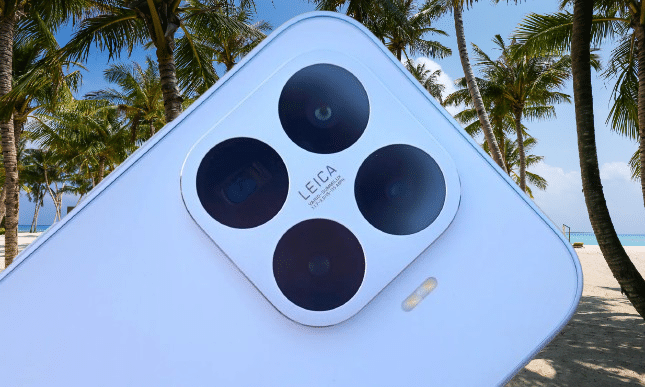
The 50MP main camera is the workhorse, and it rarely disappoints. Daylight shots are detailed, punchy, and full of contrast. Good dynamic range preserves detail in both bright skies and darker areas.
Colors can look a little boosted, and fine details sometimes show that unmistakable Xiaomi oversharpening. Still, the results are pleasing without much editing. Everyday scenes look interesting, and you do not need a photography degree to get there.
Low-light performance is just as reassuring. The camera balances bright light sources against the surrounding shadows instead of turning every night scene into an artificially bright mess. Detail stays respectable, and noise is kept under control.
I prefer Leica Authentic when I want a more neutral starting point for edits or Instagram filters. Leica Vibrant can look especially appealing in tricky HDR scenes. Having both is useful, and neither feels like a gimmick.
The 50MP periscope telephoto is the biggest reason to get excited about the Xiaomi 17T’s cameras. A dedicated 5x optical zoom gives the phone a versatility that many otherwise capable phones lack.
I can frame distant subjects without cropping hard into a main-camera shot, and the results are impressively sharp. Whether I am shooting architecture, far-off details, or something across the street, 5x is a genuinely useful focal length and not a spec-sheet party trick.
You may also like: Oppo Reno 16 Review: Great Cameras, Middling Battery
In good light, image quality at 5x is excellent. You get plenty of detail, vibrant colors, and contrast that gives photos a satisfying sense of depth. The longer focal length also helps with portraits, because it separates the subject from the background more naturally.
The catch is that portrait-mode edge detection is not fully consistent. It gets things right most of the time, but it sometimes struggles around finer details. Think reliable most days, with the occasional bad hair day.
The camera does not fall apart as the light fades. Night shots at 5x keep a surprising amount of detail, and the phone keeps noise from becoming distracting.
Sharpening is more noticeable in some situations, but the results stay very usable. A telephoto that delivers respectable images after sunset makes the 17T more versatile than phones that treat zoom as a daytime-only tool.
Then there is 10x zoom, which is much better than I would expect from a digital crop. At normal viewing sizes, images look impressively detailed, and I found little to complain about unless I started pixel-peeping.
Push the zoom further, and the compromises show, especially if you are used to the best flagship telephoto cameras. Still, most people do not inspect every photo at 100% magnification. For everyday sharing and travel photography, the 17T gives you plenty of reach without turning distant subjects into watercolors.
The 12MP ultra-wide helps when the main camera cannot fit everything into the frame. It works well for landscapes, architecture, and moments when stepping back is not an option.
Daylight photos are generally detailed enough, with respectable dynamic range and controlled distortion. It is not the most exciting camera on the phone, but it adds flexibility to a setup that already has a very capable main sensor and a proper telephoto.
You may also like: Google Pixel 11 Pro XL Review: Great AI, Weak Gaming Chops
The biggest issue in my testing is consistency. Colors can look noticeably different when you switch between the ultra-wide and the main camera, so the transition is less seamless than I would like.
Image quality also drops in tricky lighting, because the smaller sensor has less to work with. The ultra-wide is still perfectly usable. It just feels like a supporting actor next to two much stronger performers.
The Xiaomi 17T records up to 4K at 60 frames per second on both the main camera and the 5x telephoto. The ultra-wide tops out at 4K at 30fps. Having high-resolution video on the rear cameras helps when you travel, because switching perspectives makes footage more interesting.
I shot plenty of clips, and the results were detailed, colorful, and generally well exposed. The main and telephoto cameras are the most dependable, and the 5x lens gives you a useful way to capture distant scenes without losing much detail.
Stabilisation does a good job of keeping footage watchable while you move, though the occasional wobble still slips through. As with photos, the cameras do not always give identical colors, so switching lenses mid-shot can make the differences easier to spot. Even so, the video experience is strong enough that I was comfortable using the 17T as my travel camera.
You may also like: Fairphone 6 Plus Review: Repairable, Not Fast
Not every camera here is a winner. Portrait-mode edge detection can be inconsistent. The ultra-wide falls short of the main camera in both quality and color, and Xiaomi’s signature sharpening will not appeal to everyone.
The 32MP selfie camera is fine for casual photos and video calls, but it does not excite me the way selfie cameras from OPPO and Vivo often do. I still prefer the results I get from an iPhone. It gets the job done, but if you care a lot about selfies, you may want more.
Xiaomi 17T Battery Life
If the camera is my favorite thing about the Xiaomi 17T, the battery is a very close second. The 6,500mAh silicon-carbon cell makes battery anxiety feel like someone else’s problem.
It handled mobile data, navigation, music streaming, endless photos and videos, and the occasional hotspot duty for my iPhone. The phone was not on a relaxing holiday. It was running a small travel agency, and it never let me down.
The 17T comfortably lasts a full day, even with the heavy, unstructured use that comes with travel. I used maps while driving and walking, took photos, recorded clips, answered messages, and stayed connected on mobile data.
That is not a best-case day of a few emails and three hours of scrolling. It is real-world chaos, the kind that sends weaker batteries looking for an emergency exit.
You may also like: Samsung Galaxy Z Fold 8 Review: Lighter, Smarter Design
When you finally need to plug in, Xiaomi’s 67W HyperCharge gets the job done. It also supports up to 50W PPS charging with a compatible adapter.
In my testing, a full charge took roughly an hour. Some Android rivals charge faster, but 67W is hardly slow, especially for a battery this large. Compared with the wired charging on many Apple, Samsung, and Google phones, it is plenty quick.
Wireless charging is missing, so if you rely on dropping your phone onto a charging pad, keep that in mind. I do not care much. I would rather have a battery that lasts all day than a fancy way to charge it while I sleep.
The 17T gives me that, with no need to ration screen time or hunt for a wall socket halfway through the afternoon. It is a battery champ that keeps going, and that is more useful than a flashy charging spec.
Xiaomi 17T Software and AI
The Xiaomi 17T runs Android 16 with HyperOS 3, and the software has been one of the pleasant surprises of using the phone for a long stretch.
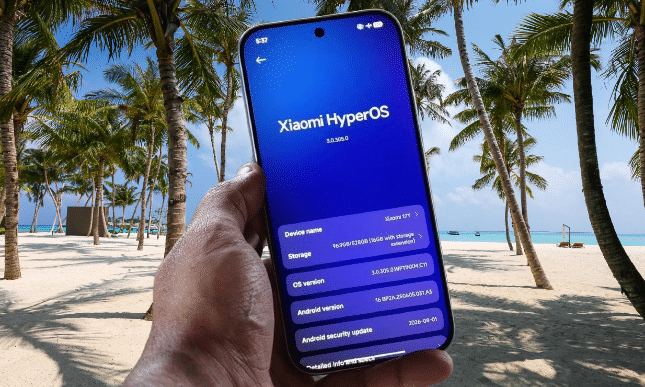
HyperOS carries some baggage from the MIUI days, especially around preinstalled apps and clutter. The 17T feels much more restrained than that reputation suggests. Some preinstalled apps are still there, but they have not taken over my app drawer, and I am not constantly fighting software I did not ask for.
You may also like: Nothing Phone 4(b) Review: Budget Phone With Real Flair
The bigger point is that the interface feels light and responsive. Animations are fluid and switching between apps is quick. Most features I want are already built in, so I do not have to hunt for third-party alternatives. It does not shout about itself. It just does its job.
That does not make HyperOS my favorite Android skin. I still prefer ColorOS, and Samsung’s One UI feels more premium to me. Even so, Xiaomi’s software has been dependable, and I like the balance of a fairly clean experience with a broad set of built-in features.
The infrared blaster is a good example of a practical extra. Xiaomi’s remote-control app can operate compatible household devices, which is genuinely handy. AI tools and integrations are present, including features tied to HyperOS and Google’s Gemini, but none of them has become a standout reason for me to use the phone.
Xiaomi promises four generations of Android OS upgrades and six years of security updates for the 17T. That is a useful commitment if you plan to keep the phone for several years. How much it is worth will depend on how reliably the updates actually arrive.
Xiaomi 17T Stereo Sound Speaker
The stereo speakers on the Xiaomi 17T have been excellent for what I actually use them for, which is watching videos and listening to music. Audio is clear, and the soundstage is enjoyable for a phone. The speakers get loud enough to make casual listening comfortable, and they do not turn into a tinny mess when you raise the volume.
They are loud, clean, and generally well balanced, with limited distortion in the high frequencies. If you like to tweak the sound, the phone also offers Dolby Atmos and other enhancement options.
You may also like: Xiaomi 18 Ultra Camera Leaks: Bigger Sensor, Better Zoom
I have not spent enough time gaming on the phone to give a first-hand verdict on how the speakers handle long gaming sessions. For video playback, music, and everyday use, I have no complaints. They are another example of the 17T getting an important part of the experience right without making a fuss about it.
Xiaomi 17T Verdict
Phones have gotten very good at convincing me that I need more. More cameras, more AI, more megapixels, more glass, and more marketing slides about how the latest chip will change your life. The Xiaomi 17T makes a surprisingly strong case for doing the basics very well instead.
I have used the Xiaomi 17T as my main phone for more than two months. It handled navigation, mobile data, photos, video, music streaming, messaging, and the occasional gaming session, and I never felt the urge to switch to something else.
The 6.59-inch display is bright and smooth. The speakers sound great. Everyday performance feels close to flagship level, and the 6,500mAh battery has been a champ. The cameras are the icing on the cake, especially the 50-megapixel periscope telephoto camera with its native 5x optical zoom.
It is not perfect. The design is a little too anonymous. The ultra-wide camera does not always match the main camera’s colors.
Portrait separation can go wonky at times, and the selfie camera is fine rather than fabulous. HyperOS 3 is fluid and full of features, but it still has room to improve. Even so, the Xiaomi 17T is the kind of phone that quietly makes life easier instead of constantly demanding your attention.
Pros | Cons |
| Excellent 5x periscope telephoto camera | Generic design lacks personality |
| Outstanding all-day battery life | Selfie camera is merely competent |
| Bright, smooth, vibrant AMOLED display with everyday performance flagship | Ultra-wide colours don’t always match |
Final Thoughts
The Xiaomi 17T will not win any design awards, but after a few weeks with it, that becomes a minor complaint. The display is excellent, performance is smooth, the speakers sound great, and the battery could probably survive a small expedition.
The 5x telephoto camera gives it a genuinely useful trick on top. Like the OnePlus 7T back in the day, it gets the fundamentals right without needing to show off.
You should consider the Xiaomi 17T if a great display, dependable battery life, smooth performance, and a versatile camera system matter more to you than flashy design or bragging rights.
Skip it if flawless portrait shots, a top-tier selfie camera, premium materials, or brand prestige rank higher on your list. The compromises are real, but they are hardly deal-breakers unless they hit the things you care about most.
The Xiaomi 17T is not for everyone, and that is fine. It suits people who want a phone that makes everyday life easier, captures great travel photos, and does not beg for a charger half the day.
It may not make a grand entrance, but it delivers once the party gets going. If practicality is your priority, this phone makes a very convincing case for itself.