
The Galaxy Z Fold 8 just landed, and it barely resembles last year’s Z Fold 7. Samsung dropped the tall, narrow cover screen and the boxy inner display built for work. In its place, you get a phone shaped for the stuff you actually do most: watching videos, gaming, texting, scrolling.
That productivity-first design didn’t disappear; it just moved up to the pricier Fold 8 Ultra. I have used the Z Fold 8 every day for a week now, and I think Samsung got this right.
The wider, shorter shape makes the phone easier to hold in one hand. It fits how people actually use apps and social media. And honestly, I kept picking it back up more than I expected to.
Samsung Galaxy Z Fold 8 Full Specs
Samsung Galaxy Z Fold 8 Design
The name says Fold 8, but don’t let that fool you. This phone doesn’t look or act like any foldable that came before it, and that’s exactly what Samsung was going for.
It’s Samsung’s first shot at a totally different book-style shape. Gone is the tall, skinny cover screen and boxy inner panel that every foldable has copied for years.
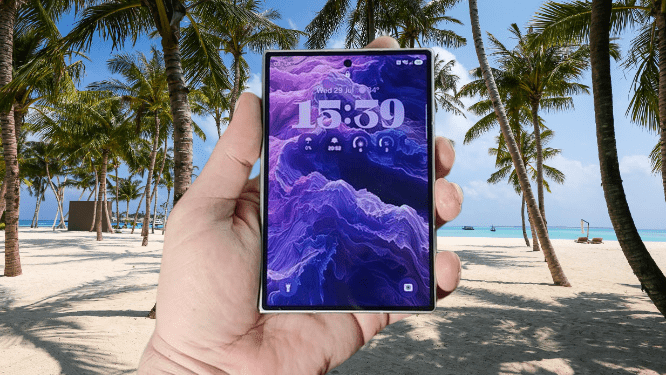
Instead, you get a 5.5-inch cover screen with a 16:10 ratio, roughly the size and shape of a passport. Open it up, and you get a 7.8-inch inner display with a 3:4 ratio, closer to a small tablet than a phone.
You may also like: Galaxy S27 May Ditch ISOCELL for New Sony Camera Sensor
I knew this phone would do well the moment I picked it up, and a week of daily use hasn’t changed my mind. I have used the Z Fold 7 and the Oppo Find N6 for months at a time, and I don’t want to go back to the boxier shape after living with the Fold 8.
The shorter, wider cover screen makes one-handed use easy without feeling like you’re using a stripped-down phone. TikTok, YouTube, and games all run fine on that outer screen, and you get more room to work with side to side than any previous Fold cover screen.
Want more space for browsing, scrolling Instagram, or watching a show? Unfold it, and you get a 7.8-inch tablet-shaped screen. It sits somewhere between a normal book-style foldable and the compact feel of a flip phone, and it works.
The weight stands out too. At 201 grams, it’s the lightest book-style foldable on the market by a good margin, and lighter than most regular phones, including Samsung’s own Galaxy S26 Ultra. For a phone built around social media, video, and gaming, things you hold for long stretches, that weight difference actually matters.
That smaller size also means it fits in your pocket easily, without the extra height or bulk older book-style foldables carried.
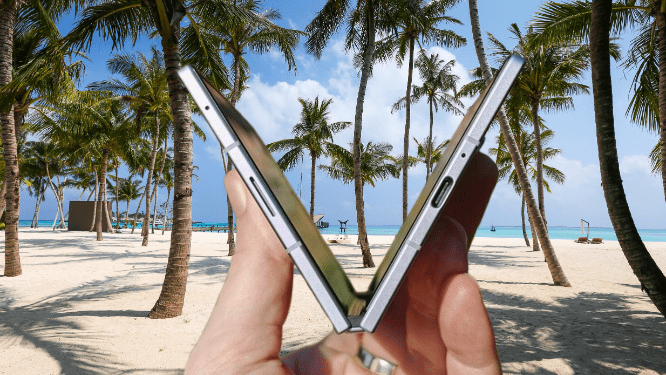
The hinge is stiffer than what you get on the Fold 8 Ultra, so getting it to hold a mid-way, laptop-style angle takes some effort. On the plus side, that stiffness makes the phone easy to open with one hand; it pops open without much force at all. Samsung says this was intentional, based on how they expect most people to actually use the phone.
You can still get it to hold a mid-way position if you want to, whether that’s propping the cover screen up in tent mode for YouTube or using the inner screen without support in laptop mode. But with the 3:4 aspect ratio inside, I doubt many people will lean on laptop mode much. If that’s what you need, the Fold 8 Ultra makes more sense for you.
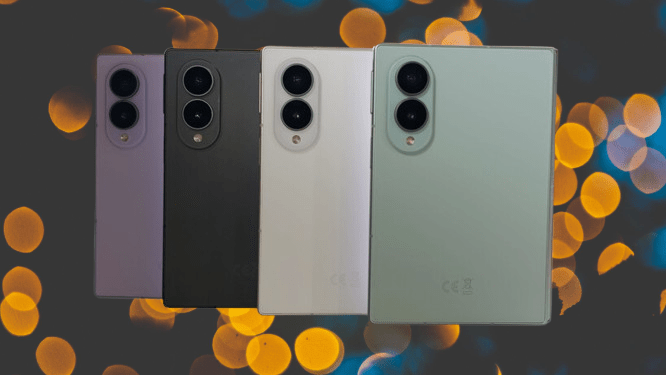
Samsung kept up its tradition of good color options here, with Graphite, Cream, Lavender, and Pistachio on offer. Pistachio is only good through the Samsung Store, though, which is a bummer.
One thing hasn’t moved forward: dust and water resistance. It’s still rated IP48, meaning it can handle being dunked in 1.5 meters of water for half an hour, but dust protection hasn’t improved at all. Anything under 1mm can still work its way in and cause problems.
You may also like: Google Pixel 11 Price Hikes Confirmed Amid RAM Cost Crisis
To be fair, Google is really the only company that’s cracked full dust and water resistance on a foldable so far. So the Fold 8 isn’t falling behind the pack here; it’s just not leading either.
Samsung Galaxy Z Fold 8 Screens
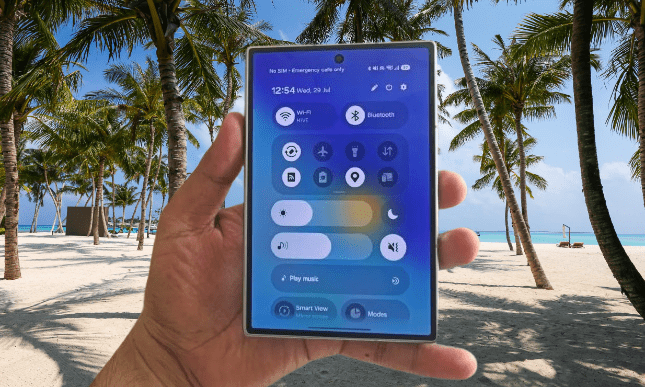
Cover screens on foldables usually feel like an afterthought next to the big inner display. Not here. The Z Fold 8’s 5.5-inch cover screen pulls just as much weight as the foldable screen behind it.
The 16:10 aspect ratio is the reason why. It’s shorter and wider, and that shape makes texting, scrolling, and basic phone tasks feel normal, something Samsung’s past cover screens haven’t always managed.
That extra width means bigger photos on social media, easier reading on messages, and Google Maps navigation without needing to unfold anything. It’s also a good match for gaming and for watching 16:9 shows on Netflix, with just a thin black bar on top and bottom.
Small as it is, it never feels cramped or like a downgrade, and that’s rare for a foldable cover screen, especially one of Samsung’s. The specs come close to matching the inner screen too, so it genuinely feels like a flagship display on its own, not a placeholder.
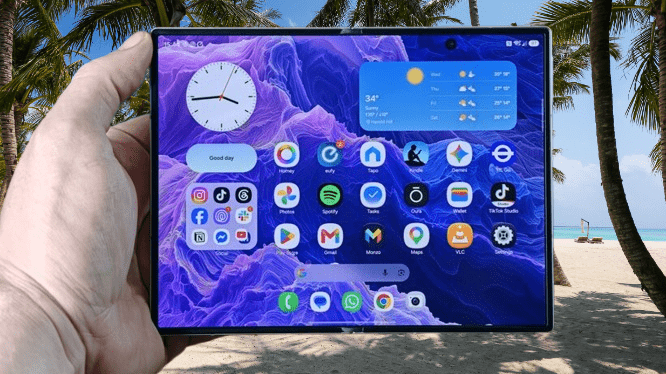
Still, the inner screen is the real draw, and it delivers. That 7.8-inch panel uses Dynamic AMOLED 2X, runs at up to 120Hz with LTPO, and hits 3000 nits at peak brightness. Bright, sharp, detailed, all of it. But what actually matters here comes down to two things: the aspect ratio, and a crease you barely notice.
You may also like: Samsung Galaxy Card: Cashback Rates, Perks and How to Apply
It’s tough to put into words how much of a difference the 4:3 aspect ratio makes here. That tablet-like shape means almost every app I opened on the inner screen just worked in landscape, WhatsApp, Slack, YouTube, Instagram, no issues.
For the first time, I didn’t have to wonder whether an app that looked fine on the cover screen would actually behave on the boxier inner panel. I just opened it, and it worked. That sounds like a small thing, but it changes how you use the phone.
Video looks better too. The shorter, wider shape lines up closer to how movies are actually shot, so you still get black bars, but the video fills more of the screen than it does on a boxier foldable like the Fold 8 Ultra.
That said, I found myself using the inner screen in portrait mode more often than not. It basically turns into one big phone screen, great for scrolling apps, playing portrait games, and watching TikTok.
The trade-off shows up with split-screen. It’s not built for heavy multitasking, though it still handles two apps side by side just fine for casual browsing or messaging. You get less room than the Ultra offers, but it still beats trying to split-screen on a normal phone by a wide margin, so don’t write it off just because Samsung boxes it differently.
The other real upgrade is Samsung’s new Flex Titanium tech. It’s two layers built into the inner folding panel, and the goal is twofold: cut down the crease and make the screen feel sturdier when you touch it, which has been a common complaint about foldable displays for years.
It delivers. The inner screen feels noticeably firmer, and combined with the same anti-reflective coating found on the Galaxy S26 Ultra, it loses a lot of that plastic-y glare you get with reflections on other foldables. That’s a real upgrade on its own.
Then there’s the crease, or the near lack of one. Lay the phone flat and look at it straight on, and you’ll barely spot a dip down the middle. Tilt it to an angle, and it’s still there, and you can feel it under your finger, but I don’t think most people will notice or care.
Oppo’s Find N6 still edges it out slightly on crease reduction, but this is a big jump from where Samsung was just a year ago.
Samsung Galaxy Z Fold 8 Performance
I ran into some stutter during heavier tasks; editing multi-track 4K footage in CapCut Pad was one, and the phone isn’t thrilled about running graphically demanding games like Wuthering Waves at top settings. It heats up within minutes of that kind of load.
On paper, the chip itself is plenty capable. The problem seems to be the Fold 8’s thinner, smaller body compared to the Ultra, which limits how long it can hold that performance without throttling.
You may also like: Samsung Galaxy Z Flip 8: Price, Specs, and Release Date Leaks
What’s interesting is that Samsung seems aware of this. It blocked the usual benchmarking apps, Geekbench 6, 3DMark, and similar tools, on our review unit. That’s not unusual for pre-release phones from companies like Xiaomi or Honor, but it’s the first time I’ve seen Samsung pull that move. And it’s telling that the Fold 8 Ultra has no such restrictions.
Good timing: Geekbench 7 launched while I was testing, and since it wasn’t on Samsung’s blocked list, I finally got real numbers. They matched what I’d already felt using the phone. Even with the 8 Elite Gen 5 for Galaxy chip inside, the Z Fold 8 falls short of the Fold 8 Ultra and other book-style foldables on CPU and GPU benchmarks.
That gap rarely shows up in daily use, though. Swiping through One UI feels quick, apps launch instantly, and there’s no lag while browsing. But if you push the phone hard, real power users might notice it can’t quite keep pace.
Samsung Galaxy Z Fold 8 Software
The Z Fold 8, Fold 8 Ultra, and Flip 8 are the first phones out the door running Android 17, landing a few weeks ahead of Google’s own Pixel 11 lineup.
It’s not stock Android though; it runs One UI 9, Samsung’s custom skin. Compared to what you get from Honor, Xiaomi, Oppo, or RedMagic, One UI still holds up as one of the better options out there. It manages to stay easy to use while packing in features that actually help, most of the time.
Day to day, it’s genuinely pleasant to use, and there’s no shortage of foldable-specific tools built around that bigger inner screen. The foldable taskbar, app tray, split-screen multitasking, floating windows, it’s all here, even though Samsung insists this isn’t the productivity-focused Fold.
But like every recent One UI update, AI is the real focus. You get the full lineup of Galaxy AI tools, including Photo Assist carried over from the S26 series, plus a handful of new additions.
You may also like: Hisense A10: Android 16 With E-Ink and a Detachable LCD
If you make content, MyFanCam is worth knowing about. It lets you crop into and track a subject in footage you’ve already shot, adjusting the aspect ratio as it goes. It works well too; the tracking stayed locked onto my subject through testing without drifting.
Samsung also added a few Gemini features that used to be Pixel-only, including the upgraded Gemini automation tools that rolled out in the US a couple of months back. In theory, this lets Gemini handle tasks inside apps for you, like booking a hotel through Expedia. I couldn’t get it running during my testing, but Samsung tells me it’s coming to UK users, likely once the phone officially launches.
Now Brief got some real attention this time around, pulling from more sources to actually feel useful. It still shines brightest with a Samsung wearable connected, giving you health insights every morning, but even without one, the mix of weather, news, YouTube picks, Spotify playlists, and weekly recaps of places you have visited and photos you’ve taken feels far more personal than before.
You can also build your own Now Brief cards now, powered by Gemini, with more than 100 combinations to pick from. Right now, that only covers weather, Samsung Health, and YouTube, so more categories would help.
One UI 9 also borrows a couple of ideas that feel very iOS, AI-ranked notifications at the top of your lock screen, and notification summaries for chat apps. The ranked notifications work well and stay accurate. The summaries are a riskier move, given how much mockery Apple got for its version. It’s there if you want it. I’m skipping it.
You may also like: Motorola Edge 70 Pro+ Coming with Periscope Camera
Same as Samsung’s other flagship foldables, the Fold 8 comes with seven years of OS updates and security patches, so it has a long runway ahead of it.
Samsung Galaxy Z Fold 8 Cameras
As tempting as the new shape is, Samsung paired it with a camera setup that’s going to bother some buyers.
The Z Fold 8 isn’t Samsung’s top Fold this year, sure, but it still costs more than phones like the iPhone 17 Pro Max and the Oppo Find X9 Ultra, and the camera should match that price tag. It doesn’t.
That’s a hard pill to swallow given last year’s Z Fold 7 shipped with a stronger camera setup for around the same money, a 200MP main sensor, an ultrawide, and a dedicated zoom lens. This year, that combination only shows up on the pricier Fold 8 Ultra.
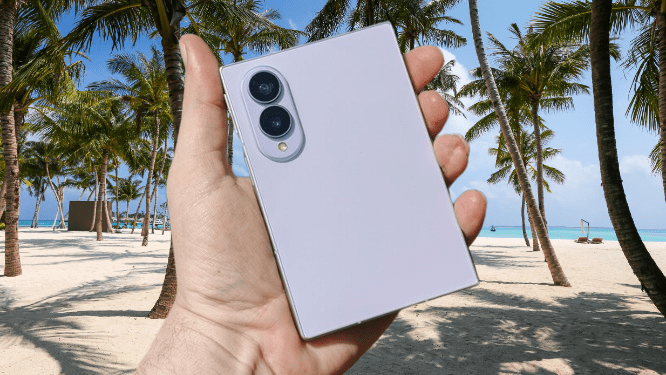
What you actually get on the Z Fold 8 is a dual 50MP setup, main and ultrawide, with no zoom lens at all. Samsung could have at least borrowed the Ultra’s 200MP main sensor to help with in-sensor zoom, but it didn’t, and zoom performance suffers because of it.
At 2x, it holds up fine; the shot tightens without any real quality loss. Push past 2 or 3x, though, and you will start seeing the usual signs of digital processing, softer detail, flatter-looking images. It’s just not a flexible camera system, even next to other foldables in this price range.
Outside of zoom, the two lenses do their job well. Samsung’s signature color boost is still here, giving photos the kind of pop that looks good on social media, and the built-in filters, including one that lets you pull a color profile from an existing photo, give you room to fine-tune your shots.
Photos come out detailed, as expected, and the main camera’s f/1.8 aperture does double duty here, adding natural background blur to close-ups while letting in more light when things get dark. The 1/1.57-inch sensor is smaller than what you’d find on top camera phones, so it won’t work miracles, but it balances light and shadow reasonably well in low light.
The ultrawide holds up in similar fashion. Colors stay consistent between the two lenses for the most part, and scenic shots come through with good detail. The gap only shows once light drops; ultrawide shots come out a touch dimmer and softer than what the main lens captures.
You may also like: Xiaomi 18 Ultra Camera Leaks: Bigger Sensor, Better Zoom
Both cameras get the job done, but if you want Samsung’s best foldable camera, you will need to spend more on the Fold 8 Ultra. That’s not an ideal setup; plenty of people, myself included, want a foldable built for content but still expect a great camera. Right now, that’s the trade-off you make for this shape.
Samsung Galaxy Z Fold 8 Battery life
Given how much smaller the Z Fold 8’s body is compared to the Fold 8 Ultra, only losing 200mAh of battery, 4800mAh versus 5000mAh, is actually impressive. For Samsung, at least.
Sure, other foldables pack bigger batteries; the Honor Magic V6 and its 6600mAh cell comes to mind, but for most people, what the Z Fold 8 offers will be more than enough.
I used this phone heavily over the past week, more than I normally would, honestly, because I kept wanting to pick it up. That meant roughly six hours of screen time a day, and I still made it through 16- to 18-hour days with battery to spare.
It wasn’t much, usually 5 to 10% left, and one particularly busy day forced me to top up in the evening. But if you’re a lighter user, this won’t be a concern.
45W charging isn’t the fastest around for a foldable, but paired with the smaller 4800mAh battery, it still charges quickly. In my testing, 15 minutes got me to 35%, 30 minutes hit 67%, and a full charge took 68 minutes total.
You may also like: Motorola Edge 70 Max Leak: Specs Reveal Bigger Ambitions Keywords
You also get 20W wireless charging, though there’s no built-in magnet system like MagSafe, something the Pixel 10 Pro Fold does offer. Given how much this phone leans into content consumption, an easy mounting option would have been a nice addition. Maybe next year.
Samsung Galaxy Z Fold 8 Verdict
The Galaxy Z Fold 8 feels like a real shift for Samsung’s foldable line, trading raw productivity for a lighter, more practical design that’s actually enjoyable to use every day. It has its weak spots, cameras, sustained performance, and battery life among them, but it’s still the Samsung foldable I’d pick.
Pros |
Cons |
| Excellent passport-style design | Underwhelming dual cameras |
| Excellent inner display | Can stutter with more demanding tasks |
| Useful wide cover screen with smooth everyday performance |
Final Thoughts
The Z Fold 8 marks a real shift for Samsung’s foldables. By stepping away from the productivity-heavy approach of past Fold models, Samsung built a book-style foldable that’s lighter, easier to hold, and more enjoyable to actually use every day.
It’s not without trade-offs. The dual-camera setup feels weak for what you’re paying, sustained performance trails the bigger Fold 8 Ultra, and battery life will only just carry heavy users through a full day. None of that changes the fact that this is one of the most refreshing foldables Samsung has put out in years.
A week in, and it’s reshaped what I expect from a book-style foldable. You still get that big inner display whenever you need it, but the wider, shorter design makes it feel like a phone you’d actually reach for daily.
Want Samsung’s most powerful, work-focused foldable? Get the Fold 8 Ultra. Want the one that’s the most fun, practical, and easy to live with day to day? The Galaxy Z Fold 8 is my pick.