
The Watch D3 may be Huawei’s most important smartwatch because it marks a major step for health tracking from the wrist.
Watches like the Samsung Galaxy Watch and the Asus Vivowatch 5 need regular calibration against a cuff-style monitor to measure blood pressure. The Watch D3 does not. The cuff is built into the strap.
The first-generation Watch D proved the concept and showed that a watch could deliver medical-grade blood pressure monitoring. The Watch D2 moved the design away from a health device and closer to a regular smartwatch.
The Watch D3 keeps evolving that design and adds new blood pressure features. If you care about your blood pressure and do not want to wrap a cuff around your arm again, this is the smartwatch to wear.
Huawei Watch D3 Full Specs
Huawei Watch D3 Design and Screen
I have tested both the Watch D and the Watch D2, and the change between them was dramatic, both in how Huawei’s blood pressure smartwatch looked and, more importantly, how it felt to wear.
The Watch D3 keeps moving closer to the size and weight of Huawei’s other smartwatches. It also tries to build the cuff into the strap in a more elegant way.
You may also like: Huawei Watch 6 Review: Health Tracking Powerhouse
Huawei has cut the case from 48mm to 46.5mm, which makes a big difference to the watch’s presence. That matches the case size of the largest Apple Watch Series 12. Huawei says the weight is the same 40g as the Watch D2, but that figure leaves out the strap.
The strap is why the D3 still feels less svelte than an Apple Watch Series 12. The body is now 11.33mm thick, down from 13.2mm, and that helps make it easier to live with. I would still like it to get slimmer and lighter, and I expect it will in a few generations.
The color options bring the Watch D3 closer to Huawei’s other smartwatches. It comes in black, white, and gold, and I was surprised by how nice the rose model looked on my wrist.
The smaller, slimmer case also comes with more screen to look at. The AMOLED touchscreen is a noticeably larger 1.92 inches, with a resolution of 480 x 408. Huawei has not raised the resolution, but brightness improves, with a peak of 3,000 nits.
I noticed the screen filling the case better than it did on the Watch D2. A sliver of black bezel remains, but it does not take much away from the extra screen space.
You may also like: Nothing Smartwatch Leak: Price, Release Date, and Design
A couple of less desirable design points remain. Water resistance has not changed. It is rated IP68, but you still cannot swim or shower with it on, which seems tied to the unconventional cuff strap.
The strap is comfortable, but it does not give you as snug a fit as a regular one. Adjusting it is also still awkward, because you have to change both the watch clasp and the cuff clasp to get the fit right.
Huawei Watch D3 Performance and Software
Huawei wants the Watch D3 to deliver as much of the same software experience as its other smartwatches, the ones that cannot monitor blood pressure. It runs HarmonyOS 7.0, the latest version of Huawei’s smartwatch operating system.
It works with Android and iOS devices through the Huawei Health app. Pair it with an iPhone, and you lose some features. The biggest gaps are access to Huawei’s AppGallery storefront and the ability to reply to some notifications.
You can still download extra watch faces, check notifications, and load music. NFC is also integrated for contactless payments.
You may also like: Best Fitness Trackers 2026: Top Picks Tested and Ranked
The main thing missing compared with other Huawei watches is connectivity. You get no Wi-Fi and no cellular. People who mainly want to track blood pressure can probably live without those. Still, a health watch that can stand on its own would have its advantages.
Using the Watch D3 feels a lot like using one of Huawei’s other smartwatches. Notifications live in the same place, and you can view the app layout screen in two different ways. There are enough non-fitness and health features to satisfy most people.
Payments are a fairly new addition to Huawei watches, and they are not the slickest on any smartwatch. Support varies by region. You also need Curve Pay to turn payments on, which makes setup longer.
Is it the best Huawei smartwatch for use outside of health tracking? No. Does it give you a good enough experience? I would say yes.
Huawei Watch D3 Tracking and Features
The Watch D3 is built mainly to monitor blood pressure, but it also covers exercise tracking and general wellbeing. You can wear it to bed too if you want sleep data.
You get the usual range of sports tracking, and a good dual-band GPS sensor handles outdoor activities. The integrated cuff does change one thing. Unlike earlier Watch D models, the D3 is not suited to tracking your swims.
You may also like: Garmin CIRQA Smart Band: Price, Features, Battery Life
Huawei has kept its beginner-friendly mini workouts mode. It makes it easier to fit in a quick session when you are short on time or have been stuck at your desk for hours.
Other Huawei watches are sleeker to wear overnight, but the D3’s sleep tracking held up well against other trackers, including the Oura Ring 5. It did especially well with sleep stage breakdowns and sleep duration.
I also like how Huawei tracks your emotional wellbeing. Shifts between your more stressful and more relaxed periods are easy to see at a glance.
The Watch D3 keeps an ECG sensor for serious heart monitoring. Huawei has also added Pulse Wave Arrhythmia analysis, which uses the optical heart rate sensor to look for signs of atrial fibrillation.
You may also like: Samsung Galaxy Watch 8 Classic Drops to $369 at Amazon
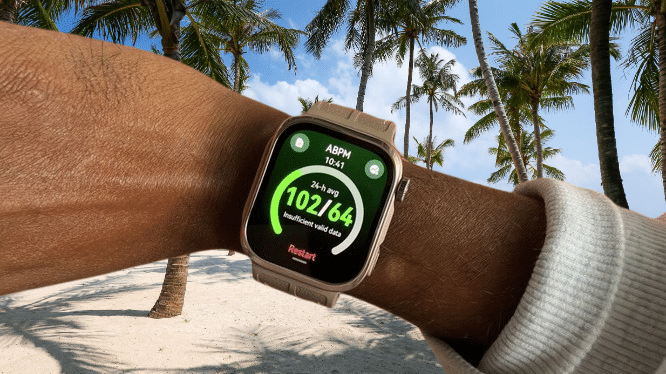
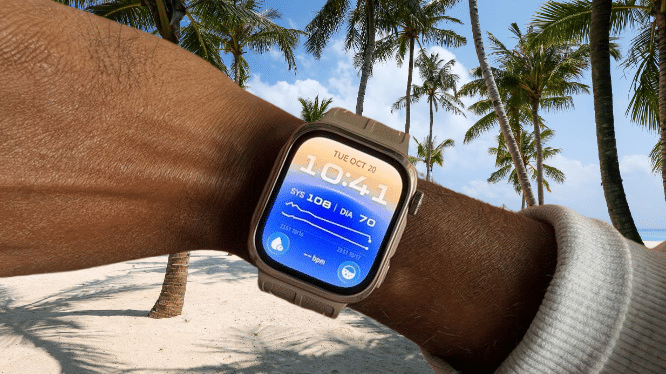
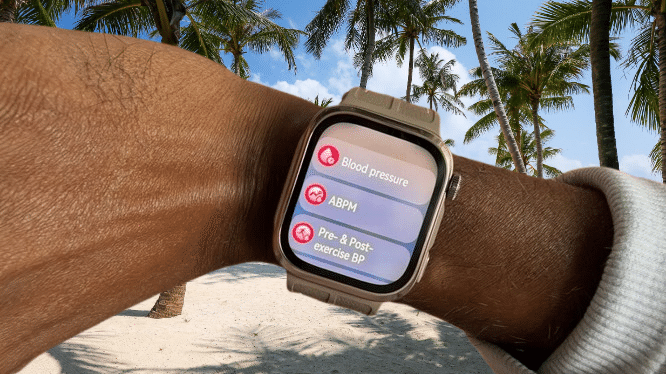
Blood pressure tracking works much like it does on the D2. You can take a reading on the spot, or you can turn on ambulatory blood pressure monitoring.
The ambulatory mode prompts you to take readings through the day and night, which builds a more detailed picture of how your blood pressure changes.
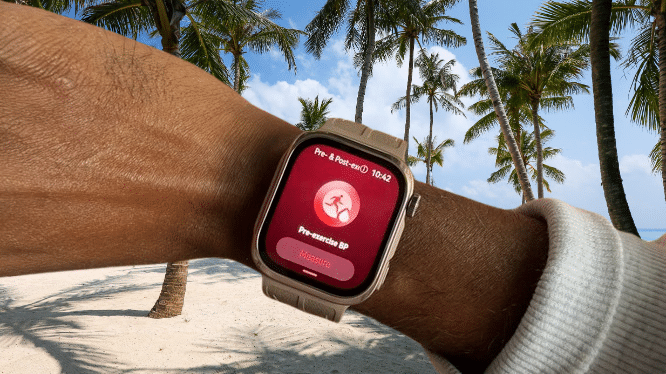
Huawei has now added a mode that links blood pressure to your workouts. It measures before and after exercise, so you can check you are in good shape to train.
To test accuracy, I compared the watch against a dedicated cuff-style blood pressure monitor. Measurements are much more reliable than on earlier Watch D models, with fewer failed attempts.
You get the best results when you follow the on-screen demonstration for taking a measurement. That brings the data much closer to a traditional cuff monitor. The numbers did not always match, and the D3 sometimes reported lower readings overall. Still, the readings looked reliable in general.
You may also like: Amazfit Active 3 Premium Review: Best Budget Running Watch
With the new pre and post-exercise mode, remember to take your post-workout measurement soon after you finish. If you wait too long, the chance expires.
The pre and post-exercise mode only works with select workout modes right now, and it simply shows your before and after numbers side by side. I compared its readings against a dedicated monitor. The data was not identical, but the numbers were not far off.
Another new health feature is Health Community mode. It lets you share real-time blood pressure alerts with close friends and family. The people you pick need the Huawei Health app on their own devices to see that data, along with other key metrics.
In short, you get a few more uses for the blood pressure technology, with fairly simple insights. I wonder whether these features could eventually come to the older Watch D2.
Huawei Watch D3 Battery Life
Most Huawei smartwatches last for weeks, especially if you let the screen turn off between glances. The Watch D3 does not go quite that long between charges, falling short of the Huawei Watch GT and Fit series.
Its battery life matches the Watch D2. Huawei promises up to six days. In my use, that dropped to about two to three days with the always-on display enabled and the richest health, sleep, and fitness features running.
You may also like: Garmin Cirqa Review: An Excellent Screenless Fitness Tracker
It will not last for weeks, but the daily and nightly drain never bothered me. It also outlasts the Apple Watch and the Google Pixel Watch between charges.
Ambulatory blood pressure monitoring drains the battery fast, because the watch takes readings regularly. With that mode on, expect around 24 hours.
Charging uses Huawei’s usual white dock. It fills the D3 in just over an hour, so even after a day of ambulatory monitoring, you are back to 100% quickly.
Huawei Watch D3 Verdict
Huawei’s blood pressure smartwatch now looks and feels much more like a regular smartwatch.
Pros |
Cons |
| Smaller and slimmer than Watch D2 | Cuff adds awkwardness to adjusting the strap |
| Bigger and brighter display | Shorter battery life compared to other Huawei smartwatches |
| Cuff strap design feels more nicely integrated | Not fully waterproof |
Final Thoughts
The Watch D3 keeps shrinking Huawei’s blood pressure technology and gives you more reasons to track that vital sign. If you own the first Watch D, you have a stronger case to upgrade than if you own the Watch D2.
If you want Huawei’s smallest and slimmest blood pressure smartwatch, this is the one to buy.