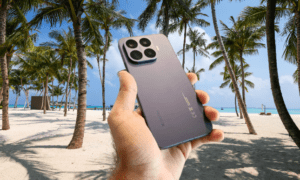

Motorola has spent years occupying an awkward middle ground. Not irrelevant, but not a serious competitor either. Its phones were fine, occasionally impressive, but rarely the ones people pointed to when asked what to buy.
The Motorola Signature changes that framing. This isn’t a phone you praise with the qualifier “for a Motorola.” It’s just a good phone.
That’s worth acknowledging, and it comes with some frustration too, because the question it raises is obvious: why did it take this long? But this isn’t about a dramatic shift in direction.
It’s a correction, and for Motorola, that correction matters more than any flashy announcement. It sets a new baseline for where the brand goes from here.
Motorola Signature Built For Quality That Reflects Engineering Discipline
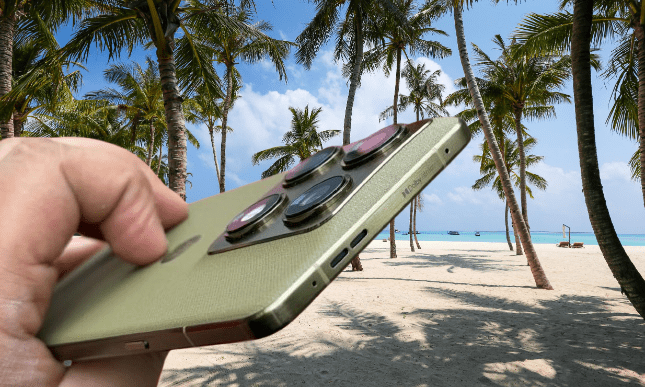
The first thing you notice about the Motorola Signature is how measured the design feels. At 7.0mm thick and 186 grams, it’s a big phone that doesn’t feel like one in your hand. Gorilla Glass Victus 2 on the front and an aluminum frame give it a solid, rigid feel without adding unnecessary weight.
You may also like: Moto Buds 2 Plus Leak Shows Redesigned Case and Bose Partnership
The durability story goes beyond the usual spec listing. Motorola built it with both IP68 and IP69 certification, which means it handles more than just submersion.
IP69 specifically covers high-pressure water jets, and achieving that rating requires tighter sealing across every port, speaker grille, and seam on the device. MIL-STD-810H compliance adds another layer, meaning the phone is tested against stress conditions that go well beyond everyday use.
Motorola treats durability as something built into the structure of the phone, not just a number added to a spec sheet.
The display follows the same logic. The 6.8-inch LTPO AMOLED panel runs at 165Hz and peaks at 6200 nits of brightness, which sounds like a lot, and it is. But the LTPO backplane is what makes those numbers sustainable.
It adjusts the refresh rate based on what’s happening on screen, which keeps power consumption in check even when the display is running at high brightness. Without that, a panel this bright would drain the battery quickly.
The Snapdragon 8 Gen 5 sits underneath, built on a 3nm process. Smaller transistors run cooler and more efficiently, which matters in a phone this thin. A slim chassis has less room to manage heat, so the chip’s thermal efficiency isn’t just a selling point; it’s a practical requirement.
Motorola picked components that work well together within the available space, rather than cramming in the most powerful parts and hoping the thermal management works out.
Motorola Signature: Camera System Built On Sensor Science
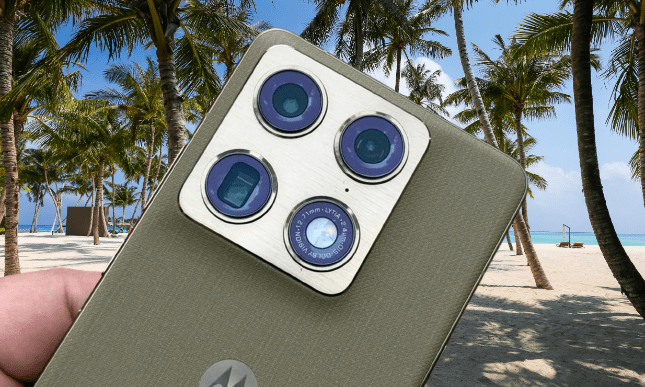
The camera is where Motorola has traditionally fallen short, so it’s the most telling part of this phone. The Signature uses a triple 50MP system, which matches what other manufacturers are doing, but the specs behind that number tell a more specific story.
You may also like: Moto Watch brings Polar’s pro-tier fitness perks
The main sensor measures 1/1.28 inches with an f/1.6 aperture and 1.22µm pixels. Sensor size directly affects how much light the camera takes in, and a larger sensor produces less noise and handles high-contrast scenes better.
Pair that with optical image stabilization and multi-directional phase-detection autofocus, and you have a camera built for consistency.
The goal here isn’t to produce one impressive shot under perfect conditions. It’s to deliver reliable results across different situations, which is a harder thing to get right and a more honest measure of camera quality.
The telephoto lens sits at a 71mm focal length with 3x optical zoom, backed by dual-pixel phase-detection autofocus and optical image stabilization.
Telephoto lenses tend to struggle in low light because the longer focal length amplifies camera shake and requires more light to produce a clean image. The stabilization and phase detection work together to keep shots sharp when the light isn’t cooperating.
The ultra-wide camera covers a 122-degree field of view and avoids being a throwaway addition. Most ultra-wide cameras on phones skip autofocus entirely, which limits what you can do with them.
This one includes autofocus, which means it can also function as a macro camera. That gives it a second practical use case instead of sitting there purely for wide establishing shots.
Video recording goes up to 8K at 30fps with Dolby Vision and 10-bit HDR10+ support. The resolution is part of it, but the more meaningful detail is the color depth. Shooting in 10-bit instead of 8-bit means the camera captures over a billion color shades rather than around 16 million.
That difference shows up when editing, giving you more flexibility when grading footage and fewer banding issues in scenes with strong contrast between light and dark areas.
The front camera gets the same level of attention. A 50MP sensor with dual-pixel autofocus on the selfie side signals that Motorola isn’t treating it as an afterthought. The same standards that apply to the rear cameras carry over to video calls and selfies, which is not something every manufacturer bothers with at this level.
Motorola Signature Battery Life and Connectivities
The rest of the spec sheet holds up without any gaps. A 5200mAh battery with 90W wired and 50W wireless charging keeps pace with what the hardware demands. Wi-Fi 7, Bluetooth 6.0, and Ultra Wideband cover the connectivity side, and Android 16 with seven years of guaranteed updates means the phone stays relevant well past the first year of ownership.
You may also like: OnePlus 15T Rumors: Dual 50MP Cameras and Massive Battery in Compact Flagship
The honest assessment is that none of this is new territory. Other manufacturers have been doing these things for years, and Motorola hasn’t stepped ahead of them.
What it has done is close the gap, and done it in a way that holds together as a complete package rather than a collection of individual specs.
That’s not a small thing for this brand. Motorola spent years hovering around the flagship tier without fully committing to it.
The Signature doesn’t try to be the most experimental phone on the market. It tries to be a dependable one, built on solid decisions made consistently across hardware, software, and durability. For Motorola, getting that right is more significant than any single feature could be.