
Oura just dropped something worth paying attention to if you track your health with their ring.
Starting May 6, the platform rolls out two new features globally, which are the Hormonal Birth Control support and Menopause Insights. Both can be found under the women’s health section of the app, and both fill gaps that have been missing from the product for a while.
The birth control feature accounts for how synthetic hormones affect your body’s data readings. Without it, your cycle tracking and temperature trends could look off, and the ring would have no way to explain why, but now it does.
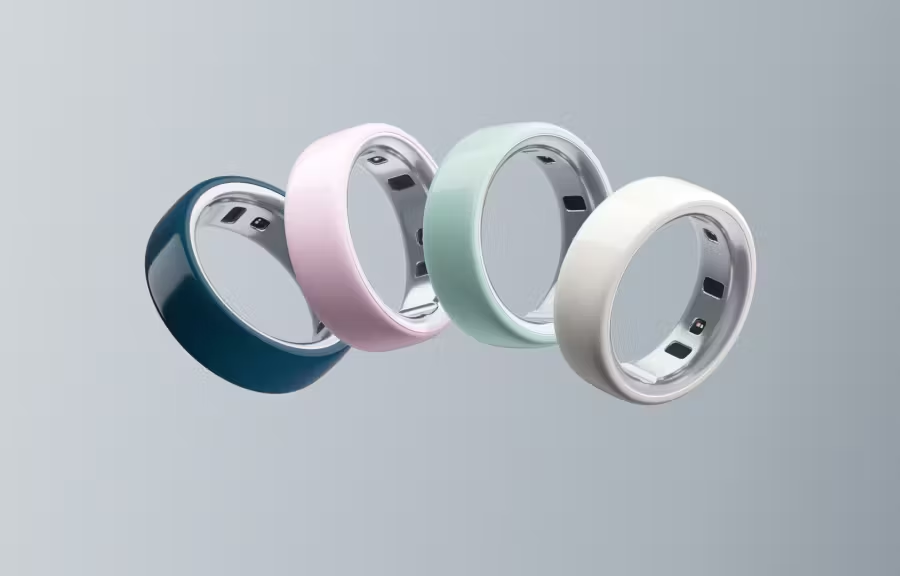
The menopause feature gives you specific insights tied to that phase of life, from sleep disruption patterns to temperature changes that show up differently than they do in earlier reproductive years.
You may also like: Sharp Karada Mate Watch Tracks Calories Without Food Logging
This is a meaningful expansion. Oura has spent years building a good foundation around sleep and recovery, but women’s health tracking has stayed fairly basic until now.
They are rolling both features out to all users on the same date and worldwide. This shows they are fully committed, as they are not a limited beta. If you wear an Oura ring and either of these applies to you, check your app after May 6.
Oura Ring Hormonal Birth Control and Menopause Tools for Personalized Health Tracking
Here is what the update actually includes. The first feature builds on top of Oura’s existing Cycle Insights. You can now log the specific type of contraception you use, whether that’s a pill, patch, IUD, or implant; the app adjusts how it reads your data accordingly.
You may also like: Oura Ring 5 Leak: New Design, Colors and Health Upgrades
Hormonal birth control changes your baseline body temperature, your sleep patterns, and your recovery scores. Oura now accounts for that instead of treating every user the same way.
That matters because most health tracking tools have ignored this variable entirely. Your data looks one way when you’re on hormonal contraception and another way when you’re not. Having a platform that recognizes the difference gives you more accurate readings and fewer confusing trends.
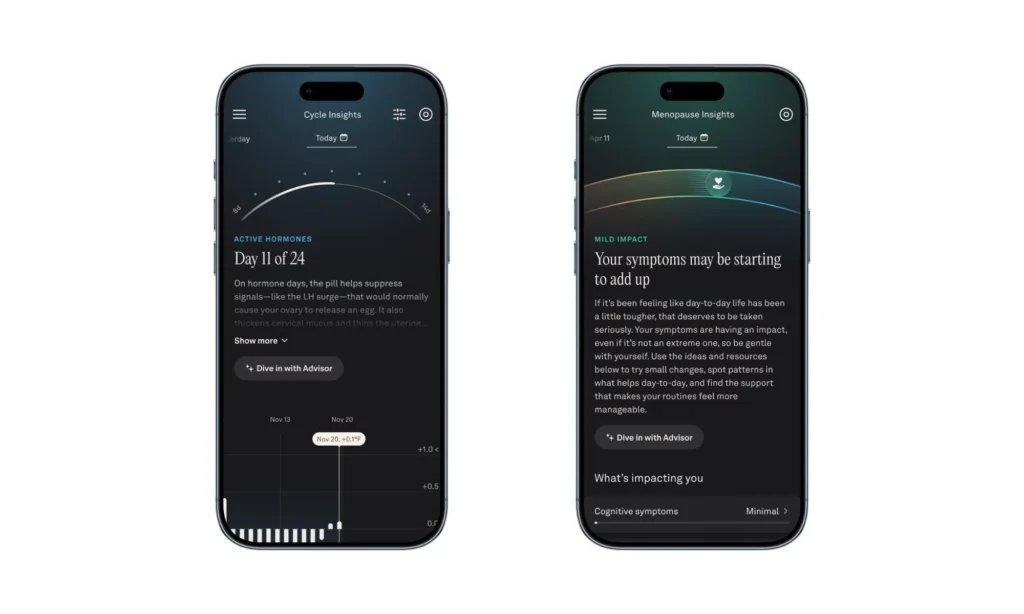
The second feature addresses perimenopause and menopause, two phases that most health apps have largely skipped over. Oura built a proprietary Menopause Impact Scale specifically for this, which measures how symptoms are affecting your day-to-day life, not just whether they exist.
You get a personalized dashboard that connects what your body is going through, like temperature changes and sleep disruption, to the biometric data the ring collects over time.
You may also like: Google Health 5.0: New Features, Issues and Pricing
The pattern-tracking piece is important here. Symptoms during perimenopause and menopause can be inconsistent and hard to connect to specific causes. Having a log that ties those symptoms to real physiological data gives you something concrete to look at and something useful to bring to a doctor if needed.
Why Oura Ring Hormonal Birth Control and Menopause Tools Matter
Hormonal health has been underfunded, understudied, and underbuilt in both medicine and consumer technology for a long time. That’s starting to change, and Oura is positioning itself as part of that change.
You may also like: Google Fitbit Band with AI Coach and No Screen To Beat Whoop
What makes this update different from a basic symptom checklist is the layer of continuous biometric data underneath it. The ring is already collecting your temperature, heart rate variability, and sleep quality around the clock.
These new features connect that stream of data to hormonal context, so you’re not just logging how you feel, you’re seeing how your body is actually responding over time.
That’s a different approach from most period or menopause apps, which tend to rely on manual input and give you averages in return. Oura is trying to give you something specific to your body, not a generalized summary based on population data.
This matters most during life stages where the changes are gradual and hard to pin down. Perimenopause, for example, can span years. Symptoms come and go, and without consistent data behind them, it’s difficult to identify patterns or explain them clearly to a doctor.
You may also like: ASUS VivoWatch 6 Plus: AI Health Tracking Smartwatch
A tool that tracks those changes automatically and links them to measurable signals gives you a clearer picture of what’s actually happening.
Health tech has spent years focused on performance optimization for a fairly narrow user base. Building features that reflect how hormonal changes shape everyday physiology for a much broader group is a step toward making that data useful for more people.
Advantages of Oura Ring Hormonal Birth Control and Menopause Tools for Users
For anyone who has tried to explain a health pattern to a doctor based on memory alone, this is where the practical value shows up.
Instead of walking into an appointment with a rough sense of how you’ve been feeling, you have months of actual data. Temperature trends, sleep quality, and recovery scores are all tied to where you are in your cycle or your menopause journey.
You may also like: Amazfit Watches Get Runna App Support and Zepp App Redesign
Oura allows you to share that data directly with your healthcare provider, which could change how consultations go. Doctors work better with specifics. A consistent pattern in your biometric data is more actionable than a description, and it puts you and your provider on the same page faster.
In the US, Oura is taking this a step further by partnering with Twentyeight Health, a healthcare provider focused on reproductive health. Through this partnership, users can access contraception services directly, including virtual consultations and prescriptions. That closes a loop that most health apps leave open.
You may also like: Leep Ring Review: Budget Smart Ring With No Subscription
Tracking your data is one thing; being able to act on it without switching between multiple platforms is another.
The combination of long-term pattern tracking and direct access to care is what separates this from a basic logging tool. You’re not just collecting information about your body. You have a clearer path to doing something with it.
What Comes Next
These two features didn’t come out of nowhere. Oura has been building toward this for a while.
The platform already includes Cycle Insights, Fertile Window tracking, and Pregnancy Insights. There’s also an AI model trained specifically to interpret women’s health data.
You may also like: Samsung Galaxy Watch 8 Classic Drops to $369 at Amazon
The birth control and menopause features slot into that existing structure, which means this isn’t a standalone addition. It’s part of a longer roadmap that covers multiple stages of a woman’s life.
That continuity is what makes it worth paying attention to. Most health apps are built around a single use case.
You download one app to track your period, another for sleep, another for general wellness. Oura is trying to be the platform that holds all of it in one place, with data that carries context across time and life stages.
You may also like: Circular Ring 3 Pro and Slim Combine Health Tracking, NFC
The company is also working with clinical partners and research organizations to bring this biometric data into actual healthcare settings. That’s a different ambition than building a consumer wellness product. It points toward a future where the data your ring collects has a role in clinical decisions, not just personal awareness.
What Oura is describing is a platform that stays relevant as your body changes, from your first cycles through perimenopause and beyond. Whether they fully deliver on that is something users will measure over time. But the foundation they’re building, with consistent data, hormonal context, and clinical partnerships, is more substantive than what most competitors have put together so far.