
CarPlay is turning into a surprisingly crowded space for AI assistants, and it’s happening fast. ChatGPT showed up on the platform in March. Perplexity followed a month later in April. Now Grok is next in line.
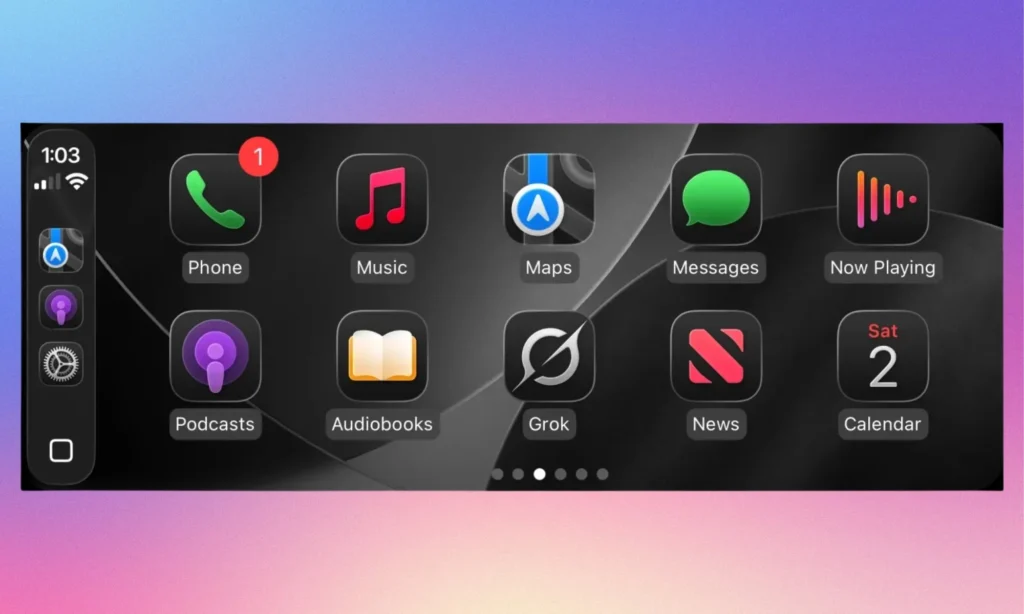
Developers who dug into the latest version of the Grok iPhone app found a CarPlay interface already sitting inside it.
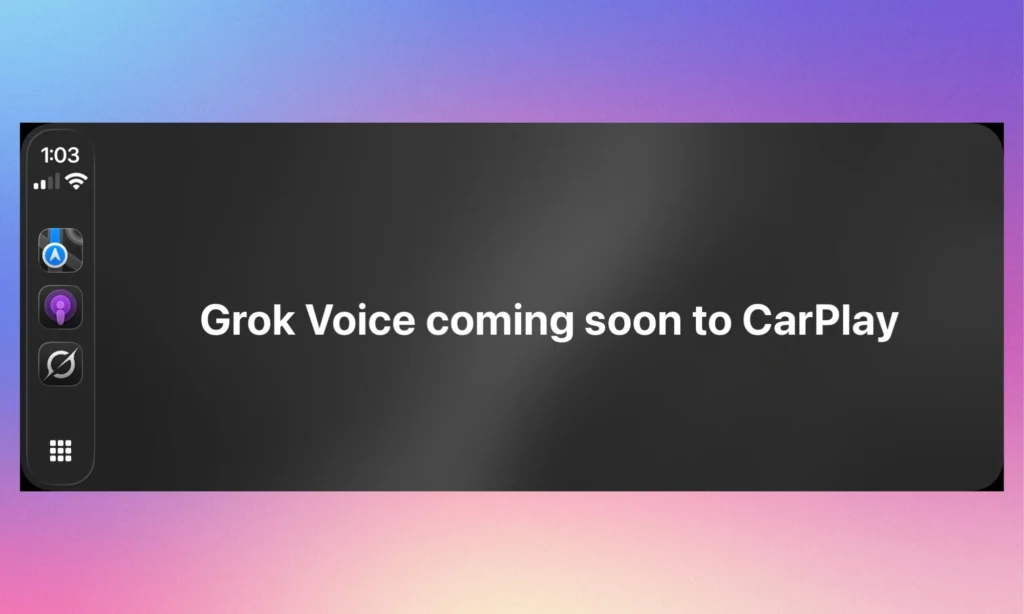
It doesn’t do anything yet, but the screen includes one clear line: “Grok Voice mode coming soon to CarPlay.” xAI, the company behind Grok, hasn’t put a date on it, but that kind of placeholder doesn’t usually sit in an app for long before the real thing ships.
This is worth noting because the pattern here is deliberate. Three major AI chatbots are all moving into CarPlay within roughly two months of each other. That’s not a coincidence.
It reflects a real push to get AI voice tools into the car, where hands-free interaction is the only practical option and where the current default, Siri, leaves plenty of room for competition.
You may also like: Apple CarPlay May Soon Support ChatGPT and Other AI Assistants
For drivers who already use Grok on their phones, the CarPlay version would let them continue those conversations without touching the screen. That’s the basic appeal, and it’s the same reason ChatGPT and Perplexity made the same move. The feature isn’t live yet, but based on what’s already inside the app, it’s close.
Reason behind Grok coming to CarPlay?
Up until now, Grok in the car meant one thing: you drove a Tesla. The chatbot has been a built-in feature on Tesla’s system for a while, but that kept it limited to a specific slice of drivers. CarPlay changes that entirely.
You may also like: Google I/O 2026: Gemini AI, Android 17 and What to Expect
If you have an iPhone and your car supports CarPlay, Grok is about to be accessible to you, regardless of what you drive. That’s a much larger audience than Tesla’s user base, and it’s the first time Grok has had a real shot at reaching everyday drivers on a broad scale.
There’s also something worth pointing out about how Grok is arriving compared to ChatGPT and Perplexity. Both of those launched on CarPlay as hybrid experiences, meaning you could type or talk depending on what you needed. Grok is coming in as Voice mode only.
You may also like: ChatGPT Is Now Available on Apple CarPlay
That’s actually the right call for a driving context. Voice mode is Grok’s more conversational, real-time format. It’s built for back-and-forth interaction without the need to look at a screen or type anything out.
When you’re behind the wheel, that’s exactly what you want. Typing a prompt while driving defeats the purpose, and a voice interface that can hold a real conversation is more useful than one that just reads responses aloud.
You may also like: Volvo Adds Apple Music to 2M+ Cars via Software Update
Going voice-first for CarPlay shows that xAI thought about how people actually use their cars, not just how to port the app over and call it done.
What is Siri’s and Gemini’s position in CarPlay?
Google is notably absent from this CarPlay race, and that’s intentional. Rather than building a standalone Gemini app for CarPlay, Google is taking a different path. Its AI is going into Siri instead.
Apple is expected to show off the rebuilt Siri at WWDC 2026, with the full release coming through iOS 27 later this year. Apple is also developing a standalone Siri app that could plug into CarPlay directly.
You may also like: ChatGPT Go Launches Worldwide at $8/Month, Ads Coming to Free Tier
So Google isn’t competing on the dashboard the same way xAI, OpenAI, and Perplexity are. It’s working through Apple’s own infrastructure, which gives it a different kind of reach. If Siri ships with Gemini powering it and lands on every iPhone by default, Google doesn’t need a CarPlay app. It’s already there.
What’s happening in CarPlay right now is worth stepping back to look at. Apple opened access through iOS 26.4, and within about six weeks, three major AI assistants either launched or announced plans to launch on the platform. That’s a fast-moving window.
You may also like: Google Chrome Installs 4GB AI Model Without Your Permission
The reason it matters is simple. Driving is one of the few situations where you genuinely cannot use a screen. Voice interaction isn’t a nice-to-have in the car; it’s the only practical option.
Whoever builds the AI assistant that actually works well in that context, that holds a conversation, understands follow-up questions, and doesn’t require you to repeat yourself, will have something the others don’t.