
The 17T Pro doesn’t bring a lot of new things to the table compared to last year’s version. If anything, the standard Xiaomi 17T got the bigger glow-up this cycle, finally catching up to the Pro in terms of cameras.
That said, what’s already here is hard to ignore. You get a well-built, premium-feeling phone, a smooth 144Hz display, Leica-tuned cameras that hold up in most shooting conditions, and a 7,000mAh battery that stands out as the main reason to buy this phone over anything else in its price range.
The real question comes down to value. At $749, you’re paying $100 more than the 15T Pro. Whether that’s a fair ask depends on how much the battery size and configurations matter to you.
Xiaomi 17T Pro Full Specs
Xiaomi 17T Pro Design
The 17T Pro looks almost identical to the 15T Pro. Xiaomi kept the same rounded edges and flat corners, which still feel good in the hand. The fibreglass back adds some grip and texture, which helps with day-to-day handling.
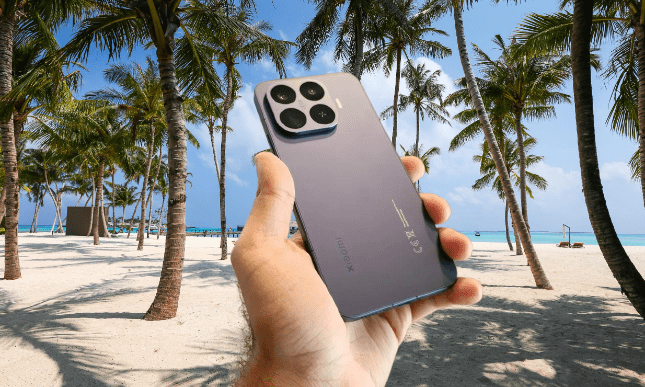
When you look closely, and you’ll spot a few small changes. The camera bump now has flat edges instead of the slightly curved ones from last year, and the bezels are a touch thinner. But these are minor changes. At a glance, most people won’t notice the difference.
Where it counts, the build quality holds up. The aluminium frame combined with the fibreglass back gives it a solid, premium feel without being slippery.
An IP68 rating means it handles water and dust without issues, so the pool, the beach, or a surprise rainstorm won’t cause any problems. Gorilla Glass 7i covers the front, and Xiaomi also throws in a pre-applied screen protector out of the box.
You may also like: Xiaomi 17 Ultra Review: Best Camera Phone of 2026
The 17T Pro is not a small phone. Last year’s model already felt a bit chunky at 8mm and 210g, and this one adds a little more to that at 8.3mm and 219g. The difference is small enough that you probably won’t notice it day to day, but you will notice you’re holding a substantial phone.
The 6.8-inch screen is part of why it works well for media and general use, but if that size feels too large for your hands, the standard 17T is worth a look. It comes with the same camera setup in a slightly smaller 6.6-inch body.
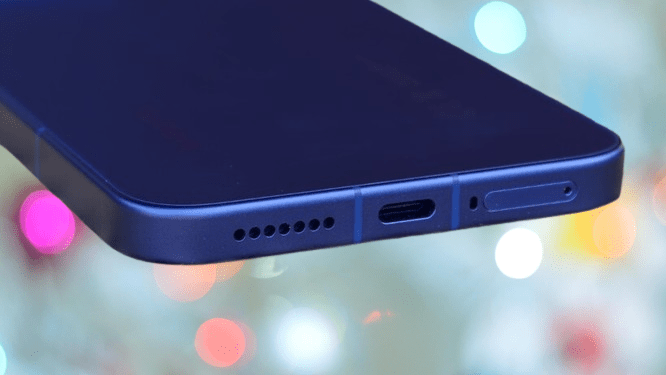
On colors, Xiaomi did a good job this year. You can pick from Deep Violet, Deep Blue, and Black. The Deep Blue review unit I tested looks great, though it sits very close to the iPhone 17 Pro’s Deep Blue in terms of shade. Whether that’s a problem depends on how much that kind of thing bothers you.
Xiaomi 17T Pro Screen
The display carries over from the 15T Pro with a few additions. That’s not a bad thing since that screen was already strong for the price. You get a 6.83-inch AMOLED panel with FHD+ resolution and a 144Hz refresh rate, which covers the basics well.
The bezels are noticeably thinner this time, down to 1.29mm all the way around. It makes the front of the phone look clean and gives you a more immersive viewing experience, even though the screen is completely flat.
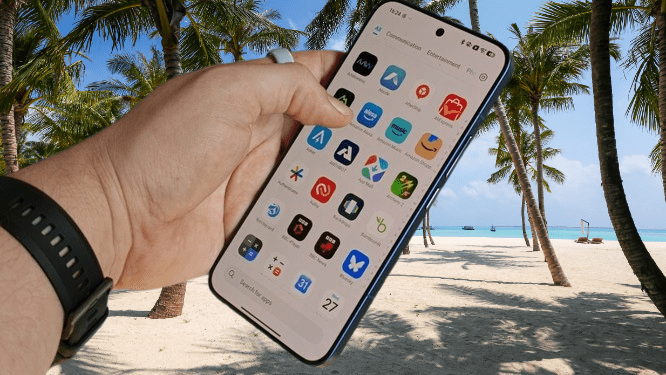
One missing feature worth mentioning: there’s no LTPO support, so the refresh rate can’t drop down to 1Hz when the screen is idle. That would have helped with battery efficiency, and it feels like a gap at this price point.
You can manually set certain apps to run at 144Hz, which works well for the most part, though the phone occasionally drops back to 60Hz in some apps for no clear reason, causing a brief, noticeable stutter.
You may also like: OnePlus 15T Launch Date: Specs, Battery and Price
Color settings lean toward natural and muted out of the box, which looks good for everyday use. If you prefer more vivid colors for games or your home screen, you can adjust the color palette in the settings without much hassle.
The display customization goes further than most phones at this price. Xiaomi updated its Eye Care suite with a reading mode that adjusts color temperature to cut blue light in the evening. A small graph shows you exactly how much blue light you’re reducing in real time, which is a nice touch.
You can also add a subtle grain texture to the screen that mimics the look of e-ink paper. It’s not dramatic, but it does take some of the harshness out of the screen during late-night use.
There’s also a full black-and-white mode for evenings if you want to go further. The black-and-white option isn’t something I’d use regularly, but the grain texture alone felt genuinely easier on the eyes during extended nighttime scrolling.
The brightness range is impressive on both ends. The screen peaks at 3500 nits for HDR content and can drop as low as 1 nit, roughly the output of a single candle, for use in a dark room. HDR video looks sharp and vivid.
The peak brightness only applies to a portion of the screen rather than the full panel, but in practice, the screen is still bright enough to use comfortably in direct sunlight, including during a recent stretch of unusually hot weather in the US.
You may also like: Huawei Pura X View: Specs, Design and What We Know
The one gripe I have is with the fingerprint sensor placement. It works fine, unlocking consistently on the first try, but Xiaomi positioned it much lower on the screen than most competing phones. Depending on how you naturally hold the device, reaching it can feel a bit awkward.
Xiaomi 17T Pro Cameras
Xiaomi marketed the camera upgrades as a highlight of the 17T series, but most of those improvements went to the standard 17T, which finally gets the same 50MP main sensor and 50MP 5x zoom the Pro has had. Between the two Pro models, the differences are small.
The 17T Pro moves from the Light Fusion 900 sensor to the 900’s successor, the 950. On paper, both are closely matched: a 1/1.31-inch sensor size, 4-in-1 pixel binning, and optical image stabilization.
The 15T Pro’s aperture is actually fractionally wider at f/1.62 versus f/1.67 on the 17T Pro, though that gap is too small to matter in real shooting conditions.
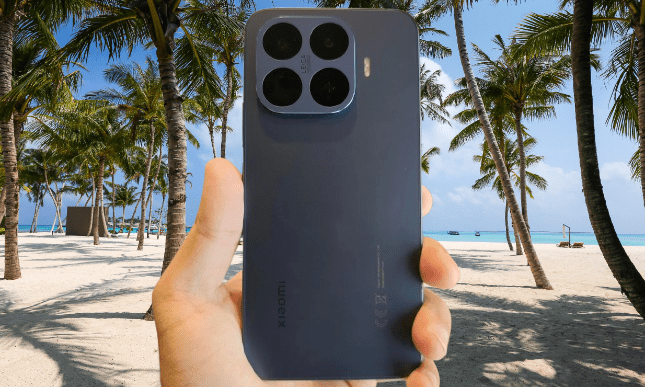
Most of what’s new sits on the software side. Xiaomi added Leica Live Moment, which is essentially live photo support, and 4K at 60fps for portrait video mode. Neither feature is new to smartphones broadly, just new to the T series, but they’re reasonable additions for the price.
You may also like: OnePlus 15T Rumors: Dual 50MP Cameras and Massive Battery in Compact Flagship
In practice, the camera experience feels close to the 15T Pro. That’s not a criticism. The Leica-tuned setup still performs well above what most phones at this price offer, including the Samsung Galaxy S26 and Google Pixel 10.
The main 50MP sensor produces photos with strong detail and wide dynamic range, meaning you keep texture in both bright and dark parts of a scene. The Leica processing adds a layer of refinement on top, and the large sensor size means low-light shots hold up better than you might expect at this price point.
Like Xiaomi’s higher-end flagships, you get access to both Leica Vibrant and Leica Authentic shooting modes. These aren’t subtle filters; they can noticeably change the look and feel of your photos depending on which one you lean into.
That said, a familiar issue carries over from previous models. In tricky indoor lighting at night, the camera sometimes pushes contrast too hard, producing shots that come out darker and moodier than the scene actually looked. It’s a tuning quirk that shows up often enough to mention. A quick edit fixes it, but it’s an extra step you shouldn’t need to take.
The 50MP 5x telephoto is a strong performer. It closes in on distant subjects without leaning on digital zoom, which keeps image quality intact.
In good light, it produces clean, sharp shots with colors that stay consistent with the main camera. It also holds up reasonably well in lower light conditions. Just don’t expect it to match a wide-angle sensor after dark; the f/3.0 aperture lets in less light, and that limit shows in very dim environments.
Digital zoom goes up to 120x, a small step up from the 100x on the 15T Pro. But like most phones, anything past roughly 10x starts to look soft and over-processed. Up to 10x, the results are usable and hold onto enough detail to look decent.
You may also like: Xiaomi 18 Pro Max Debuts With Dual 200MP Leica Cameras
The ultrawide is where Xiaomi left an easy improvement on the table. It carries over the same 12MP, 120-degree lens from the 15T Pro without any changes. Compared to the main and telephoto cameras, it feels like the weak link. There’s no autofocus, the resolution is lower, and the overall capability gap is noticeable.
In good daylight, it still does its job. You get wide, fun shots that work well for social media. But as soon as the light drops, the cracks show. Detail fades, textures go soft, and images come out darker and muddier than what the main or telephoto lenses would produce in the same conditions.
Xiaomi 17T Pro Performance
Xiaomi’s T series has consistently kept up with its flagship lineup on performance, and the 17T Pro continues that pattern, though the jump from the 15T Pro isn’t dramatic.
The 15T Pro ran on the Dimensity 9400+, a mid-cycle chip. The 17T Pro moves to the Dimensity 9500, the current flagship processor, paired with 12GB of RAM and either 256GB or 512GB of storage. Benchmarks show gains in both single-core and multi-core performance, but the difference isn’t something you’ll feel during normal use.
You may also like: Nothing Phone 4a Pro Review: Worth Buying in 2026?
Day to day, the phone is fast. Apps open immediately, games run without hiccups, and the camera processes shots quickly. You can push it further by adjusting the transition speed in settings; at its fastest setting, the whole experience feels noticeably snappier.
Gaming causes the phone to warm up, which is expected at this performance level. Xiaomi’s 3D IceLoop cooling system keeps things in check well enough that performance didn’t drop noticeably during extended sessions of The Division: Resurgence. Worth noting: Xiaomi has blocked the 3DMark app used for GPU testing, so performance comparisons under load are harder to quantify and based mostly on hands-on use rather than hard numbers.
Overall, the performance sits comfortably alongside other flagship-level phones at this price, including the Galaxy S26. You’re getting top-tier chip performance without paying top-tier flagship prices.
Connectivity covers Wi-Fi 7, Bluetooth 6, and dual-SIM support, all carried over from the 15T Pro with no changes.
The one addition is Xiaomi’s Offline Communication feature, which lets you make short-range voice calls between compatible Xiaomi devices without a network connection.
It runs over Bluetooth rather than satellite, which limits both its range and its practical usefulness. It’s hard to think of many everyday situations where you’d actually need it.
Xiaomi 17T Pro Software
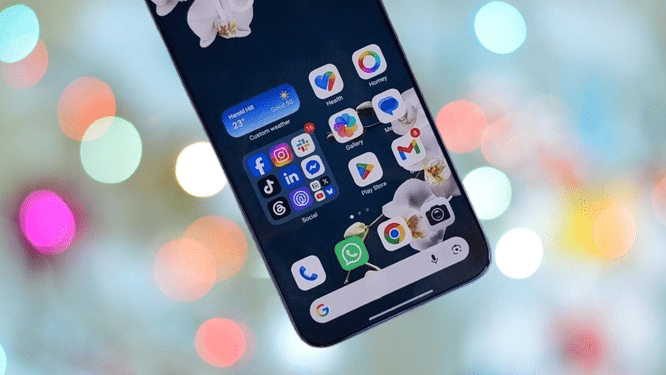
HyperOS 3 isn’t stock Android 16, but it brings a lot to the table on its own terms. Customization is deep. You can change app icons, rework your lock screen, and adjust plenty of smaller visual details. There’s also a Theme Store built in, though most of the options lean toward the loud and busy side if that’s not your style.
General use is smooth. The settings menu is well organized, quick settings look familiar, and the whole system works well if you use other Xiaomi devices alongside it.
You may also like: Xiaomi Redmi Note 15 Pro Plus 5G Review: Strong Battery and Sharp Display
AI features are present across the OS. Some are genuinely useful, like the speech recognition tool. Others, like the AI writing tools, are easy to ignore. Gemini and Circle to Search are the standout additions and see the most real-world use. Nothing here is new to the Android space, but the core set is solid.
That said, a few things get in the way of an otherwise clean experience. Notifications in the shade take up too much visual space while showing very little actual text, which makes scanning them more frustrating than it needs to be.
The bigger annoyance is the stream of Xiaomi app notifications pushing low-quality games for you to install. That kind of thing is acceptable on a budget phone. On a $749 device, it feels out of place. You can turn the notifications off, but having to do that at all is the problem.
Bloatware is another issue worth flagging. The phone ships with a fair amount of pre-installed apps, both from Xiaomi and third parties. There’s a Game Centre app that functions as a storefront for low-quality games, plus a folder of random apps sitting on the home screen from the moment you first set it up.
Most of it can be removed, but on a phone at this price, you shouldn’t need to spend time cleaning house before you can actually use it.
Background app management is also more aggressive than it should be. Notifications from certain apps either arrived late or didn’t come through at all.
On a few occasions, a batch of notifications from the past hour arrived all at once. You can fix this by adjusting battery settings for individual apps to keep them running in the background, but the process has to be done manually, one app at a time.
To be fair, the overall experience isn’t bad once you get past the setup friction. Animations are smooth, the interface looks polished, and there are some genuinely useful touches like extra-large folders on the home screen. It just needs a bit of time and patience to configure properly before it feels like the premium product it’s priced as.
Xiaomi 17T Pro Battery Life
Battery life is where the 17T Pro makes its clearest statement over the 15T Pro. The capacity jumps from 5,500mAh to 7,000mAh, making it the largest battery Xiaomi has put in a smartphone outside of China.
In practice, that size translates to genuinely impressive endurance. A typical day of TikTok scrolling, WhatsApp, and some gaming regularly left me with 40 to 50 percent remaining by the end of the day. For lighter users, this could comfortably stretch to two days or more between charges.
You may also like: Honor Magic V6 Brings IP69 Protection and a 2,800 MPa Steel Hinge to Take On Samsung’s Fold 7
Some of that endurance comes from the aggressive background app management mentioned earlier, but even accounting for that, the battery life is hard to argue with if longevity is what you’re after.
Charging also got a bump. The 17T Pro supports 100W charging, up from 80W on the 15T Pro, and it also works with 50W and 100W PPS charging standards alongside Xiaomi’s own HyperCharge technology. That broader compatibility matters because the phone doesn’t come with a charger in most regions. Being able to use a wider range of fast chargers you might already own makes that omission much easier to live with.
I tested charging with an Anker Prime 240W, and it topped out at around 50W rather than the full 100W, so not every fast charger will hit the maximum speed.
Even at that limited rate, it reached 53% in 30 minutes and a full charge in 68 minutes. For most people, 50% is roughly a full day of use, so a quick top-up in the morning covers a lot of ground.
Wireless charging is 50W, but it requires a Xiaomi HyperCharge wireless charger specifically. Standard Qi2 chargers won’t work here, which is a limitation worth knowing before you buy.
Xiaomi 17T Pro Verdict
The 17T Pro doesn’t do anything dramatically different from its predecessor, but it doesn’t need to. The core package is still well above average for the price.
You get a good build, a large 144Hz display, Leica-tuned cameras that perform well against the competition, and a 7,000mAh battery that few phones at this price can match. It’s fast, it’s feature-complete, and it holds up well in daily use. Just be prepared to spend some time sorting out the software before it feels fully dialed in.
Pros |
Cons |
| Better 7,000mAh battery | Minimal upgrades over predecessor |
| Great camera performance | Bloated, spammy software |
| Big, sharp 144Hz AMOLED screen | Expensive |
Final Thoughts
Within the 17T series, the standard 17T actually makes the stronger case for itself this year by finally catching up to the Pro on cameras. That single upgrade shifts attention away from the Pro in a way Xiaomi probably didn’t intend.
The 17T Pro, by comparison, moves cautiously. The camera hardware is mostly the same, performance is better but not by much, and the display, while still excellent, doesn’t introduce anything meaningfully new.
What hasn’t changed is the overall package, and that still holds up well at $749. You get a well-built phone with a premium feel, a large 144Hz display, a capable set of Leica-tuned cameras, and a 7,000mAh battery that outclasses most phones at this price on endurance alone.
If the familiar design and the software setup process don’t put you off, the 17T Pro delivers fast, reliable performance with a feature set that most buyers will find more than enough for daily use.