
The Nothing Phone 4(b) marks a new direction for the London brand, its first phone of this particular kind.
Nothing shook up the budget phone space with an unexpected call: no sequel to the well-received CMF Phone 2 Pro this year. Instead, the company decided to launch a spiritual successor under its own Nothing name.
That successor is the Phone 4(b), essentially a stripped-down, cheaper version of the Nothing Phone 4(a). Inside, you get a Qualcomm Snapdragon 6 Gen 4 chip, 8GB of RAM, 128GB of storage, a 6.77-inch Super AMOLED screen, and a 5200mAh battery.
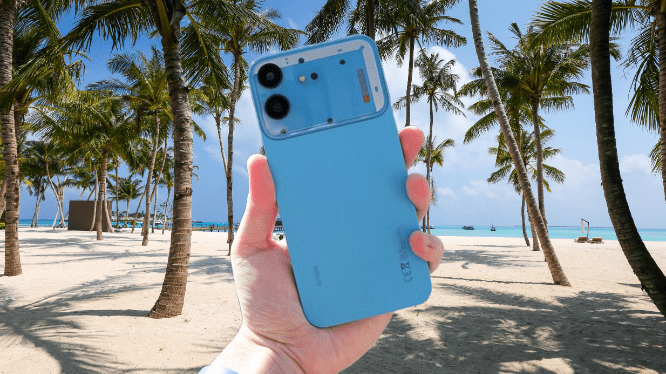
At £299 or $399, it costs more than the old CMF Phone 2 Pro, but it also brings meaningful upgrades to the table. That pricing puts it up against phones like the Motorola Moto G86 5G and the Poco X8 Pro.
You may also like: Nothing Phone 4a and 4a Pro Specs and Pricing Leak Ahead of March 5 Launch
I’ve spent the last week testing the Phone 4(b) to see whether it earns a spot among the best cheap phones we’ve tried.
Nothing Phone 4(b) Full Specs
Nothing’s phones always have a distinct look, and the Phone 4(b) sticks to that same formula, funkier and more interesting than most phones in its category. You’ll either love the look or you won’t; there’s not much middle ground. For what it’s worth, I’m a fan.
You may also like: Nothing Phone 4a Pro Review: Worth Buying in 2026?
It’s built from polycarbonate, basically plastic, which makes sense for a phone at this price point. That’s not a knock against Nothing, though. It feels comfortable in hand and holds up well compared to other budget phones I’ve tested. No creaking, no flex at the corners; it feels solid.
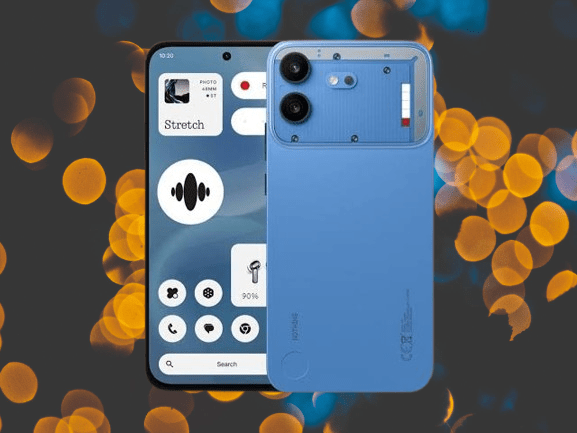
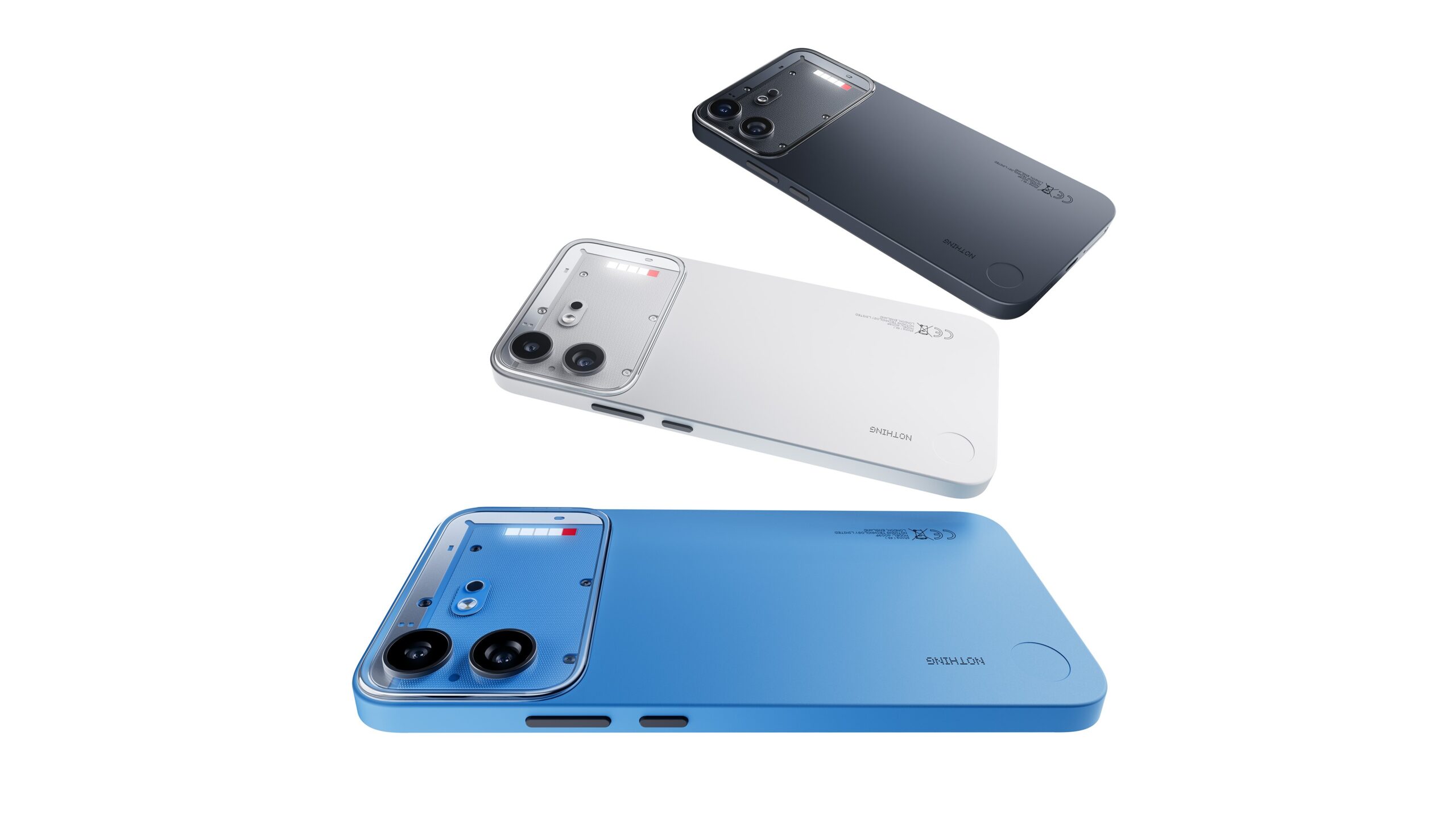
Color choices come down to black, white, or blue. My review unit is the blue version, and it adds a nice bit of personality compared to the other two; it definitely helps it stand out on a table.
You may also like: Google Pixel 10a Launches with Tensor G4, Brighter Display, and Satellite SOS for $499
Around back, you’ll find a rectangular camera bump that doesn’t stick out too much, so the phone still sits flat and stable when placed down. Nothing’s signature retro-futuristic design language carries through here too, along with a smaller Glyph Bar borrowed from the Phone 4(a).
The Glyph Bar has been Nothing’s signature feature since day one, and it works the same way here as it does on the brand’s other phones. It lights up to flag notifications from specific contacts, shows charging progress at a glance, counts down camera shutter timers, and even pulses red during severe weather alerts.
Port selection stays standard for a modern phone: USB-C for charging, plus a SIM slot on the left side. Don’t expect extras like a headphone jack or microSD expansion; neither made the cut here.
The Phone 4(b) comes with IP64 water and dust resistance, solid enough protection for everyday use. That beats the IP54 rating on Nothing’s own CMF Phone 2 Pro, though it still falls short of the IP68/IP69 rating you’d get with the Motorola Moto G86 5G.
No charger ships in the box here, but you do get a USB-C to USB-C cable along with a clear silicone case to keep the phone protected from day one.
Nothing Phone 4(b) Screen
Nothing fitted the Phone 4(b) with a large 6.77-inch Super AMOLED screen running at 1080×2344 resolution, making it one of the bigger displays you’ll find on a phone at this price.
You may also like: Samsung Galaxy A57 Design Leaked: Thinner Profile, Better Specs Than Galaxy A56
That resolution lands closer to HD than true Full HD, so detail is decent for the price point, nothing to complain about. Being AMOLED, though, the screen still delivers deep blacks and strong contrast, at least from what I could see in daily use.
If there’s one weak spot on the Phone 4(b)’s display, it’s brightness. Typical peak brightness sits at 1200 nits, enough to give images some pop and hold up fine in bright conditions. HDR content peaks at 2000 nits, though that’s noticeably less vivid than what you’ll find on some rival budget phones.
Refresh rate goes up to 120Hz, a real upgrade from the 60Hz screens we dealt with for years. That said, this panel skips the more advanced LTPO tech found on pricier phones, so the variable refresh rate switches in bigger, less refined steps instead of smoothly scaling. In practice, the screen mostly just stays locked at 120Hz anyway, which honestly isn’t a problem in daily use.
Brightness is where the Phone 4(b)’s screen falls a little behind the competition. A typical peak of 1200 nits still gives images decent pop and holds up fine in brighter conditions, but the 2000-nit peak for HDR content doesn’t quite match what you’d get from other budget phones in this range.
You do get up to 120Hz refresh rate, a real upgrade over the 60Hz screens we dealt with for years. That said, this panel skips the more advanced LTPO tech found in pricier phones, so the variable refresh rate switches in bigger, less refined steps. In everyday use, though, I found the Phone 4(b) mostly just stays locked at 120Hz, which honestly isn’t a problem at all.
Nothing Phone 4(b) Cameras
Camera-wise, the Phone 4(b) drops the telephoto lens found on the Phone 4(a) and goes with a dual-camera setup instead. The main sensor is 50MP, sized at 1/2.76-inch, with optical stabilization and an f/1.8 aperture. Alongside it sits an 8MP ultrawide sensor at 1/4-inch with an f/2.2 aperture.
You may also like: OnePlus May Kill OxygenOS for ColorOS: What You Need to Know
By default, the main camera outputs 12MP photos, but you can switch into the full 50MP mode whenever you want more detail, better dynamic range, and naturally bigger file sizes.
Photos straight out of the main camera look genuinely pleasant, with natural colors and good detail throughout. Shooting in 12MP mode gives you richer, punchier colors, while switching to the full 50MP resolution pulls out more fine detail if that’s what you’re after.
The 8MP ultrawide camera doesn’t hold up nearly as well, though. Detail takes a noticeable hit, and I’d call the results serviceable at best. Zoom in on finer details, and things start looking fuzzy pretty quickly.
No telephoto lens is the biggest gap in the Phone 4(b)’s camera setup. Push past a simple 2x or 3x zoom, and detail drops off fast. I tested this shooting Spinnaker Tower, and anything beyond the recommended 2x zoom looked rough, just a digital crop that can’t compete with real optical zoom. A dedicated telephoto lens would’ve fixed this completely and given the camera a lot more range to work with.
The front camera comes in at 16MP and does an okay job for selfies; colors look rich, and the overall tone comes across as vibrant and pleasant. Video is where things stay basic, capped at either 1080p at 60fps or 4K at 30fps. Nothing special, but it gets the job done.
Nothing Phone 4(b) Performance
Under the hood, the Phone 4(b) sits a step below its pricier sibling, running a Qualcomm Snapdragon 6 Gen 4 chip paired with 8GB of RAM and a single 128GB storage option; no other configurations are available.
Even so, performance holds up well against the Xiaomi Redmi Note 15 4G, beating it clearly on both CPU and GPU in our Geekbench 6 testing. Compared against Nothing’s own lineup, though, the cheaper CMF Phone 2 Pro performs at a similar level, and last year’s Phone 3(a) actually outpaces the 4(b) here.
You may also like: Oppo Could Join Samsung and Apple in Wide Foldable Race
Day-to-day performance actually beats what the benchmark scores suggest. Navigating the OS, streaming music or video, and scrolling through social media, everything felt quick and responsive in my regular routine.
Gaming tells a similar story for casual titles. Games like COD Mobile or PUBG run just fine, as long as you’re willing to dial back some graphics settings for smoother gameplay. Just don’t expect this phone to handle heavier, more demanding titles. The 3DMark Wildlife Extreme test posted single-digit frame rates, one of the lowest scores I’ve seen on a phone.
Push this Nothing phone with heavier, sustained tasks, and it does warm up a bit. It never got uncomfortable enough that I needed to put it down, though. The vapor chamber cooling inside the Phone 4(b) seems to handle heat management reasonably well.
Nothing Phone 4(b) Software and AI
Out of the box, the Phone 4(b) runs Nothing OS 4.1, the company’s own Android skin built on Android 16. During setup, you’re given a choice: go with a standard Android look, or switch to Nothing’s signature monochrome, retro-future style.
I went with Nothing’s own skin, and it definitely stands out next to other budget Android phones. App icons show up as white symbols on black circles, which looks distinctive but takes some getting used to; telling apps apart at a glance isn’t always easy at first. If it’s not for you, switching back to the standard colorful Android look only takes a few taps in settings.
With all that in mind, I didn’t run into any bloatware or junk apps here; the software feels genuinely clean for a phone at this price. Nothing OS also brings a few handy extras, like Private Space, a hidden vault for storing sensitive photos and documents, plus freeform window resizing that lets you shrink or expand any app to whatever size you want on screen.
You may also like: OnePlus 15T Rumors: Dual 50MP Cameras and Massive Battery in Compact Flagship
There’s also a dedicated Essential key on the left side of the phone. Press it, and you open Essential Space, where AI steps in to organize your screenshots, recordings, and notes. It automatically pulls out summaries, reminders, and to-do lists from whatever you’ve saved.
AI features seem to stop there on this Nothing phone, though. I didn’t find any extra AI tools built in, no AI photo editing or similar extras that plenty of other phones at every price point now include.
On the software support side, Nothing commits to six years of security updates and three years of Android version updates for the Phone 4(b). That’s a solid promise if you plan on keeping this phone for the long haul.
Nothing Phone 4(b) Battery Life
Inside the Phone 4(b) sits a 5200mAh battery, which happens to be the biggest battery Nothing has ever put in a phone, ironically enough, given this is also its most affordable model. For comparison, the Phone 4(a) carries a 5080mAh cell.
Nothing claims that translates to 22 hours of video streaming. In my own testing, running the phone through a demanding day of multitasking and regular use at moderate brightness, I landed around eight hours of screen-on time.
My typical day involves scrolling social media, streaming music through Tidal or Plexamp, snapping the odd photo out and about, and occasionally knocking out a bit of work in Google Docs when I need to.
For a more controlled test, I ran the PCMark Work V3.0 battery benchmark at 50% brightness. The result came out to nearly 17 and a half hours of use, a genuinely excellent number.
You may also like: The Best Google Pixel 10 Deals: Up to 26% Off on Amazon Now
Charging tops out at 33W wired, and there’s no wireless charging at all, a real step behind most competing phones in this range. I tested it with my own 66W 6A charger, and the results were slower than expected. Getting to 50% took 57 minutes, while a full charge needed 100 minutes.
Nothing Phone 4(b) Verdict
The Nothing Phone 4(b) holds its own as a budget Android phone. You get clean software, a look that stands apart from every other phone in this price range, and battery life that genuinely impresses. Performance is fine for what you’re paying, though it does trail some rivals in the same price bracket. The dual camera setup won’t blow you away, but it gets the job done for the price.
Pros |
Cons |
| Classic Nothing design | The screen is dimmer than some rivals |
| Solid internal grunt | A fair bit dearer than the last CMF phone |
| Excellent battery life | Performance isn’t as strong as rival devices |
Final Thoughts
The Nothing Phone 4(b) holds its own as a budget Android phone, with clean software, a standout design, and battery life that genuinely impresses. Performance is fine for the price point, though it trails some rivals, and the dual camera setup gets the job done without doing anything remarkable.
Compared to Nothing’s own CMF Phone 2 Pro, this phone brings real upgrades: better battery life, stronger dust and water resistance, and that same distinctive design language. Still, it’s a bit puzzling that the Phone 4(b)’s screen is actually dimmer, and performance gains feel modest at best. Worth remembering, too, the CMF option costs almost $100 less.
Then there’s the Motorola Moto G86 5G, which offers a slightly sharper screen, comparable performance through its MediaTek Dimensity 7300 chip, and a similar camera setup, all for $27 less than the Phone 4(b). The catch is that Motorola’s software comes loaded with far more bloatware than what Nothing offers, so it’s really a trade-off either way.
All things considered, the Phone 4(b) makes sense if you want an affordable phone with genuine personality and a design that stands apart from the crowd. It looks like this direction is where Nothing plans to keep heading. Check out our list of the best cheap phones we’ve tested for more options.