
The Oppo Find X10 Pro is a phenomenal camera phone. It has three 200MP rear cameras, which no other phone on the market can claim. It also has a fast processor, plenty of RAM and storage, and a huge battery.
Oppo returned to global markets in 2024, and since then it has split its Find X flagships into three tiers. Last year’s lineup shows how that works. The standard Find X9 offered a solid flagship experience.
The Find X9 Pro raised the camera specs and performance for enthusiasts. The Find X9 Ultra added a near-1-inch sensor, a 10x telephoto camera, and a larger screen for power users.
This year’s Find X10 Pro Max sits between the Pro and Ultra models. It has a 6.78-inch display, a powerful MediaTek 9600 Pro chipset, and a stylish new aluminium and glass design.
The camera system has no huge sensor, but it offers nearly every other feature you could want. ColorOS is still a version of Android, although the phone ships with an inexcusable amount of bloatware.
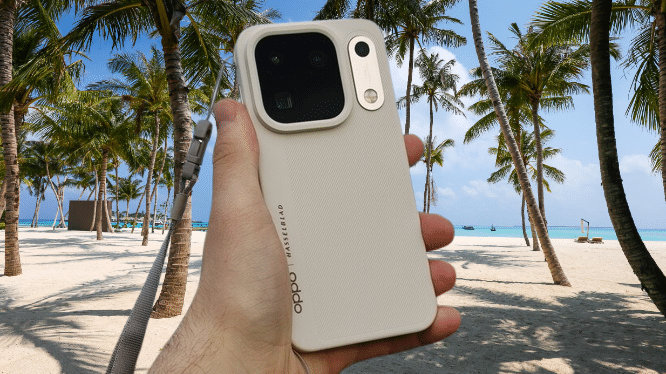
With the optional Hasselblad teleconverter kit attached, the Find X10 Pro Max felt more like a camera than a phone.
On a trip to Stockholm, I walked through the Old Town with the phone hanging from my neck, ready to shoot with the main, ultra-wide, and telephoto zoom lenses at any moment. That makes Oppo’s decision to remove the Find X9’s Quick Button, its answer to Apple’s Camera Control, even more confusing.
You may also like: Oppo Reno 16 Review: Great Cameras, Middling Battery
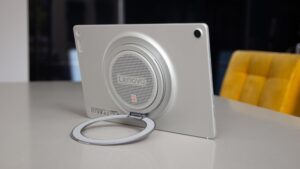
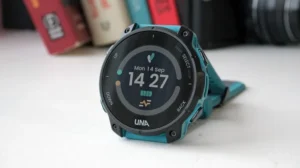
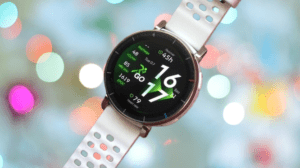
The price makes the missing button hurt more. The phone costs a lot, which makes it one of the most expensive phones on the market. You do get a free choice of the Hasselblad Teleconverter Kit, the Oppo Watch X3, or the Oppo Pad 5.
Oppo Find X10 Pro Max Full Specs
Oppo Find X10 Pro Max Design
I have used Oppo phones as my daily drivers since the Find X8 Pro arrived in 2024. I loved that phone for its quirky design and materials. Last year’s Find X9 Pro toned things down, taking cues from sister brand OnePlus. The Find X10 Pro Max lands in a happy middle. It looks understated but still interesting, and it feels simple and thoughtful at the same time.
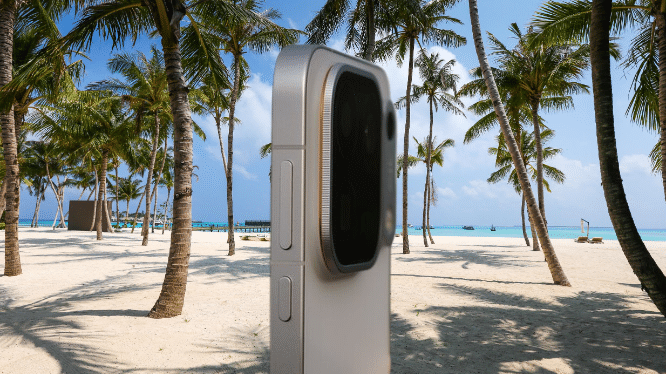
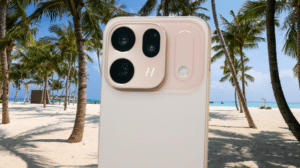
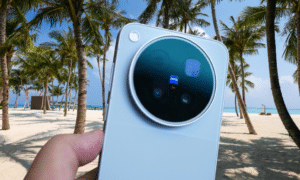
You can choose from two designs, Luna White and Titanium Grey. The phone contains no titanium, so that name is misleading. These options go beyond a normal color choice, because they change the shape and material of the phone.
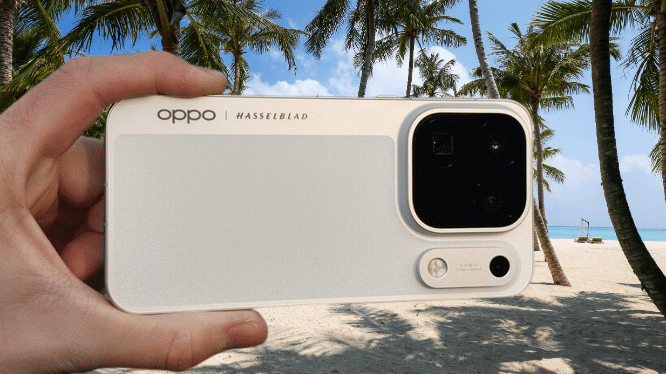
The Luna White model I tested has a textured glass back, separate camera and flash modules, and an orange accent on the camera housing. The Titanium Grey model has a matte glass back and an iPhone-like camera island.
You may also like: Google Pixel 11 Pro XL Review: Great AI, Weak Gaming Chops
I really like the textured glass on the Luna White back. It adds visual interest that last year’s flat glass lacked, and it gives you a slightly better grip while you take photos. Outdoors, you will still want the included color-matched silicone case.
A large black glass camera module and combined Oppo and Hasselblad branding along the left edge mark this as a phone built for photography. That camera system does make the phone feel a bit top-heavy. The screen is 6.78 inches, so it is a big phone, yet it never felt unwieldy or too wide.
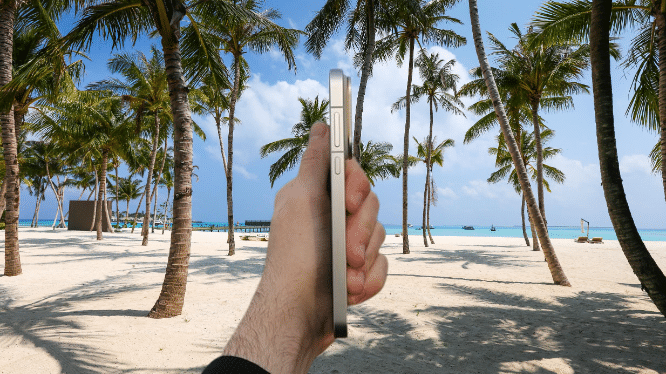
The rest of the build is solid. The frame is all aluminium and holds a USB-C port, a power button, a volume rocker, and the Snap Key, which is Oppo’s answer to the Action Button. Oppo had the phone certified separately at IP66, IP68, and IP69, so it resists water and dust about as well as any phone can.
You may also like: Vivo X500 Pro Max Hands-On: 2nm Chip, 7,800mAh, LOFIC Camera
The Find X10 Pro Max is 8.4mm thick at its thinnest point. It weighs 233g in Luna White and 235g in Titanium Grey. That makes it thinner and lighter than the iPhone 18 Pro Max and thinner than the Google Pixel 10 Pro XL. The Samsung Galaxy S26 Ultra beats all three.
Oppo Find X10 Pro Max Screen
The Oppo Find X10 Pro Max has a 6.78-inch display with a sharp 2772 x 1272 resolution at 450 pixels per inch. The tall 20:9 aspect ratio helps this large phone stay manageable in your hand. The bezels are only 1.15mm on every edge and barely register in normal use, which makes the screen look even bigger.
The panel is a bright LTPO AMOLED. Oppo says it reaches up to 3,600 nits at peak for HDR content and outdoor use. Typical brightness averages 800 nits and peaks at 2,000 nits. It can also drop to 1 nit for use in low light.
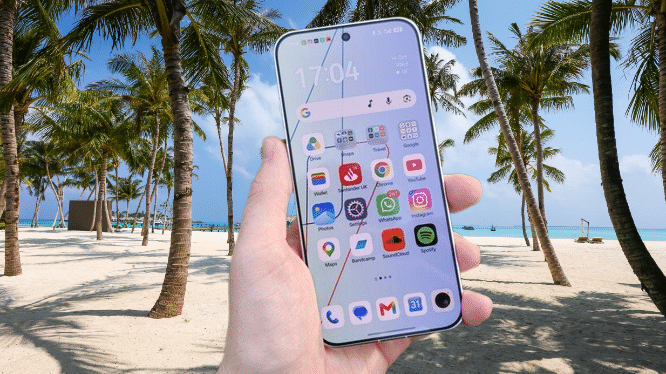
Side by side, the previous-generation Find X9 Pro looked brighter to me in almost every situation. The Find X10 Pro Max gives you deeper, warmer colors in return.
You may also like: Google Pixel 11 Pro Review: Great Software, Weak Chip
The refresh rate is adaptive from 1Hz to 120Hz, and it climbs to 144Hz in certain mobile games. Oppo names PUBG Mobile as an example. When in use, the screen feels fluid and immersive, which makes this phone a great pick for mobile gaming. The 20:9 ratio is also just squat enough for 16:9 videos to look natural.
I listen to a lot of music and podcasts through my phone’s speaker. The Find X10 Pro Max has the best speakers of any Android phone I have used. They come close to the iPhone in volume and frequency response. If you prefer headphones, the phone supports Bluetooth 6.2.
Oppo Find X10 Pro Max Cameras
The Oppo Find X10 Pro Max is the first phone with three 200MP rear cameras, and it shows. It is an excellent camera phone. Of all the phones I have tested, it gives the best match in quality between its lenses. Pros can also shoot in large-format JPG and RAW for more editing options.
The main sensor is a 1/1.3in Samsung ISOCELL HPC with an f/1.5 aperture and a 24mm lens. Shots come out bright, colorful, and detailed. They hold up well when you crop, and the post-processing does not apply too much AI tampering.
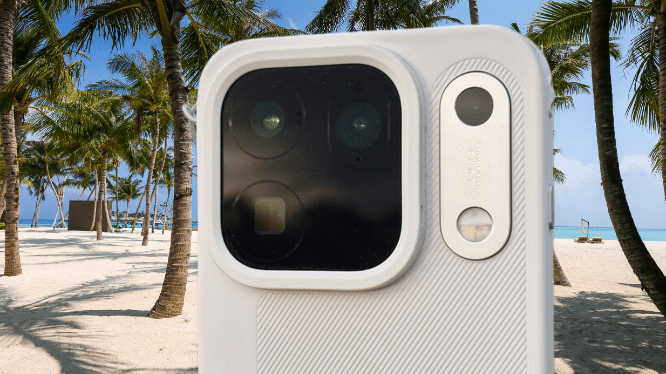
The wide aperture and large sensor also make it a top performer in low light. The stock camera app adds a lot of character, with plenty of shooting modes, color profiles, and film emulations.
The other two cameras use 1/1.56in Samsung ISOCELL HP5 sensors. The ultra-wide has an f/2.2 aperture and a 13mm lens. It is the first mobile ultra-wide camera I have actually enjoyed using. I do not mean usable or fine in a pinch. It is genuinely good.
You may also like: Fairphone 6 Plus Review: Repairable, Not Fast
In the narrow streets of Stockholm’s Gamla Stan, I used the ultra-wide more than the main sensor, so I could fit as much of the scene as possible into each shot. Its high resolution also makes close-up macro shots stand out.
The telephoto camera steals the show, though. It is a 3x periscope zoom with an f/2.1 aperture and optical image stabilisation. Thanks to its high resolution, it can take lossless cropped images at up to 13.2x zoom. Digital zoom goes all the way to 120x, but expect serious artefacts past about 50x.
The optional Hasselblad teleconverter kit is where things get wild. The kit includes a photography case with a neck strap, a 3.28x teleconverter lens, and a tripod mount. Together they turn the Find X10 Pro Max into a serious long-range photography tool.
I would skip the tripod mount, though. On my unit, it scuffed the side of the teleconverter lens, so I switched to a third-party brace. With the teleconverter attached, the telephoto camera’s default zoom becomes 10x, and lossless cropping reaches up to 40x. It suits concerts, nature photography, and portraits, as long as you are willing to step back a bit.
The 50MP selfie camera is clear and bright. It is not amazing in low light, but it is more than fine for video calls. For video, all three main cameras record at 4K120fps, 4K60fps, and 8K30fps. Footage comes out stable, detailed, and colorful, and four microphones give you good audio.
All of this makes the Find X10 Pro Max sound like the perfect camera phone. I would agree, except for Oppo’s baffling decision to remove the Quick Button, the shutter button, from this year’s model.
I used that touch-sensitive shutter control almost every time I took a photo with the Find X9 Pro. On the new phone, I missed it each time I had to look down at the screen or reach around to the Snap Key. It does not affect the quality of the cameras, but it matters to the overall photography experience.
Oppo Find X10 Pro Max Performance
If you still need proof that MediaTek chips can keep up with Qualcomm Snapdragon and Apple A-series processors, the Find X10 Pro Max is it. I could not trip this phone up, no matter how hard I pushed it.
You may also like: Samsung Galaxy Z Fold 8 Review: Lighter, Smarter Design
Across three weeks of testing, I never needed to close an app to speed things up. I never saw a dropped frame in the interface animations, and no app stuttered or crashed. It runs like a bullet train at the Olympics.
In benchmarks, the phone scores well but not quite as high as rivals like the iPhone 18 Pro and the Samsung Galaxy S26 Ultra. Oppo’s optimisation deserves credit here, because the phone still feels as fluid as any of them.
Part of the reason is the generous RAM. My review unit had 16GB, though the EU version comes with 12GB as standard. Either amount is enough for serious multitasking, gaming, and on-device AI.
You also get 512GB of storage. That is plenty of room for photos, videos, apps, and games, and it is double the starting storage that Apple and Google offer.
Connectivity is up to date. The phone supports Bluetooth 6.2 and Wi-Fi 7. Its single USB-C port is a USB 3.2 Gen 1 connector, with transfer speeds of up to 10Gbps.
Oppo Find X10 Pro Max Software and AI
I have long been a fan of ColorOS, Oppo’s version of Android, because it knows when to help and when to stay out of your way. ColorOS 17, based on Android 17, keeps that pattern. The essentials are easy to reach, and there are some genuinely smart tools if you want convenience or customisation.
It is also closer to iOS than ever. Oppo has borrowed most of its look from Cupertino, from the enlarged lock screen clock to Liquid Glass-like transparency effects. It is as shameless as ever. It could work in your favor if you love the look of Apple but want the flexibility of Android.
You may also like: Nothing Phone 4(b) Review: Budget Phone With Real Flair
You get five years of OS updates and six years of security updates. That is a little light for a phone this expensive. Samsung and Google typically promise seven years of each, and Apple has been known to patch iPhones for a decade or more.
Originality aside, ColorOS 17 feels snappy and simple. Its Dynamic Cloud sits around the punch-hole selfie camera and holds live items like playing music, timers, and Google Maps directions.
Settings for display calibration, battery saving, and sound are easy to find and fairly thorough. The stock apps are fine, but I prefer Google’s pre-installed alternatives.
The bloatware is not fine on a £1499 phone. During setup, I found apps I never use, such as Facebook and Booking.com, sitting in a pre-made folder on the home screen. Oppo phones have had this problem for years. It needs to change if the company wants to be seen as a true rival to the major flagships.
You may also like: Google Pixel 12 Lineup Leak Reveals Model Numbers and Displays
AI fans get plenty to enjoy. Gemini is all over the software. You can talk or type to it by holding the power button, or use Circle to Search to look up anything on screen.
By default, the Snap Key opens AI Mind Space, one of the few AI features I find genuinely useful. It appears on Oppo and OnePlus phones and works like an intelligent junk drawer. It sorts your notes, screenshots, and reminders into a searchable database. Other stock apps add AI text generation, audio transcription, and image generation tools.
Oppo Find X10 Pro Max Battery Life
Depending on where you buy it, the Oppo Find X10 Pro Max gives you either a bigger or a smaller battery than last year’s Find X9 Pro.
The Asia-Pacific version, which is the one I tested, has an enormous 8,000mAh battery. That is larger than the battery in the base-model iPad and much larger than the battery in any phone from a US or European brand.
The EU version has a smaller but still impressive 7,150mAh battery. That is a drop from the X9 Pro’s 7,500mAh cell, which is not what you want to see on the maxed-out version of the phone.
Oppo keeps using silicon-carbon battery technology here. It lets the battery hold much more charge than a standard lithium-ion battery of the same size.
You may also like: Vivo X Fold 6 Launches Globally With 200MP Camera
Charging runs at 80W with the included SuperVOOC wired charger and at 50W with a compatible AirVOOC wireless charger. These are Oppo’s own standards, so do not expect third-party chargers to deliver this much power.
In practice, the stamina is phenomenal. It lasted me a full 18-hour day of travel with 30% to spare. That day included music and video streaming, plenty of photography, a few dozen Google Maps checks, and regular messaging and calls. With lighter use, it can last two days.
At 1% battery, the phone switches to a super power-saving mode. That gives you about another hour of low-level use, which helps if you need to make an urgent call or send a message.
A cell this large takes a while to fill. In my testing, a charge from empty to 100% took around 1 hour 20 minutes. Reaching 50% took only about half an hour.
Oppo Find X10 Pro Max Verdict
Oppo goes all in with its latest consumer flagship. It is a huge, good-looking, and very expensive camera phone with three 200MP rear cameras and a bigger battery than a base-model iPad. Each new release brings the company closer to mobile perfection. The bloatware and a surprisingly high price keep the Find X10 Pro Max from getting there.
Pros |
Cons |
| Flexible, high-res camera system | Too expensive |
| Huge battery that lasts for days | No shutter button |
| Snappy performance | Comes loaded with bloatware |
Final Thoughts
The Oppo Find X10 Pro Max is an excellent smartphone, and any Android fan should be happy with it.
It is not cheap. At this price, I would expect a cleaner phone on first setup. The specs hold up, though. This is a fast, flexible phone with an industry-leading camera system, an enormous battery, and top-tier performance.
The title of best camera phone is more contested than ever. Phone makers now use camera systems to stand apart from rivals in an era of cloud-based AI tools and rising prices.
The Find X10 Pro Max does not have the 1-inch sensor of the Ultra models before it. It still makes a strong case for a place in that conversation. I was amazed by how consistently it performed across all three rear lenses.