
Seemingly out of nowhere, Tribit burst onto the portable outdoor speaker scene with the original Stormbox Micro, immediately making an impression with strong performance.
Now comes the trilogy’s final chapter, the Stormbox Micro 3, bringing a handful of new features and improved sound quality. The outdoor speaker space isn’t exclusively Tribit’s anymore either, with JBL launching its own Go speaker into the mix. So the real question is whether Tribit, no longer the scrappy newcomer, can still hold its own against the established giant of outdoor audio.
Tribit Stormbox Micro 3 Full Specs
Tribit Stormbox Micro 3 Design
Sometimes it’s better not to mess with a design that already works, and that’s exactly the philosophy behind the Stormbox Micro 3’s changes, small, but genuinely useful.
First up, the IP rating jumped from IP67 to IP68, with the USB-C port now properly sealed. That upgrade means better dust protection, and should the speaker end up submerged, it can survive up to 30 minutes at 1.5 meters depth, compared to the IP67 rating’s 1-meter limit.
Tribit also claims SGS certification confirming it’s waterproof, dustproof, and able to survive drops from up to 1.22 meters.
You may also like: JBL Go 5 Review: AirTouch Stereo, USB-C Audio and IP68 Tested
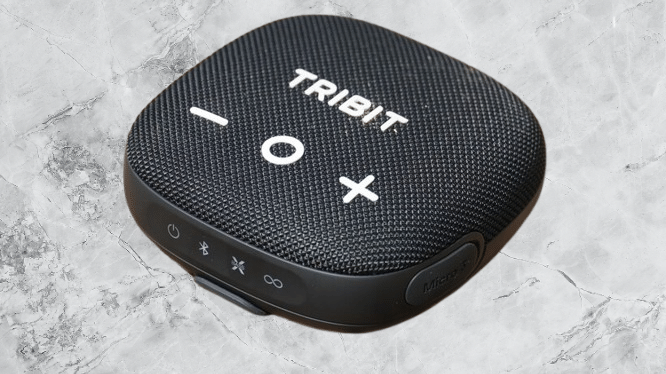
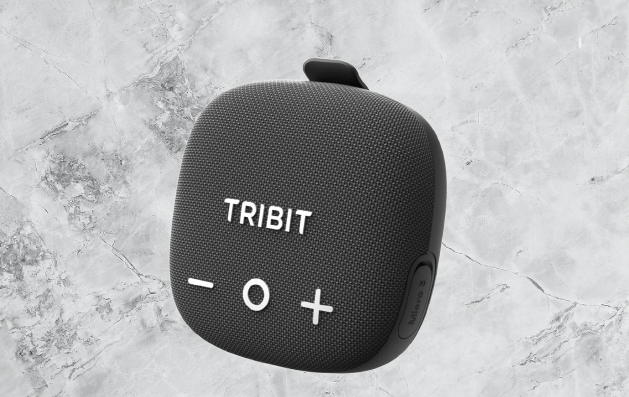
The logo and volume markings look bolder and clearer now too, standing out better against the fabric cover, which comes in white and blue variants as well. The fabric texture itself feels slightly different; the Stormbox Micro 2 felt smoother to the touch, while this new version has a bit more grip.
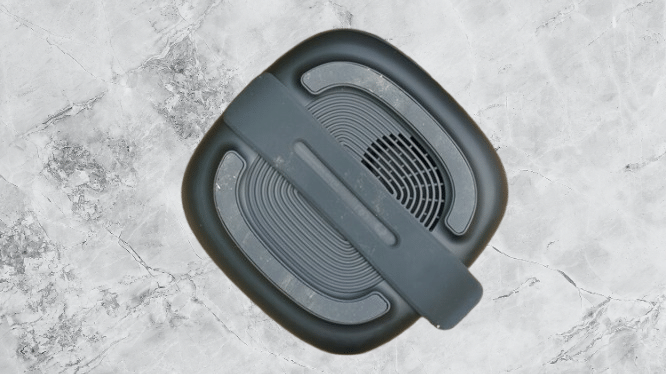
The same silicone strap sits underneath for hooking onto a bag or bike during adventures, and Tribit added a magnetic mount this time for attaching the speaker to metal surfaces.
Beyond that, the speaker looks and feels similar in size and appearance to its predecessor. Other notable changes are the control layout, which is now up front, bigger and clearer buttons, with the Xbass button positioned front and center to boost bass, and a link button right next to it for pairing two speakers into stereo.
Every change here nudges things in a positive direction. It’s essentially the same speaker as before, just more practical to actually use.
Tribit Stormbox Micro 3 Features
Wireless connectivity runs on the Bluetooth 6 standard, and walking from one end of my garden to the other, the connection never dropped or glitched. SBC and AAC streaming are both supported now, an upgrade over the Micro 2’s SBC-only setup, and Bluetooth multipoint comes along too.
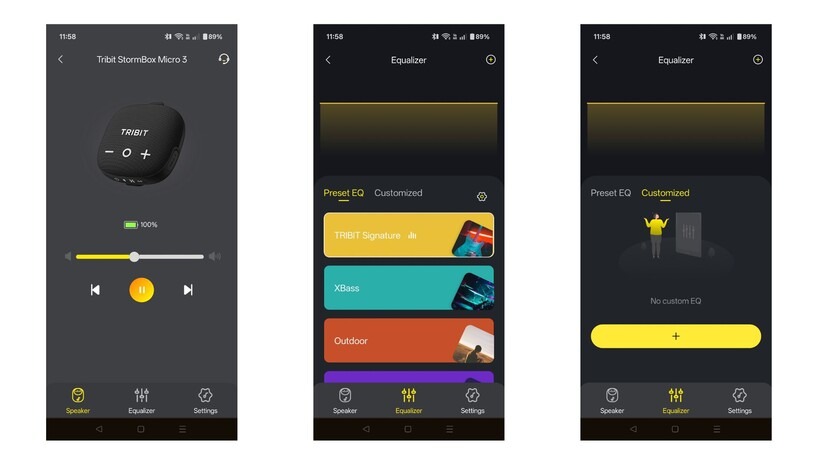
Stereo pairing works if you pick up two Stormbox Micro 3 speakers, and beyond that, the Tribit app lets you monitor battery life, adjust volume, and control playback.
You may also like: JBL Cove Speakers Bring Whole-Home Audio to Wi-Fi
You also get a selection of preset EQ modes to play with, including Tribit’s Signature mode, Xbass, Outdoor, Rock, Audiobook, Rap, and Popular. Each one sounds genuinely different: Outdoor brightens up highs and midrange, Popular smooths things out, and Signature delivers a flat, neutral sound.
If none of those fit your taste, a 10-band custom EQ lets you build your own profile from scratch. The only other feature worth mentioning is the ability to assign Xbass to whichever custom EQ setting you create yourself.
Tribit Stormbox Micro 3 Battery Life
Tribit claims 24 hours of battery life at 50% volume, so naturally, I put that to the test.
After draining the battery for five hours at roughly 50% volume, the Tribit dropped to 80%. Extrapolate that rate, and you land around 25 hours total, meaning Tribit’s claim checks out accurately here.
Tribit mentions fast charging, though in practice it seems to just mean a standard full charge, taking about two hours to go from empty to full. The Stormbox Micro 3 also doubles as a power bank, letting you charge your phone from it when needed.
Tribit Stormbox Micro 3 Sound Quality
The obvious first question with any sequel is how it stacks up against its predecessor. If you’re considering upgrading from the Stormbox Micro 2, rest assured the Stormbox Micro 3 delivers genuinely better sound.
Vocals and treble come through clearer on the new speaker, detail improves noticeably, and bass sounds more rounded overall.
Surprisingly, it doesn’t get quite as loud as the older model, but it trades that for a more natural overall tone. Listening side by side, the older speaker clearly struggles to keep up in terms of detail and defining individual voices and instruments.
You may also like: Amazon Echo Studio Drops to $174.99 for Prime Day, Lowest Price Yet
Playing Lily Allen’s “Smile,” the Tribit brings genuine clarity to the track, though it does sound slightly thin at moments.
Vocals come through well, detail stays strong, and the bassline carries decent weight, which gets even more pronounced once you switch on Xbass. Overall, the Tribit strikes a good balance, spacious, clear sound with detailed highs throughout. It’s a substantial improvement over the previous generation.
There’s genuine competition at this price point too: the JBL Go 5, and comparing the two head to head, performance is remarkably close. The JBL sounds bigger and more open than the Tribit, though I’d argue it also sounds a touch thinner overall.
Bass performance between the two stays fairly similar, but switching on Xbass gives the Tribit a bigger, warmer sound by comparison. Personally, I’d leave Xbass on permanently; the speaker simply sounds better with it enabled.
Where JBL arguably edges ahead is musicality; it leans more toward vocal focus and feels slightly more musical overall. That said, the Tribit certainly isn’t trailing far behind.
JBL feels like the more fun speaker between the two, trading on musicality and richness, while Tribit counters with clarity and stronger bass performance. Neither one quite matches the energy and liveliness of the Bose SoundLink Micro, though that speaker costs nearly double the price of either option here.
Tribit Stormbox Micro 3 Verdict
A portable speaker that genuinely improves on its predecessor, with a better design, longer battery life, and noticeably improved sound.
Pros |
Cons |
| Better and more practical design | Nearly identical to Tab S11 Ultra |
| Excellent sound than before | $200 more expensive and an older chipset |
| Long battery life and affordable price | Pro Keyboard is an expensive accessory |
Final Thoughts
As a follow-up, the Stormbox Micro 3 marks a genuine improvement over its predecessor. Sound quality is better, battery life stretches further, and the design fits adventure use even better than the Stormbox Micro 2 did. It’s genuinely hard to find fault with any of that.
So why stop short of a full five stars? Mainly because competition here is stiff, particularly from the JBL Go 5. The JBL costs less, includes USB-C audio and Auracast support, and arguably delivers better overall value.
Even so, the Tribit Stormbox Micro 3 is one of those rare sequels that actually builds meaningfully on what came before it. It stands as one of the best portable speakers you can buy under $100.