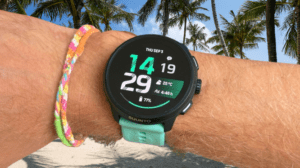

The Garmin Instinct Crossover AMOLED takes the rugged outdoor smartwatch formula and adds something unexpected: real analogue hands sitting on top of a color display. It’s part digital, part traditional, all in one watch.
Essentially, Garmin mashed up its Instinct line with its Vivomove hybrid smartwatches. That gives you an LED flashlight and Garmin’s best GPS tech alongside genuine smartwatch perks like contactless payments and access to the Connect IQ store.
It costs more than earlier Instinct models, but it still undercuts rivals like the Apple Watch Ultra 3 and Samsung Galaxy Watch Ultra 2. There’s no denying it’s a distinctive take on an adventure watch. The real question is whether those physical hands add something worthwhile or get in the way of it being a solid smartwatch. I spent a few weeks wearing it to find out.
Garmin Instinct Crossover AMOLED Full Specs
Garmin Instinct Crossover AMOLED Design and Screen
The whole Instinct line has always reminded me a bit of Casio’s G-Shock watches, and that comparison holds here too, especially with a bezel that dominates the face and adds extra protection around the display. At 46mm, the case sits close in size to the 47mm Samsung Galaxy Watch Ultra 2 and the 47mm Garmin Fenix 9 Pro.
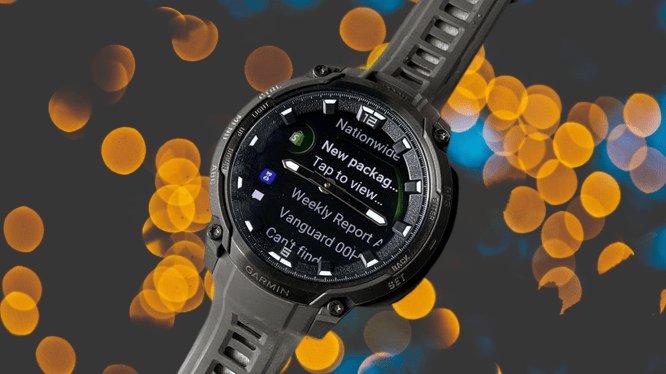
The polymer and stainless bezel give the Crossover a distinct feel compared to other outdoor watches. Then there’s the display: a 1.2-inch, 390 x 390 AMOLED screen. Unlike most AMOLED Garmin watches, this one skips touch input entirely. You can navigate menus and data screens using physical buttons instead, and they have a good, grippy feel to them.
You may also like: Samsung Galaxy Z Flip 8: Price, Specs, and Release Date Leaks
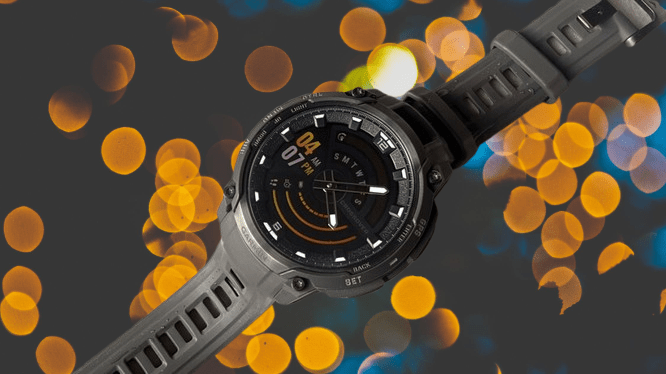
Sitting on top of that AMOLED panel are the analogue hands. When they’re not doing their normal job of telling time, they shift out of the way automatically so you can still see notifications or your live data underneath.
My take on the analogue hands after wearing this for weeks is that they rarely get in your way. Do they add real value over a standard smartwatch? Not particularly. I appreciate that they light up at night and double as a compass. Past that, I found myself wishing Garmin had done something more creative with them.
You get a removable 22mm strap here, though it uses Garmin’s QuickFit mechanism, which takes a bit more effort to swap than some alternatives. Flip the watch over and you’ll find Garmin’s Gen 4 Elevate heart rate sensor, not the newest version Garmin offers, along with the standard charging port you’ll recognize from nearly every other Garmin watch.
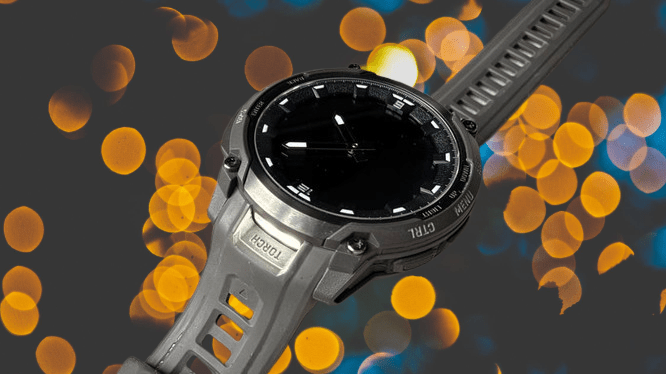
Up top, there’s an LED flashlight, and this feature actually impressed me. You can dial the brightness up or down and switch into a red light mode for situations where you need light that doesn’t wreck your night vision. I used it during several nighttime walks and just around my apartment, and it puts out more than enough light to be genuinely useful.
Waterproofing is a good point too. The Crossover carries a 10ATM rating, meaning it can handle submersion down to 100 metres. Combine that with sapphire crystal protecting the display from scratches and a build tested against military durability standards, and you end up with a watch that feels properly rugged.
Garmin Instinct Crossover AMOLED Performance and Software
Garmin has always handled its own software, and that usually means a familiar experience no matter which watch you’re wearing. The Crossover breaks that pattern slightly, and the analogue hands are the reason why.
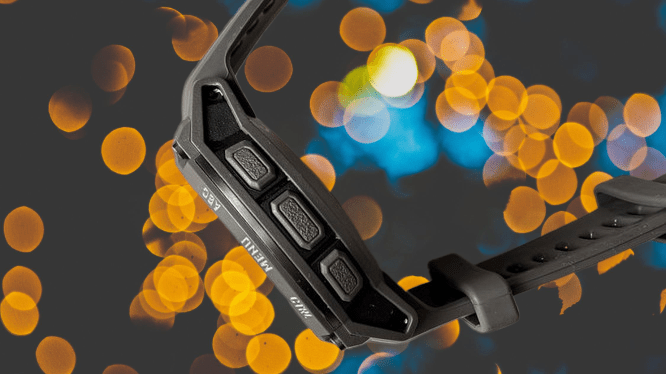
Because of them, the interface here isn’t a carbon copy of what you’d find on other Garmin devices. Certain elements got reworked specifically to accommodate the hands moving around the screen.
Still, the core Garmin experience survives. Your widget stream sits right on the main watch face like always, and pressing and holding the top button still brings up quick settings. Switching watch faces works the same way too, and you can still customize the highlight color for the hands.
You may also like: Whoop vs Garmin Smartwatch: Screen, GPS, and Tracking Accuracy Compared
From there, you can check notifications and pull apps from the Connect IQ Store, same as any other Garmin. A few apps clearly haven’t been optimized for this screen’s unusual layout, and browsing the store without a touchscreen feels slower than it should. Storage takes a hit as well, with only 4GB available here versus the 64GB you get on other Instinct Crossover variants.
You do get Garmin Pay for contactless purchases, but several newer features are missing entirely: no music player, no Bluetooth calling, no voice memos, and no way to summon your phone’s assistant.
None of that stops it from working as a genuine smartwatch. It just takes some getting used to, since the design choice here occasionally works against you rather than for you.
Garmin Instinct Crossover AMOLED Tracking and Features
Given its rugged build, the Instinct Crossover clearly wants to live outdoors, though it packs enough sensors and features to work well as an indoor workout partner too.
Core sports are covered: running, cycling, swimming, plus a dedicated golf mode. Beyond that, you’ll find profiles for strength training, skiing, team sports like football, and even a mode built for tracking snowmobile rides.
The standout upgrade over previous Instinct Crossover models is multi-band GPS, which gives you Garmin’s most precise positioning technology available, though it does drain battery faster than standard GPS modes. I tested it against strong dual-band performers like the Apple Watch Ultra 3 and several Suunto watches, and it held up well across the board.
You may also like: Best Fitness Trackers 2026: Top Picks Tested and Ranked
One disappointment: no full-color maps here. That stings a bit since you can find that feature on cheaper, somewhat older AMOLED watches like the Garmin Forerunner 965. It remains one of the clearest lines separating an Instinct from a Fenix.
You can still load routes onto the watch, but you’re working with Garmin’s simpler breadcrumb navigation instead of anything more visual. It gets the job done for staying on track, though scrolling through routes without touchscreen support feels a bit clunkier than it should.
Switch focus to indoor training, and there’s plenty here too, including the ability to build and follow workouts, HIIT sessions included. Many of these come with animated prompts on screen, so you know you’re actually doing the movement correctly.
I loaded a handful of Garmin’s own workouts onto the watch, though not every one played nicely with the Crossover.
Before you start, the watch shows you which muscle groups your workout targets. Then the analogue hands slide to the 3 and 9 positions, clearing space for the animation demonstrating each move at the top of the screen. The animation not taking up the full display isn’t a dealbreaker, but it does make glancing down to check your form a little less immediate than I’d like.
On the training side, you get the usual strong Garmin lineup: Training Readiness scores, smart workout suggestions, Garmin Coach, and the Body Battery energy tracker. All told, there’s enough here to help you make better calls about your training, your sleep, and everything connecting the two, and that’s genuinely useful.
Heart rate tracking remains a good way to gauge your effort, even though Garmin stuck with its older Gen 4 sensor here. That older tech means no ECG readings and no skin temperature monitoring.
For everyday tracking, the sensor performs reliably despite its bulkier housing. Push into harder efforts, especially interval training, and it starts to struggle a bit more. It’s not a disaster by any means, and pairing external heart rate sensors, both Garmin’s own and MyZone’s, was quick and gave me more accurate numbers when I needed them.
Wear the Crossover to bed, and it’ll track your sleep, log naps, and let you set smart alarms that ease you awake in the morning. Sleep tracking has historically been a weak spot for Garmin, particularly around pinning down exactly when you fell asleep and when you woke up.
You may also like: Garmin Cirqa Review: An Excellent Screenless Fitness Tracker
That said, I noticed some improvement here. I wore it alongside the Oura Ring 5 and Apple Watch Ultra 3, and sleep duration numbers generally lined up across all three.
Sleep stage data was a different story, rarely matching between devices. That doesn’t automatically mean Oura and Apple nailed it either, but based on my experience with both, they tend to tell a more consistent story about how you actually slept.
Garmin Instinct Crossover AMOLED Battery Life
Garmin rates the Instinct Crossover AMOLED for up to two weeks when you’re sticking mostly to smartwatch features, though regular GPS and heart rate use will chip away at that number. It also falls short of the battery life you’d get from Garmin’s memory-in-pixel version of the Crossover.
In practice, this isn’t a watch that’ll leave you scrambling for a charger after one heavy day of use. Heading away for a few days without packing your charger? You’ll probably be fine. Start tracking outdoor workouts using the most accurate GPS mode, though, and battery life takes a real hit, roughly cut in half. A two-hour trail run alone drained 20% of the battery.
You may also like: Garmin CIRQA Smart Band: Price, Features, Battery Life
Switch to expedition mode and you can stretch that to 53 hours, or up to 12 days if you drop down to the most basic GPS setting. I never felt let down by the battery here, though it’s worth knowing that cheaper AMOLED outdoor watches exist that outlast the Crossover for less money.
Garmin Instinct Crossover AMOLED Verdict
If you’re set on having real analogue hands without giving up serious sports tracking, the Garmin Instinct Crossover AMOLED stands out as one of the better picks available. That said, most outdoor athletes will find stronger value and fewer trade-offs by looking elsewhere in Garmin’s range.
Pros |
Cons |
| Very comfortable | App sign-in issues |
| Detailed app data | Design might not suit everyone’s tastes |
| Does not require subscription fees and it comes with a charging case | Can not record many workout activities |
Final Thoughts
The Garmin Instinct Crossover AMOLED pulls off the hybrid concept, though the analogue hands bring more character than actual usefulness to the table.
You’re getting a genuinely rugged build, strong multi-band GPS, a flashlight that actually earns its place, and good training tools, all of which make this a capable outdoor watch. At £519.99/$549.99, though, the missing full-color maps, lack of touchscreen, and absence of Garmin’s newest health features become harder to overlook.
If you specifically want real analogue hands without sacrificing serious sports tracking, this lands as one of the better options out there. Most outdoor athletes, though, will find better value and fewer trade-offs elsewhere in Garmin’s lineup.