
Google’s Pixel 11 series looks strikingly similar to the Pixel 10, and even the 2024 Pixel 9. After spending more than a week with the Pixel 11 Pro XL, I don’t think anyone currently holding a 10 Pro or 9 Pro needs to rush into upgrading.
Along with the Pixel 11, Pixel 11 Pro, and Pixel 11 Pro Fold, the Pixel 11 Pro XL gets the upgraded Tensor G6 chip and a slightly reworked camera bar. Both Pro models get a new 50MP main sensor along with an upgraded 5x telephoto lens. There’s also a brighter, more scratch-resistant screen, plus a modest bump in charging speed.
As always, Google is leaning hard into AI here too, with Gemini woven into nearly every part of the phone.
But the 11 Pro XL now starts at $1299, the highest price ever attached to a non-folding Pixel. That price increase stings even more given Google now only offers 12GB of RAM at that base price, down from 16GB last year; you’ll need to pay extra for the pricier configuration to get back to 16GB.
The 11 Pro XL remains a good pick for Pixel fans still on an 8 or older who want a big-screen Google phone, and I did enjoy my time testing it, but this isn’t a phone that blows the competition away.
Google Pixel 11 Pro XL Full Specs
Google Pixel 11 Pro XL Design
A casual glance makes it tough to tell the 11 Pro XL apart from the 10 Pro XL or 9 Pro XL, but honestly, that’s not really a bad thing. I still like Google’s design language here: playful, functional, and the triple-lens camera bar spanning the back keeps the phone from rocking on a table.
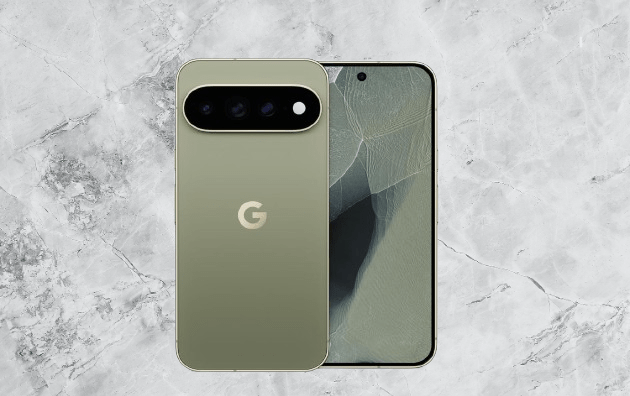
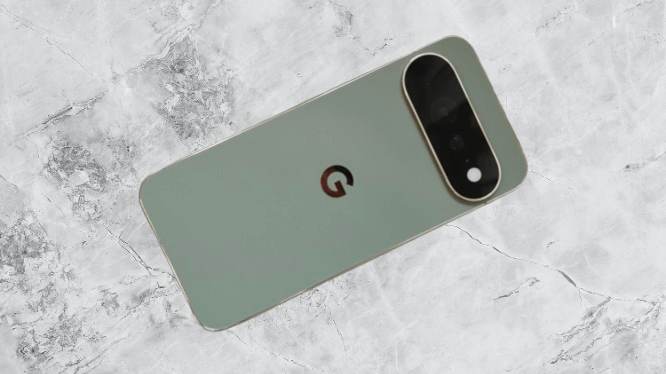
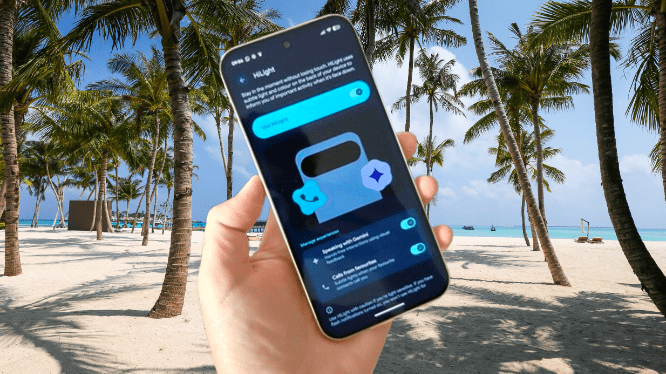
Right next to that camera bar sits the flash, which now also houses HiLight, a new feature that feels significantly underused so far. Gone is the temperature sensor that’s been present on Pro Pixels since the 8 Pro, and the flash now doubles as a multicolor indicator light instead.
The catch is it only activates when the phone is face down, and only for two scenarios: using Gemini or receiving a call from a specific pre-selected contact.
You may also like: The Best Google Pixel 10 Deals: Up to 26% Off on Amazon Now
Talk to Gemini, and the flash swirls through colors to show it’s active. Contacts, meanwhile, can be assigned one of five colors that light up when they call.
It says something about how little genuine innovation exists in phones right now that this counts as a headline feature. At launch, there’s no way to customize what triggers the light beyond those two cases, and it won’t even activate for texts or WhatsApp messages from your chosen contact, calls only.
I do occasionally set my phone face down when it’s in a case, but without one, I’d genuinely worry about scratching the screen. Google says more uses are coming eventually, but right now, this feels like a fairly unimpressive gimmick, oddly reminiscent of the more genuinely useful LED notification lights BlackBerry phones had two decades ago. Progress, apparently.
Build quality elsewhere is excellent, matching Apple’s iPhone 17 Pro for fit and finish. My Olive review unit comes in a genuinely lovely shade of green, though I’m less enthusiastic about the shiny metallic side rails, which get finger grease almost instantly.
There is a black model with matte sides available, but that finish is exclusive to that color. The Canyon (salmon) and Fog (silver) options both stick with the same shiny rails. IP68 dust and water resistance is present as expected, so an accidental dunk shouldn’t be catastrophic.
You may also like: Google Pixel 12 Lineup Leak Reveals Model Numbers and Displays
Worth flagging if you’re not a fan of large phones: the Pixel 11 Pro XL is genuinely big. My pinky finger actually started aching from tucking underneath its 226g weight during one-handed use. That said, it does measure smaller in every dimension than the iPhone 17 Pro Max, and it’s narrower than the Galaxy S26 Ultra too.
If I were buying one myself, I’d lean toward the cheaper, more manageable Pixel 11 Pro instead, smaller in hand, with identical specs aside from screen and battery size.
Google Pixel 11 Pro XL Screen
The large 6.8-inch OLED display on the Pixel 11 Pro XL genuinely impresses, running a sharp 1344 x 2992 resolution. Peak brightness hits 3,600 nits, making it pop visually and firmly placing it among top-tier smartphone screens.
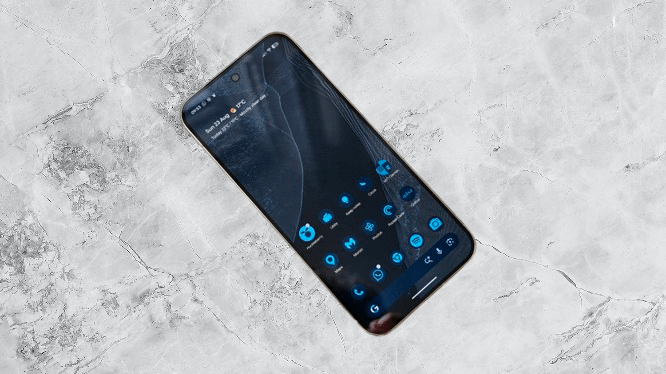
That said, this really is a two-handed phone. I found myself struggling with basic one-handed scrolling in daily use; reaching the top of the screen with a thumb simply isn’t happening, which is another good reason to consider the smaller Pixel 11 Pro with its 6.3-inch display instead.
You may also like: Nothing Phone 4(b) Review: Budget Phone With Real Flair
The refresh rate runs up to 120Hz and scales down to 1Hz for better energy efficiency, particularly useful with the always-on display setting active. HDR support sticks with HDR10+. The glass itself is Gorilla Glass Victus 2, same as the Pixel 10 Pro XL, though Google claims it’s now “twice as scratch-resistant.”
Going with the XL model makes sense if you want larger text for easier reading, or if you spend a lot of time watching video on your phone.
Google Pixel 11 Pro XL Cameras
Pixel phones have long had a reputation for strong cameras, and the 11 Pro XL continues that trend. But in 2026, phone photography leans heavily on computational processing, and in Google’s case, that increasingly means AI.
This year’s phone gets an upgraded 50MP main sensor and 48MP 5x telephoto lens over the 10 Pro series, while the 48MP ultrawide carries over unchanged. I have come away genuinely pleased with shots from the main lens; default settings produce crisp, well-focused images consistently.
Pixel phones remain particularly good with moving subjects, babies, pets, that kind of thing. Samsung phones tend to struggle here comparatively, so if reliable point-and-shoot performance matters to you in an Android phone, I’d pick the 11 Pro XL over any Galaxy S26 model.
You may also like: Nothing Phone 4a and 4a Pro Specs and Pricing Leak Ahead of March 5 Launch
That said, having also tested the Xiaomi 17 Ultra, Oppo Find X9 Ultra, and Vivo X300 Ultra, all three Chinese flagships genuinely outperform the Pixel’s camera system overall. If camera quality is your top priority, one of those is the better pick. They all pack larger sensors capable of more accomplished shots, along with sharper telephoto zoom lenses that give photos a more filmic quality.
Rather than leaning on hardware improvements, Google keeps pushing software and Gemini AI to squeeze more out of the Pixel’s cameras. After capturing a shot, the camera app shows “processing” while Google’s imaging algorithms enhance the result. Photos come out with a noticeably processed look, boosted contrast, and colors that skew less true-to-life compared to iPhone shots.
If that processed look isn’t your preference, the Pixel 11 series includes Camera Looks, alternative shooting modes that change how images turn out without applying the default “Original” processing. Additional options include Editorial, Velvet, Classic, Digi, Black Tie, and Minimal, each adjustable to taste, and each requiring more manual input than the default mode, which automatically handles things like overexposure correction.
I had fun experimenting with these, though ultimately the shots I liked best still came from Original mode, with that signature boosted-contrast Pixel look. Camera Looks require more effort to nail a great shot, similar to shooting on a DSLR, which isn’t necessarily what most people want from a phone camera. Still, it’s a genuinely nice option for Google to offer.
While the telephoto lens tops out at 5x optical zoom, Google pushes digital zoom all the way to a genuinely absurd 120x. This Pro Zoom feature relies on Gemini to fill in, or more accurately, invent, detail the hardware physically can’t capture. I’m not a fan. It feels like a feature trying hard to justify itself despite not being something most people actually need.
Stick to the 5x or even 10x zoom range, and the Pixel handles things really well. Google has also sped up its Night Sight mode considerably, with genuinely strong results to show for it.
The ultrawide camera does the job when you need to fit more into a scene, though like most phones I test, it stays my least-used lens overall; the unusual field of view and slight edge distortion keep it from feeling like a go-to option.
A less impressive addition this year is Magic Capture, which records a short video and lets AI pick out frames it thinks look good, presenting them as your final shots. The idea is you just point and shoot, letting AI handle selection.
It doesn’t work particularly well in practice. The frames it chose weren’t ones I would have picked myself, and results came out blurrier on moving subjects compared to regular stills from the main camera.
Video quality left me a bit underwhelmed too. At the default Full HD setting, colors come out washed out and slightly grey, and switching between lenses mid-recording feels somewhat jerky.
It’s fine for casual clips destined for social media, but Google still trails noticeably behind the iPhone here, and the results don’t quite match what you’d expect from a phone carrying the “Pro” label.
You may also like: Google Pixel 10 Pro Drops to $684 for Prime Day, Lowest Price Yet
4K and 8K recording are both available, though since the Pixel’s own screen isn’t 4K resolution, there’s limited benefit unless you’re exporting footage to view on a separate compatible display.
The front camera is a genuinely strong 42MP sensor with autofocus included.
Google Pixel 11 Pro XL Performance
Google runs its own Tensor G6 chip in the Pixel 11 Pro XL, and for my everyday use, it’s genuinely more than enough. Every Pixel 11 phone shares this processor, and it flies through daily tasks, with no jitter or slowdown when switching between apps, scrolling feeds, or browsing files and photos.
My review unit came with 16GB RAM and 512GB storage, but the base $1299 model with 256GB storage only gets 12GB RAM, actually less than the Pixel 10 Pro XL offered at its launch price with the same 256GB and 16GB RAM.
This combination of a price hike and RAM downgrade traces back to the AI boom driving up RAM costs across the phone industry. There’s a certain irony in Google raising Pixel prices partly due to a RAM crisis it’s actively contributing to by pushing Gemini so heavily onto users.
The bottom line: this expensive phone isn’t built for mobile gamers, and performance falls noticeably short of what you’d expect at this price. The Galaxy S26 Ultra, running a Snapdragon 8 Elite Gen 5 chip with 12GB RAM standard, handles demanding mobile games with ease by comparison.
Personally, this doesn’t bother me much since I don’t game on my phone, but it’s frustrating knowing this $1419 device can’t handle a genuinely popular game that plenty of mid-range phones half its price, running Qualcomm or MediaTek chips, manage without issue.
Google is instead tuning the G6 to excel specifically at AI tasks, and it succeeds there. Along with a new image signal processor, Google claims a 50% boost to the Tensor processing unit, which handles photo processing noticeably faster than older Pixel models.
Asking Gemini questions gets quick, responsive answers, and the AI features woven throughout Google’s version of Android feel genuinely integrated rather than tacked on, unlike similar tools I’ve seen on competing phones. Heat was rarely an issue during my testing, aside from occasional warmth while wireless charging, which isn’t unusual for any phone.
Benchmarks back up the graphics shortfall I mentioned earlier. The phone scored 7,912 on Geekbench 6’s GPU test, compared to 24,611 on the Galaxy S26 Ultra. That’s not a typo; nearly 17,000 points separate the two. It’s a genuinely low score that makes clear just how little priority Google gave graphics performance on the Tensor G6, favoring on-device AI capability instead.
You may also like: Pixel 11 Pro Fold Leak: Same Design, New Pine Colo
Elsewhere, connectivity checks all the boxes: Wi-Fi 7, Bluetooth 6, and while difficult to verify directly, Google says the phone uses a new modem that could improve cellular signal compared to older Pixels. NFC for mobile payments is present too, as expected.
Google Pixel 11 Pro XL Software & AI
The Pixel 11 Pro XL is designed specifically to run Google’s Gemini AI suite well, and on that front, it delivers. That said, the headline Gemini Intelligence features shown off at launch are mostly limited to the US right now. That includes Proactive Assistance, a tool designed to read everything on your screen at any given moment and surface personalized, timely notifications based on it.
This would show up in places like the home screen’s At a Glance widget, messaging apps, the phone app, and more throughout the system. Unfortunately, I genuinely can’t tell you whether it actually works.
Thankfully, one Android 17 feature performed excellently in my testing. It’s called Rambler, essentially an advanced voice-to-text system. Press the mic button in a messaging app like Messages or WhatsApp, and the AI listens as you speak, ignoring pauses, ums, and filler, and can even correct earlier statements if you tell it to.
You genuinely can ramble, as the name suggests, and Google manages to piece it into coherent sentences you review before sending. I rarely come away impressed by AI features on a phone, but Rambler genuinely impressed me. Even better, it’s set to roll out to more phones rather than staying exclusive to Pixel.
For the most part, I ignore the AI features baked into this phone, and I was pleasantly surprised at how rarely they got pushed in my face compared to what I expected. You usually have to seek these features out, which might not always stay true going forward, but for now, you can run this Pixel about as simply as you want if Gemini isn’t your thing.
You may also like: Samsung Galaxy Z Flip 8: Price, Specs, and Release Date Leaks
I do genuinely like Google’s take on Android here. It feels playful, with whimsical widgets and icon options that don’t take themselves as seriously as Samsung’s more austere One UI or Xiaomi’s HyperOS, which leans heavily toward mimicking iOS.
With seven years of promised Android and security updates, this pricey Pixel should at least stick around for the long haul.
Google Pixel 11 Pro XL Battery Life
Battery life on the Pixel 11 Pro XL follows a similar pattern to its cameras: genuinely good, but still beaten by the strongest Android phones out there.
The 5115mAh battery is actually slightly smaller than the 5200mAh cell in the 10 Pro XL, yet longevity held up impressively well in testing.
Even after a heavy day of use, I’d typically have 30-40% remaining. That falls short of a true two-day phone under my usage patterns, but it’ll comfortably carry you from a full charge at 7am through a late night out. This tracks with Google’s claim of over 30 hours per charge.
The OnePlus 15 remains the only phone I’ve tested that genuinely stretches to three days under moderate use, partly thanks to silicon-carbon battery tech that Google hasn’t adopted here yet. The lithium-ion cell in this Pixel performs well, but it doesn’t lead the pack for endurance.
Google also claims the XL can hit 75% charge in 30 minutes, though no charger comes in the box. You’ll only reach those speeds using a 45W charging brick, which Google sells separately for $29.99. A USB-C cable is at least included.
There’s also a manual Extreme Charging mode you can enable with a compatible charger plugged in, pushing to the maximum 45W speed. In my testing with a Belkin 45W charger, I hit 37% in 30 minutes, noticeably below Google’s stated figure.
You may also like: Galaxy S27 Ultra Price Hike Rumored Ahead of 2027 Launch
Wireless charging tops out at 25W thanks to the newer Qi 2.2 standard. Like the 10 series, this Pixel also includes Pixelsnap, Google’s built-in magnetic charging ring, allowing it to snap onto compatible wireless chargers the same way iPhones do with MagSafe.
It’s a genuinely convenient feature, and the Pixel 11 Pro XL remains one of the very few Android phones offering it; Samsung still hasn’t joined in.
Google Pixel 11 Pro XL Verdict
The Pixel 11 Pro XL is a phone caught between two identities: a genuinely capable, well-designed flagship on one hand, and a device that’s clearly prioritized AI ambition over raw hardware performance on the other.
Where it excels, it excels genuinely. The display is top-tier, the camera handles everyday shooting and moving subjects impressively well, battery life comfortably gets most people through a full day, and Rambler alone makes a strong case for Google’s approach to on-device AI done right. Seven years of software support also means this phone stays relevant far longer than most.
But the compromises are hard to ignore at this price. Gaming and GPU performance fall well behind rivals like the Galaxy S26 Ultra, charging remains slower than Google’s own claims suggest, and the base model actually offers less RAM than last year’s phone did. Add a price increase on top of that, and the value proposition gets shakier the more you look at it.
If you’re already deep in the Pixel ecosystem, love Google’s take on Android, and don’t care about mobile gaming, the 11 Pro XL is easy to enjoy day to day. But if raw performance matters to you, or you simply want the best value for your money, the Galaxy S26 Ultra or even Google’s own smaller Pixel 11 Pro make a stronger case. This isn’t a bad phone by any means; it’s just not the obvious upgrade its price tag suggests it should be.
Pros |
Cons |
| Excellent high-resolution display | Big and heavy |
| Better triple cameras | Tensor chip can’t cope with top-tier games |
| Good battery life, and slick Android software with seven years of updates | AI can be tiresome, if ignorable, and expensive |
Final Thoughts
The Google Pixel 11 Pro XL represents Google’s largest non-folding phone reaching a kind of full maturity. It looks like the past two generations, but it’s still a genuinely lovely design, paired with an excellent display and cameras that are very good, if not quite the best on the market.
There’s a lot of AI packed in here, but none of it feels mandatory; you can pick and choose what you actually want to use without constant interruption. The Rambler voice-to-text tool stands out as a genuine highlight, though UK buyers should know upfront that many of the marketed Gemini Intelligence features remain US-only at launch, which is a fair reason for frustration.
Compared to similarly priced rivals, the weak points come down to GPU and gaming performance, genuinely poor, along with charging speeds that still lag, and less RAM this year at 12GB in the base model. For the same $1299, the Galaxy S26 Ultra simply performs better across the board.
Buyers interested in this phone should also weigh the standard Pixel 11 Pro, a more manageable size at a lower price. The regular Pixel 11 is worth a look too, sharing the same chipset and three rear cameras, though with different lenses than the Pro models.
The 11 Pro XL remains a genuinely good phone if you love Google’s approach to Android and plan on holding onto it for years; seven years of promised software support is excellent. That said, competing Android phones like the cheaper Galaxy S26 outperform it while costing less, and more casual buyers looking for a solid, if less capable, Google phone experience should consider the $499 Pixel 10a instead.