
Color e-paper has always felt like a compromise to me. You get color, but the text loses some of that crisp, printed-page look. That has been my biggest complaint about color e-readers.
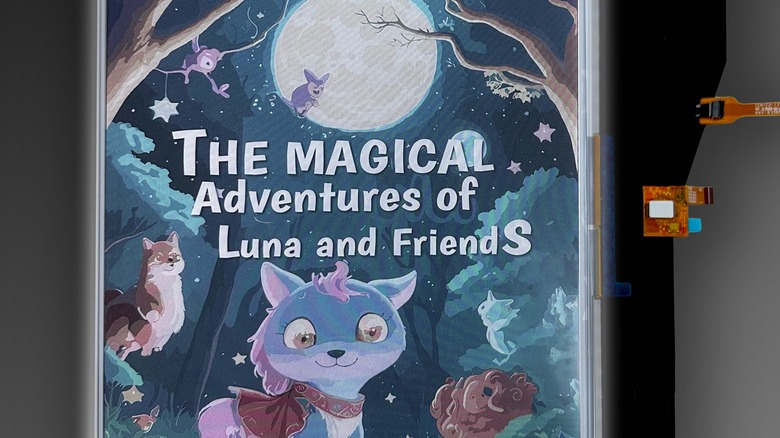
E Ink may have an answer. It is called Kaleido 4, the latest version of its color e-paper platform, and it already ships in Hanvon’s M10C II notebook.
What does E Ink Kaleido 4 improve?
E Ink says Kaleido 4 doubles the color gamut volume of the previous generation and pushes it above 40K. Color gamut is the range of colors a screen can show. The release gives no unit for that figure, so do not read it as a count of colors.
White reflectance, which measures how much light the screen bounces back, rises by 15%. Contrast improves by 50%. Put together, you get more color volume, better contrast, and a brighter white background, which makes Kaleido 4 a better display than the one before it.
You may also like: Kindle Scribe Colorsoft Fig Color Launches January 28: Price, Features, and Where to Buy
E Ink wants these gains to let e-paper handle color PDFs and engineering drawings, not just books. New algorithms also raise video playback to a best case of 18 frames per second. I am not sure video is a big selling point for e-paper, but smoother playback could help with educational content.
What does the first E Ink Kaleido 4 device offer?
Kaleido 4 debuts on Hanvon’s M10C II. The notebook uses a new oxide backplane, the layer of transistors that switches each pixel, and it runs at higher voltages for faster refreshes. Paired with Hanvon’s own screen-timing chip, page flips and scrolling are 27% faster. That should ease one of e-paper’s most common frustrations, which is slow navigation.
You may also like: OnePlus Pad Go 2 review: Better than all mid-range tablets
The front light, the screen’s built-in glow, has been reworked to give more natural color. For handwriting, you get a battery-free pen with 8,192 pressure levels. The micro-etched tempered glass cuts glare and parallax, the gap between the pen tip and the ink, and adds a paper-like writing resistance.
I think Kaleido 4 is built for a wider range of content. That includes educational illustrations, science and technology reference material, and presentations. It also aims to make the screen look less grainy.
Down the line, you could see this display in devices from brands like Amazon, such as the Kindle Colorsoft, as well as digital notetakers, e-paper tablets, and digital textbooks.