

The Chelsea Flower Show is not where most people expect to encounter robotics, but the University of Lincoln brought exactly that and left with a Silver Gilt medal.
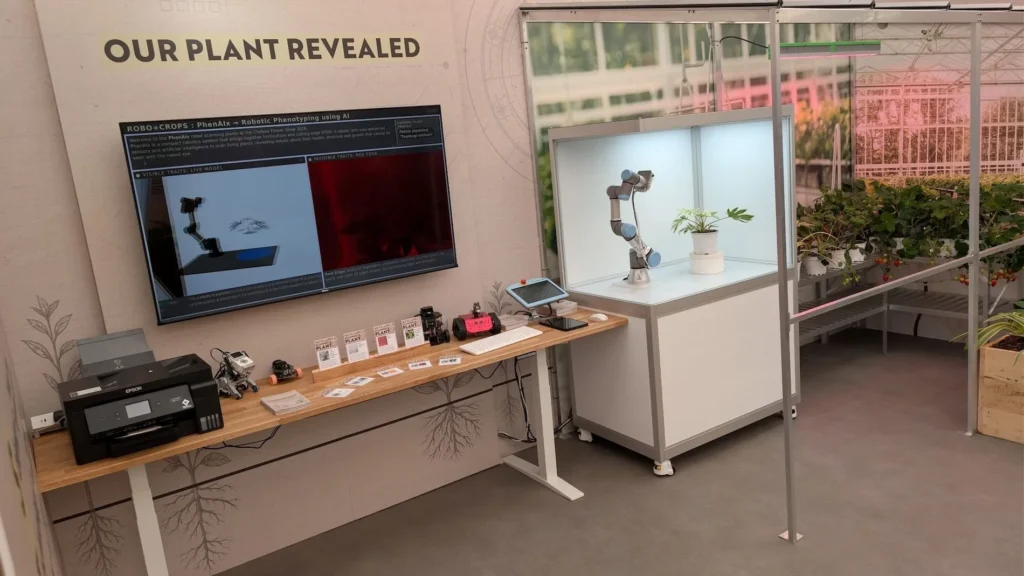
Their exhibit, titled RoboCrops: Plant Selection, Beyond the Visible, was developed by the university’s Lincoln Institute for Agri-Food Technology (LIAT) and placed in the show’s GreenSTEM zone. That section of the show is set aside for exhibits that connect horticulture with science, technology, and environmental research, making it a fitting home for what LIAT brought to the floor.
Robot and Flower Show
At the center of the exhibit was PhenAIx, a robotic system designed to assess plant health in ways that go beyond what the human eye can detect. It combines advanced imaging with AI to identify early signs of stress, disease risk, and performance problems before they become visible to anyone looking at the plant directly.
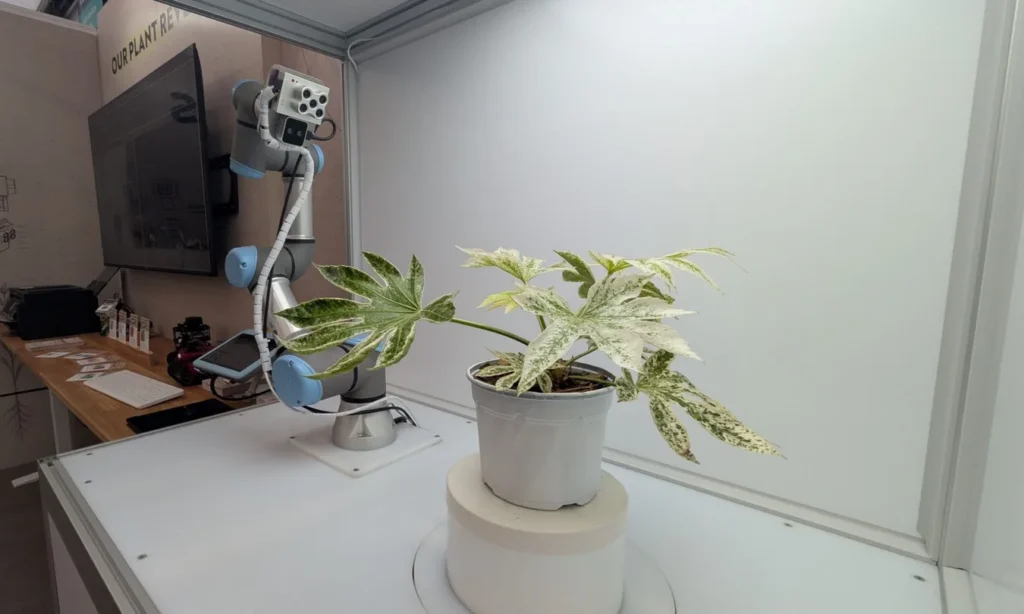
Think of it as a diagnostic scanner for crops, similar in concept to how an X-ray or MRI works for the human body. Plant breeders can use it to identify more resilient crop varieties faster than traditional selection methods allow.
You may also like: University of Houston Engineers Develop Thermal Diode to Prevent Device Overheating
The exhibit drew significant attention on the floor. Sadiq Khan, the Mayor of London, stopped by to discuss how the technology could scale up to address broader food production challenges, which gives you a sense of how seriously people are taking what this system could eventually mean for agriculture at a larger level.
The university had a clear goal beyond just showing off the technology. The exhibit was designed to connect with younger visitors, particularly those from rural and agricultural backgrounds who might not typically see themselves pursuing careers in AI or robotics.
Professor Simon Pearson MBE, Founding Director of LIAT, pointed to the curiosity shown by young visitors as one of the most rewarding outcomes of the entire week.
RoboCrops: What does it mean for the future of food?
The exhibit made a clear point about what happens when different STEM fields work together. In this case, the combination of robotics, AI, and agricultural science is being applied to one of the most pressing problems in food production: finding plant varieties that are stronger and more adaptable, and finding them faster than conventional breeding methods allow.
You may also like: New Vibrating Microchip Could Make Smartphones Thinner, Faster, and More Efficient
The goal is practical. Crops that tolerate higher temperatures, survive with less water, and produce reliably under tougher conditions are going to matter more as climate change continues to put pressure on global food systems.
Getting better tools into the hands of plant breeders now is one of the more direct ways to get ahead of that problem.