

AI-generated content has been flooding the internet since ChatGPT launched, but a new Pew Research Center analysis puts real numbers behind just how widespread it’s gotten. The study found that roughly one in three web pages published since ChatGPT’s debut shows signs of being AI-written.
A Third of Web Pages Show Signs of AI Authorship and This Didn’t Happen Overnight
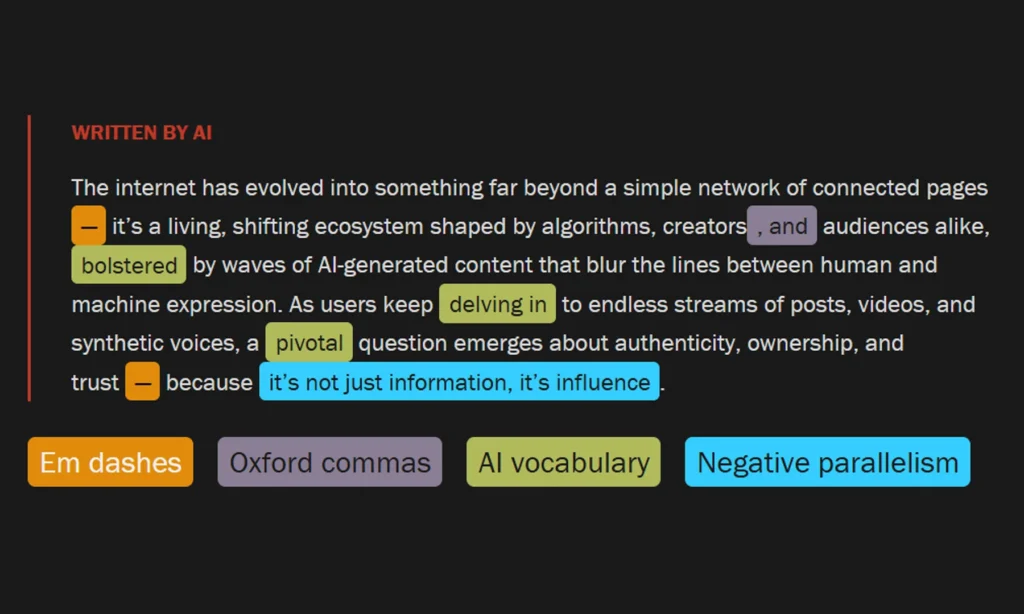
The key word in that finding is “signs.” Pew’s research isn’t claiming a third of every webpage on the internet was written entirely by AI from start to finish. Instead, it looked for indicators suggesting AI played some role in how the content came together.
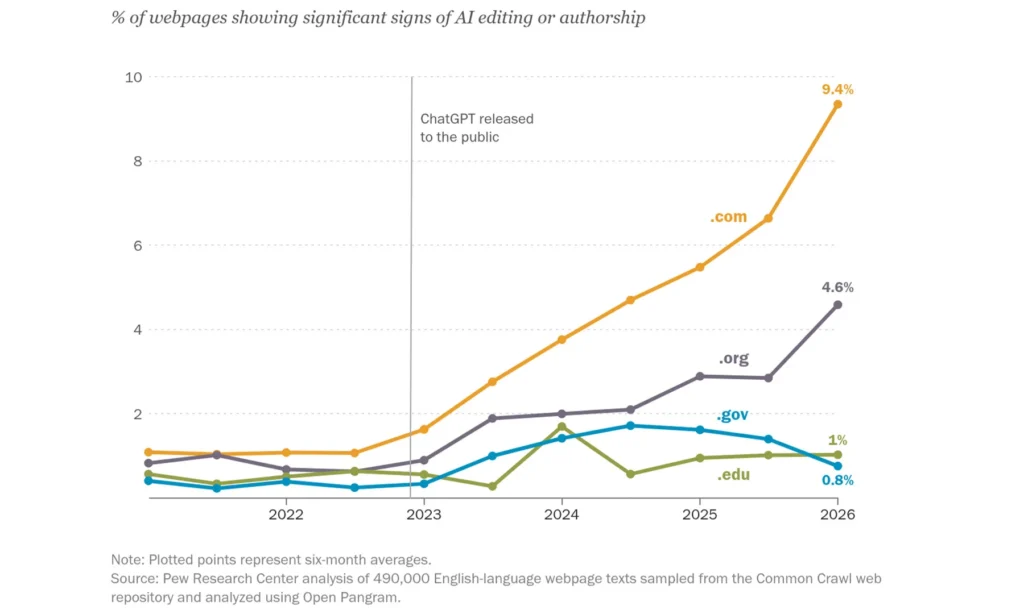
That distinction matters, because modern online writing rarely splits neatly into human-written or machine-written. A writer might use AI to draft a first pass, rewrite certain sections, clean up grammar, expand an article, or produce an SEO-optimized version. The final page ends up as a blend of human and machine contribution more often than not.
You may also like: WhatsApp Web Now Supports Group Voice and Video Calls
Still, the overall trend is hard to ignore. ChatGPT launched publicly in November 2022, and the share of web content showing signs of AI involvement has climbed steadily since.
This lines up with earlier research suggesting AI-generated or AI-assisted content has become a genuinely significant part of the web, not just something confined to obvious low-quality content farms.
The Internet Today
There’s a genuine irony baked into this. AI companies rely on massive amounts of human-written material to train their models, and those same models are now helping produce a growing share of the content that eventually gets published online.
The internet is edging toward a strange loop where humans write for machines, machines write for humans, and machines may eventually end up training on content other machines wrote in the first place.
There’s also a meaningful gap between how much AI content exists and how much of it people actually encounter. Earlier research from Graphite found AI-generated articles approaching half of all newly published online content, yet a separate analysis from the same source found human-written articles still dominate both Google search results and AI citations.
That suggests the web isn’t necessarily heading toward an endless wall of low-quality AI content. But Pew’s findings do show that the old assumption that anything published online was probably written by a person is becoming shakier by the day. The internet is still fundamentally human. AI isn’t merely visiting anymore. It’s starting to settle in.