
If you’re the under $100 earbud type, chances are you’ve already tested a stack of them. That’s exactly the space Nothing is stepping into with the new Ear (3a), and it’s a crowded one.
You’ve got the OnePlus Buds 4, the Sony WF-C710N, and the Cambridge Audio A100, each one good in its own way. Then there’s the EarFun Air Pro 4 Plus, a five-star pick that’s hard to beat on value alone.
The Ear (3a) keeps the semi-transparent design language and compact case from the original Ear (a), but Nothing didn’t stop there. You get a longer battery life, a refined equaliser, spatial audio support, upgraded ANC, and a new 12mm driver.
There’s also a pink colourway now, plus on-device audio recording and call transcription baked into the Nothing X app. And despite all these additions, the price hasn’t moved.
The real question is whether that’s enough to compete with everything else in this price range. I spent three weeks using the Ear (3a) as my daily pair to find out.
Nothing Ear (3a) Design
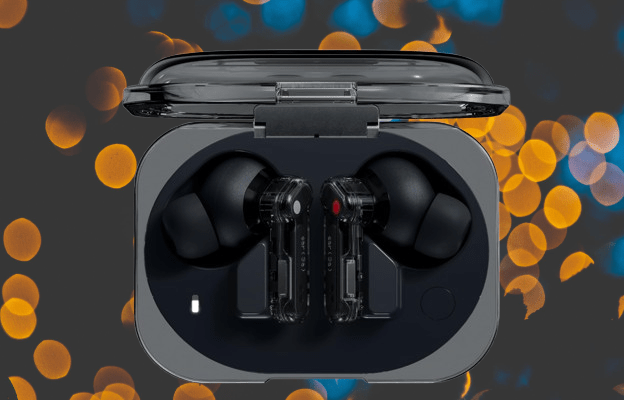
Design-wise, not much has changed here. You’re looking at the same squeeze controls, the same glossy case that fits easily in your pocket, and the same pairing button as the outgoing Ear (a).
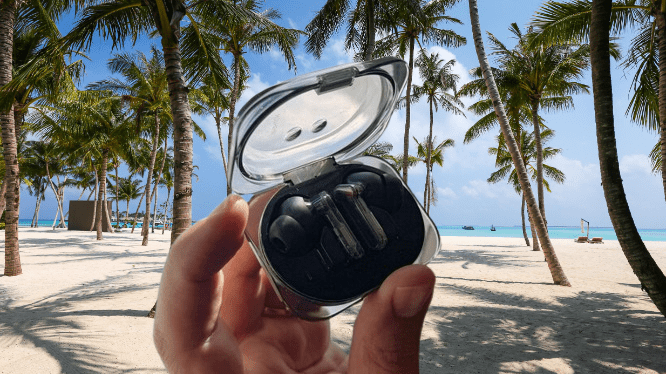
Nothing did add a pink option alongside the white, black, and yellow ones, and the case now has a smarter LED system. It flashes differently depending on what’s happening: pairing, battery level, charging, firmware updates. It’s a small touch, but it works well in practice.
You may also like: Nothing Headphone (a) Price and Release Date Leaked
The transparent design still stands out, and the pinch controls respond quickly most of the time, though they can feel a bit finicky here and there. My main complaint is the case itself. Opening it one-handed takes more effort than it should.
One genuine upgrade is fit. Nothing added an extra small tip size, so more ear shapes should get a secure seal now. They still won’t hold in place as well as something like the Google Pixel Buds 2a, but the better fit translates to noticeably stronger isolation and noise cancelling, even beating out the flagship Ear (3) in my testing.
I’ve never found the Ear (3) blocks out enough noise to make it worth using on the subway, but the (3a) manages it better.
Nothing Ear (3a) Noise Cancellation
I tested the ANC across walks, at home, on two separate flights, and down in the subway. The verdict: this is a step up from the old Ear (a), and honestly, it beats Nothing’s own flagship Ear (3), which has never impressed me much on the noise cancelling front.
You may also like: CMF Buds Neo Launch at $21, Cheaper Than Apple EarPods
Some of that improvement comes down to fit. The more secure, comfortable tips create better isolation on their own. But there’s also a genuine boost to the ANC processing itself.

That said, it’s not top of the class. On a Boeing 737, where cabin noise sits around 82dB, the Ear (3a) cuts that drone down to a manageable hum rather than wiping it out completely.
I ran music, podcasts, and video at 50% volume in that environment and could still hear everything, though you’ll probably want to nudge the volume up a touch to stay comfortable over the background noise.
Midrange and higher frequencies get handled reasonably well too, but voices nearby can still cut through, and I noticed wind noise creeping into the mics during walks.
You may also like: Insta360 Mic Pro Review: Best Noise Cancellation Yet?
So it’s good, not spectacular. If ANC is your top priority, the OnePlus Buds 4 and Soundcore Liberty 5 both do a better job. Where the Ear (3a) does pull ahead is transparency mode. It’s a clear improvement over the previous version, and I could hold a conversation with the buds still in without anything sounding muffled or artificial.
Nothing Ear (3a) Features
Download the Nothing X app, and you unlock the same extras that made the original Ear (a) worth setting up: an ear tip fit test, multipoint pairing for two devices at once, custom controls, and a low-lag gaming mode.
This time around, Nothing added a proper parametric equaliser for fine-tuning your sound, plus a spatial audio mode that, frankly, doesn’t add much.
The feature getting the most attention is on-board recording. You can capture short audio snapshots or record phone calls, and both work the same way: pinch both earbuds at once, either while listening or mid-call.
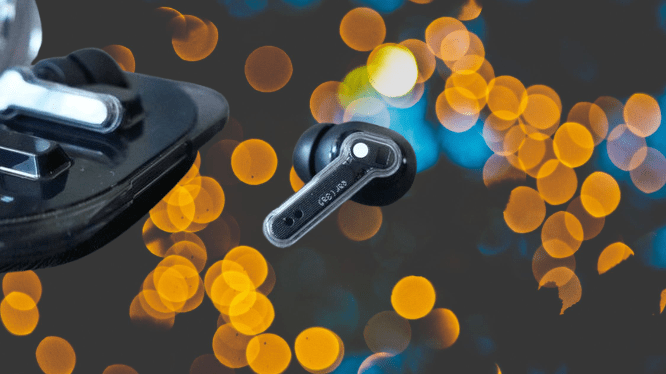
Start with the audio snapshots, since they’re the less questionable of the two. This grabs 30 to 60 seconds of whatever’s playing through your buds. Turn on pre-recording, and it captures up to 30 seconds before you even hit the button, though that disables LDAC while it’s active.
Either way, you’re capped at 60 seconds total. It’s a decent way to grab a quote from a podcast or hold onto a thought from a video, though I didn’t find myself reaching for it much. Everything gets saved inside the Nothing X app.
You may also like: New JBL Sense Pro and Sense Lite open-ear earbuds
Call recording does exactly what it sounds like. It saves your call audio straight to the app. It’s limited to certain regions, switched off by default, and the app does prompt you to get consent from the other person first, which is a good sign Nothing thought about this one carefully.
When I tested it on a call with a friend, we both heard a clear audio warning counting down before recording started: “This call will be recorded in 3, 2, 1.” That’s reassuring, but it’s still worth thinking about how a feature like this could be abused. Nothing has put the right safeguards in place for now, though it’s an odd addition, and not something I’d reach for myself.
The app also includes AI transcription, with a fast standard mode and a slower, more accurate “precise” mode. And yes, there’s a paid Pro tier waiting behind a free trial.
You get 120 minutes of cloud transcription a month to test it out, but Nothing hasn’t confirmed what it costs after that. The company only says pricing and plans “may vary,” so heads up: there’s a subscription tucked into this app, and you might end up paying for it without fully realizing it when the free trial runs out.
Nothing Ear (3a) Battery Life
Battery life was probably the biggest weak spot on the original Ear (a), which only claimed 5.5 hours with ANC running. The (3a) bumps that up slightly to 6 hours on a single charge with noise cancelling switched on.
You may also like: CMF Teases New Earbuds, Likely Buds Pro 3 Successor
Turn ANC off, and that climbs to around 10 hours per charge, with a total of 42 hours once you count the case. With ANC on throughout, you’re looking at roughly 25 hours total.
Honestly, that’s a smaller jump than I expected from either the buds or the case, and it puts the (3a) squarely in average territory for this price range. The cheaper EarFun Air Pro 4 Plus manages about 8 hours with ANC on, the OnePlus Buds 4 gets 6.5 hours, and Google’s Pixel Buds 2a hit around 7 hours despite a smaller case battery.
Battery capacity matters for more than just how long you can listen in one sitting, too. Batteries degrade over the years, so starting with more headroom means the buds stay usable for longer overall.
You may also like: Marshall Milton ANC: Specs, Battery Life and Price
To put Nothing’s numbers to the test, I ran a three-hour drain test: Spotify at 50% volume, ANC on, streamed from an iPhone 17 Pro over AAC. The buds dropped from 100% to 65% in that time, which suggests real-world battery life could run longer than the official rating, at least if you keep the volume moderate.
That’s a good sign, even accounting for the fact that battery drain rarely stays perfectly linear. It’s also worth noting Nothing likely tested its official figure using LDAC rather than AAC, and LDAC tends to drain batteries faster, which could explain the gap.
Nothing Ear (3a) Sound Quality
Sound quality comes down to taste, and plenty of listeners love heavy bass. But for me, the Ear (3a) leans too far into it out of the box. Tracks come through boomy and muffled. Sam Fender and Olivia Dean’s “Rein Me In” turned into a woolly mess on the default tuning, which Nothing labels “Balanced.” That name doesn’t match what I heard.
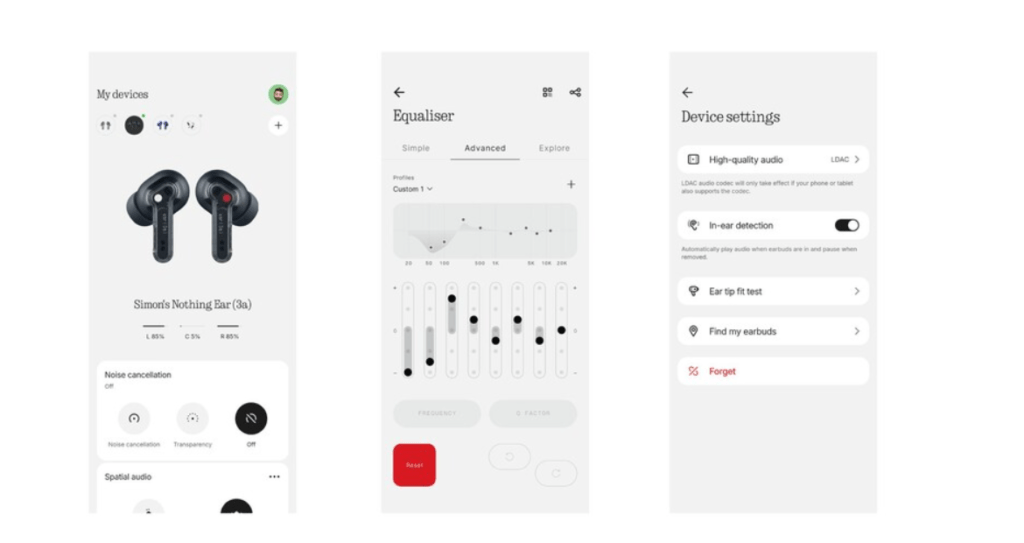
Gracie Abrams’ “Hit the Wall” had the same bass problem, though her vocals still came through with a nice shimmer underneath it. The fix is heading into the Nothing X app and using either the Simple Equaliser or the 8-band Advanced Equaliser to pull back the bass and push the mids up slightly.
Those adjustments make a real difference. The sound cleans up noticeably, though it still stops short of feeling truly detailed. I tested this across both an iPhone 17 Pro and a Nothing Phone (3), and Android users get a small edge here, since LDAC pulls out a bit more texture and nuance than AAC does.
Skip the presets in the Simple tab. They swing too hard in one direction or another. You’re better off spending a few minutes dialing in the custom settings yourself. Nothing also has an Explore tab with EQ profiles tuned by other users, which is a fun way to experiment, and you can share your own settings with friends too.
You may also like: Lenovo Headphone Yoga PC Edition
As for spatial audio, I wasn’t a fan. The “fixed” mode Nothing built sounds hollow and echoey, and it doesn’t do anything meaningful for Dolby Atmos content. Skip it entirely.
Nothing Ear (3a) Verdict
These earbuds hold their own at this price point, and in some ways, like fit and noise cancelling, they actually worked better for me than Nothing’s own flagship Ear (3). Still, the under $100 category is packed with strong options, and there are a few I’d point you toward before these. That said, the Ear (3a) is compact, stylish, loaded with features, and easy to customize to your taste. It’s still worth putting on your shortlist.
Pros |
Cons |
| Sleek design and small charging case | Very bass-heavy by default |
| Improved comfort, fit and ANC | Case can’t be opened one-handed |
| Good sound quality, with the equaliser, and good value price | Not the most battery life earbud you can get. |
Final Thoughts
Nothing got the priorities right with the Ear (3a). Fit, comfort, noise cancelling, and controls all saw real improvement. The recording features feel like a stretch, but you can ignore them entirely if they don’t interest you.
On pure value, the EarFun Air Pro 4 Plus is still tough to top, and it costs noticeably less. The Sony WF-C710N and OnePlus Buds 4 are also worth a look if sound quality and ANC performance top your list. That said, the Ear (3a) holds its own here, and if the design speaks to you, it’s an easy one to choose.
There’s not much to criticize in the feature set itself. You get a lightweight build, stronger ANC, dependable pinch controls, a case that actually fits in your pocket, and app features worth using, including a real parametric equaliser.
If none of that changes for you, and you can live without Auracast, LE Audio, wireless charging, a more balanced sound out of the box, or a longer battery life, then the Ear (3a) is an easy buy.