
The wireless microphone space has gotten crowded fast. DJI has been the one to beat, pushing the bar higher with each new version of its Mic series. Now Insta360 is stepping in with its own flagship option, the Mic Pro, and it brings two features that no competing product currently offers.
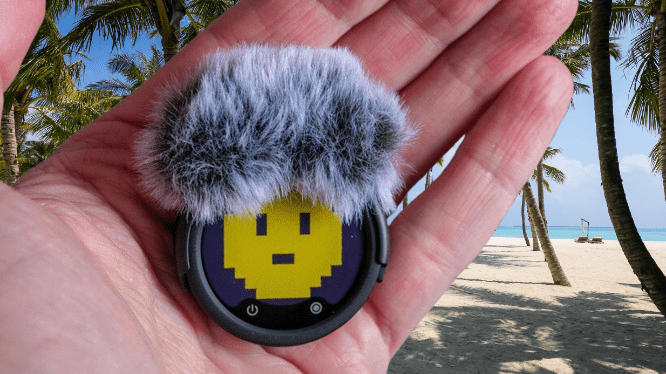
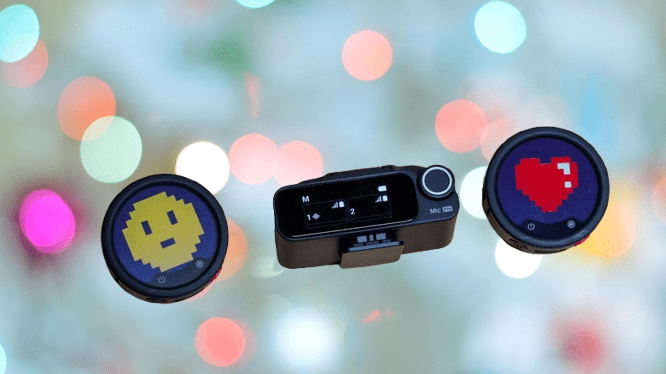
The first is an E-ink display built into each transmitter. Through the Insta360 app, you can upload any graphic you want and it shows up on the 1.22-inch screen. What makes it stand out is that the image stays visible even after you switch the transmitter off.
The second is a three-microphone array that gives you four polar patterns to choose from: omnidirectional, super-directional, cardioid, and figure-8. The system processes these in real time using digital signal processing, so you are not locked into one pickup pattern for every situation.
The rest of the spec sheet holds up well too. You get 32-bit float internal recording, 32GB of onboard storage, AI noise cancellation powered by a dedicated NPU, timecode sync, and a wireless range of up to 400 meters. The multi-channel recording options are also more flexible than most competitors offer at this price.
You may also like: 4K DJI Mini 3 Drone Fly More Combo Deal: $575 (20% Off Limited Time)
The full kit, two transmitters and one receiver, costs $279. That puts it squarely in the same bracket as the DJI Mic 3. Whether it earns that price is worth looking at closely.
Insta360 Mic Pro Full Specs
Insta360 Mic Pro Design
The Mic Pro transmitter has a distinct shape. It is a circular puck, 38mm across and 12.2mm thick, with the E-ink display covering the entire front face. Without a clip or magnet attached, it weighs 19.7g, light enough to sit on a lapel without feeling like a burden, though it is slightly heavier than the transmitters that come with the DJI Mic 3.
You may also like: Nothing Ear (3a) Review: Better Fit, Same Great Price
The display is the first thing people will notice. The six-color E-ink screen shows logos and text with clean detail, and because it stays on even when the transmitter is powered down, your graphic is always visible.
E-ink only draws power when the image changes, unlike OLED or LCD screens that consume battery constantly, so the display has almost no impact on battery life. It is a practical design choice that also sets the Mic Pro apart visually from anything else currently available.
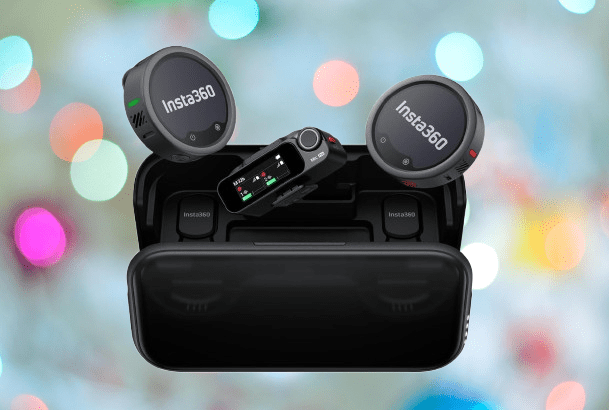
Attaching the transmitter to clothing works the same way as DJI’s system: you choose between a clip or a magnet. The clip does double duty as a cold shoe adapter, which means you can mount the transmitter directly onto a mirrorless camera.
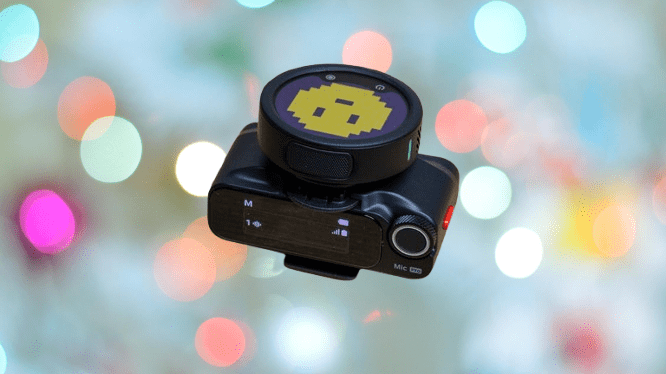
That is worth noting and something worth revisiting when looking at real-world performance. The receiver is a rectangular unit with a small screen, a cold shoe clip, and both USB-C and 3.5mm output options.
You may also like: DJI Osmo Pocket 4: 1-Inch Sensor, 4K 240fps, and More
The charging case looks sharp at first glance. A clear front panel shows both transmitters, the receiver, and neat compartments for clips, magnets, and phone adapters. But once you start using it regularly, a few things become frustrating.
The transparent panel picks up fingerprints easily and will likely scratch over time with regular handling. The hinged lid also does not open and close as smoothly as you would want from a product at this price.
Storage is another issue. There is no slot inside the case for the 3.5mm audio cable or the windshields, so both end up in the separate fabric pouch that comes in the box.
You may also like: Hohem Eyepic Gimbal Doubles as a Wearable Action Camera
DJI handles this better. The Mic 3 and Mic Mini 2 cases have dedicated spots for windshields, which keep everything together and save time when you are setting up outdoors.
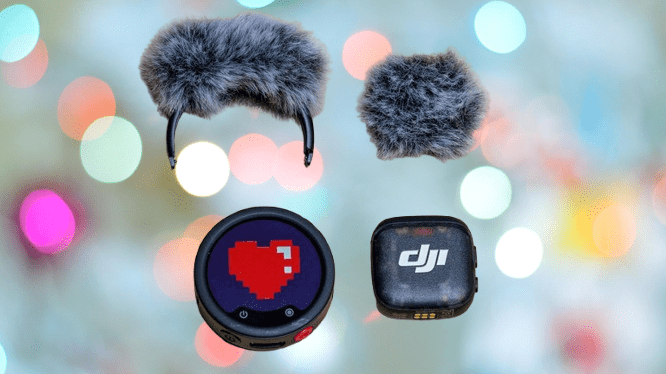
The full $279 kit does include that fabric carrying bag, so you can store the case, cables, and windshields together in one place. It works, but it adds a step.
One more thing worth flagging. The kit does not include a Lightning adapter. Insta360 sells one separately, but it is not in the box.
You may also like: DJI Osmo Pocket 4P vs Insta360 Luna Ultra Compared
Given that Apple has fully moved its current iPhone lineup to USB-C, the decision makes sense from a forward-looking perspective. But if you own an older iPhone, it is an extra purchase you will need to factor in.
Insta360 Mic Pro Features
The Mic Pro uses three microphones to give you four polar pattern options: omnidirectional, super-directional, cardioid, and figure-8. These are not four separate physical capsules. Instead, the system combines and processes the input from three omnidirectional microphones using digital signal processing to produce each pattern.
In practice, the differences are real. The figure-8 mode is genuinely useful if you are recording a two-person interview, since it picks up sound from the front and back while rejecting noise from the sides.
For most everyday recording situations, though, you will probably set it to omnidirectional and leave it there. The directional modes become more relevant when you mount the transmitter on a camera, where controlling what the mic picks up is more important.
You may also like: DJI Avata 360 Camera Drone Review: The Best 360 Drone You Can Buy
Multi-channel recording is another area where the Mic Pro goes beyond what most products in this size range offer. A 4-to-1 mode lets you connect four transmitters to a single receiver, giving you four separate isolated tracks with no external mixer needed. That is a practical setup for panel discussions or podcasts with multiple guests.
A 2-to-4 mode works the other way, sending two transmitters to four receivers at once, which solves audio distribution across multiple cameras on a shoot. These are configurations you would normally expect from much larger and more expensive systems.
Timecode sync is also on board, supported by a TCXO oscillator that keeps drift under one frame over 24 hours. On a multi-camera production, that level of precision matters.
The Mic Pro also connects directly to compatible Insta360 cameras over Bluetooth, including the X5, X4 Air, Ace Pro 2, and GO Ultra. This gives you 48kHz audio without needing the receiver at all. It is the same concept as DJI’s OsmoAudio setup, just built into Insta360’s own ecosystem.
You may also like: Insta360 X6 vs X5: Is the Upgrade Worth It?
Battery life is good across the board. Each transmitter runs for 10 hours, the receiver lasts 11 hours, and the charging case extends total use to 30 hours. If you run low, a five-minute charge adds another 1.5 hours of recording time.
Insta360 Mic Pro Audio Quality
Audio quality from the Mic Pro is strong. Wireless transmission runs at 48kHz/24-bit, which is the standard for this category, and every recording I made came out clean and detailed with no obvious issues.
The 32-bit float internal recording is worth understanding before you get too excited about it. Like other wireless mics that support this format, the 32-bit float only applies to what gets saved directly onto each transmitter’s 32GB of internal storage.
The live wireless signal still maxes out at 24-bit. That is a common limitation across the category, not something unique to the Mic Pro.
That said, the internal recording is still a genuinely useful backup. The 32-bit float format gives you a much wider dynamic range than standard 24-bit recording, which means if something unexpectedly loud happens during a shoot, you can go back to the internal recording and recover the audio in post without clipping.
At live events or in unpredictable shooting situations, that safety net can save a recording that would otherwise be unusable.
You may also like: Canon RF 14mm F1.4L VCM and RF 7-14mm Fisheye Hands-On Review
The internal storage holds up well in practice. You get close to 45 hours of 32-bit mono recording or around 22 hours in 32-bit stereo on each transmitter’s 32GB of storage.
The stereo internal recording option stands out on its own because it appears to be something no other product in this category currently offers, made possible by the three-microphone array.
The noise cancellation is what impressed me most during testing. The Mic Pro gives you two levels, Weak and Strong, plus the option to turn it off entirely. I tested both settings against a fan running in my office.
The Strong setting removed the fan noise completely, with nothing left behind, and more importantly, my voice sounded completely natural throughout. No artifacts, no thinning of the audio.
I ran the same test with the DJI Mic 3 for comparison. The Mic Pro’s Strong mode came out ahead. Weak mode also performed well, which matters because Strong mode is not always available.
It appears to be disabled when you are recording without a receiver connected, so knowing Weak mode still delivers good results gives you a reliable fallback.
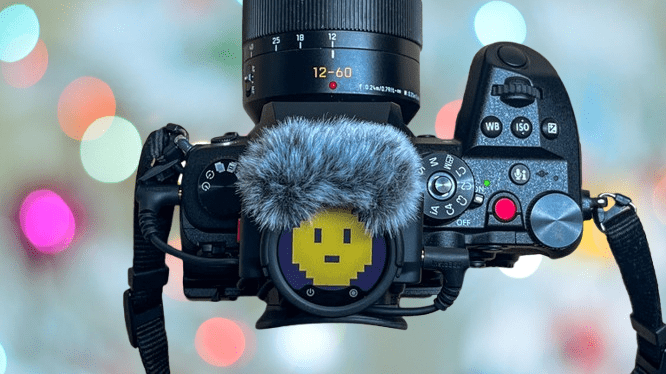
One area that did not deliver was the direct integration with Insta360 cameras. Pairing the Mic Pro with an Ace Pro 2 over Bluetooth was simple enough, but once connected, the options were limited.
You cannot access noise cancellation or adjust settings through the camera menu, aside from gain control. That is a real gap, especially when you compare it to how well DJI’s equivalent setup works within its own ecosystem. Camera-level control is a big part of why people choose the Mic 3 for Insta360 or DJI camera workflows.
You may also like: Best Bose Headphones and Earbuds to Buy in 2026
Firmware updates could fix this down the line, but right now, DJI’s OsmoAudio integration feels more complete and better thought out.
Insta360 Mic Pro Verdict
The Insta360 Mic Pro enters a crowded market and actually brings something new to it. The E-ink display is a first for this category, and the three-microphone array with DSP-driven polar pattern selection gives you recording flexibility that no competing product currently offers.
Noise cancellation beats the DJI Mic 3 in direct testing, and the ability to mount it on a camera cold shoe and use it as a directional mic is something even DJI has not managed to replicate.
A few design choices could be better, but at this price, it is a strong alternative for creators who will genuinely take advantage of what sets it apart.
Pros |
Cons |
| Best-in-class noise cancellation | Windshields don’t fit in the charging case |
| Customisable E-ink display | Insta360 camera integration feels unfinished |
| Cold shoe mounting adds versatility with 32-bit float internal recording and 32GB storage | No Lightning adapter included |
Final Thoughts
The Insta360 Mic Pro is the most technically ambitious compact wireless mic I have tested. That is not a small claim, given how competitive this space has become.
The E-ink display is a genuine first in this category, and it serves a real purpose rather than existing purely for looks. The selectable polar patterns add flexibility that most users will appreciate in specific situations, even if they rarely switch between them.
The noise cancellation is the best I have encountered in this class of product, based on everything I tested it against.
The design has some rough edges, and the Insta360 camera integration still needs meaningful improvement. But neither issue takes away from how capable and distinct this product is overall. If you are a creator who will actually put its standout features to use, the Mic Pro is a serious option worth considering.