
Infinix has been around for 13 years, with roots connected to Hong Kong, Pakistan, and Nigeria, but it’s still a brand most people in Western markets haven’t come across. That’s mostly a distribution problem, not a quality one.
The company builds its phones primarily for markets across India, Africa, and Southeast Asia, but importing the flagship models has become simple enough that it’s worth putting them to a proper test against what’s sitting on shelves in Europe and the US.
The phone we’re looking at here is the Infinix Note 60 Ultra, the larger of the two new models the company just released. It comes with a notable design detail: an official collaboration with an Italian automotive design firm. That partnership alone makes it worth a closer look.
Infinix Note 60 Ultra Full Specs
Infinix Note 60 Ultra Design
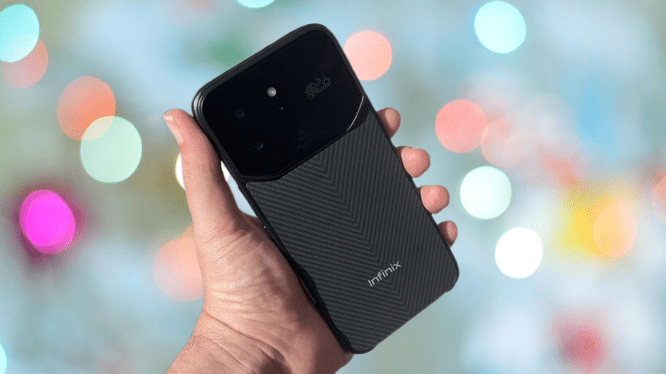
Pull the Infinix Note 60 Ultra out of the semi-rigid case it ships in, and you’ll get a proper look at what Pininfarina contributed to the design. It’s a tall, slim candybar-style phone with a dark finish, and it carries that collaboration well. If the black isn’t your style, Infinix also offers it in red, blue, and silver colorways, each with an Italian-themed twist.
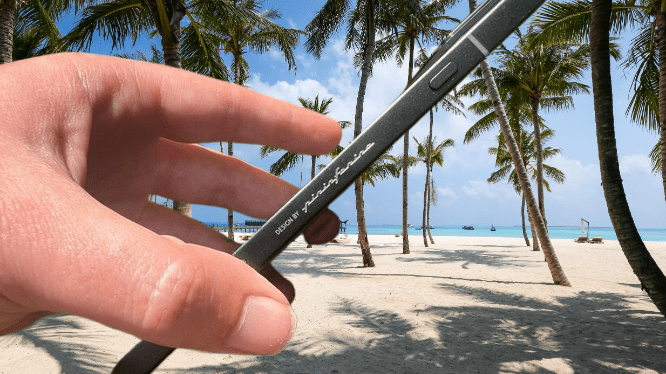
The left side has a small multi-use button that works a lot like Apple’s Action Button. You can assign apps or specific actions to a single tap or a long press, which is a useful addition. The right side is a bit more confusing. There’s a flat, sensor-style zone on the frame that turns out to be a health monitor, but Infinix doesn’t explain it anywhere during setup, so most users will likely ignore it without ever knowing what it does.
You may also like: Xiaomi 17 Ultra Review: Best Camera Phone of 2026
On the audio side, the Note 60 Ultra has stereo speakers with JBL branding, and they actually sound good for a phone at this price point.
Flip the Note 60 Ultra over, and the Pininfarina influence becomes obvious. The back has a carbon fibre finish, a visor-style camera housing, hidden lighting accents, and an etched signature on the body.
Infinix describes the shape as designed for “low-drag,” which is a fun bit of automotive branding on a phone you’re mostly going to hold in your hand.
Next to the cameras sits a small dot-matrix display. It doesn’t connect directly to the car theme, but it’s a genuinely interesting feature that feels like something the ASUS ROG Phone line experimented with a couple of years ago. You can run small animations on it, and yes, there are little games built in.
The Note 60 Ultra also supports two-way satellite connectivity, which is a rare feature at any price point. Testing that wasn’t possible in this review, but it’s a real differentiator on paper. What we could test was the IR blaster on the top edge, a feature that’s quietly disappeared from most modern phones.
If you still have older TVs or appliances running on infrared remotes, having it built into your phone is more useful than it sounds.
You may also like: Samsung Galaxy A57 Design Leaked: Thinner Profile, Better Specs Than Galaxy A56
Our review unit came with a compact 100W charger, but it’s not confirmed as a standard inclusion with every purchase.
What Infinix officially mentions is the MagCase, which you can see above. Two other accessories, the MagCharge Base and the MagPad, are also listed but weren’t included with our unit. Based on the names, both are likely wireless charging accessories designed to work with the MagCase.
Infinix Note 60 Ultra Screen
First impressions on the display were decent but not quite what you’d expect from a phone at this price. The 6.8-inch 1.5K AMOLED panel is perfectly usable, but it doesn’t have the same visual punch as other handsets in this range. Even after adjusting the display settings, the colors felt a step behind what the spec sheet suggests.
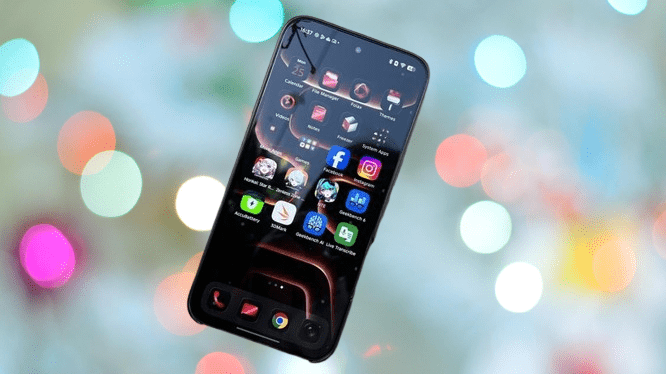
Where it does deliver is brightness. The Note 60 Ultra gets genuinely bright, bright enough to stay readable under direct sunlight during a harsh summer day. That’s one area where the AMOLED tech earns its place.
You may also like: Xiaomi Redmi Note 15 Pro Plus 5G Review: Strong Battery and Sharp Display
The high peak brightness should make it a good fit for HDR content, but the support isn’t there. You get Ultra HDR for photos, and that’s about it. HDR10, HLG, and Dolby Vision are all absent. It’s not a dealbreaker since most people watch HDR content on larger screens anyway, but it’s a gap worth knowing about before you buy.
The display tops out at 144Hz, which is a plus for gaming, but the refresh rate options have a noticeable gap at the lower end. It steps between 60, 90, 120, and 144Hz with no option to drop below 60Hz. That means no 1Hz low-power mode for reading, and no 24Hz cinematic mode for video purists.
It also ships set to 60Hz by default, which contributed to that underwhelming first impression straight out of the box.
The 144Hz mode helps in games, but the touch polling rate doesn’t fully keep up. Missed taps show up more than they should, particularly on the lock screen, and it gives the overall interaction a slightly rough feel.
That said, the display is still large, bright, and clear. For everyday use, most people won’t have complaints.
Infinix Note 60 Ultra Software and AI
The Note 60 Ultra runs Android 16 with Infinix’s XOS 16 skin on top. The software experience is reasonable overall.
There’s some social media bloat pre-installed, but the e-commerce clutter is minimal. Most of the extra apps are first-party Infinix utilities, which take up space but aren’t as intrusive as third-party installs.
You may also like: Nothing Phone 4a Pro Review: Worth Buying in 2026?
The bigger issue is the Google News feed panel. Swipe right from the home screen, and you’ll find it loaded with content sources you didn’t ask for, including Taboola turned on by default.
You can switch these off manually, but having to do that on a phone in this price range is frustrating. This isn’t a budget device, and the ad-heavy default setup doesn’t match the premium positioning Infinix is going for with the Note 60 Ultra.
The Note 60 Ultra includes a Game Mode overlay that will feel familiar if you’ve used Poco or similar gaming-focused Android phones. It gives you quick access to battery settings and performance metrics without leaving your game.
It also doubles as a game launcher, with download shortcuts for titles like PUBG Mobile, Free Fire, and Mobile Legends built right in. Those are essentially ads, but they fit the audience Infinix is building this phone for.
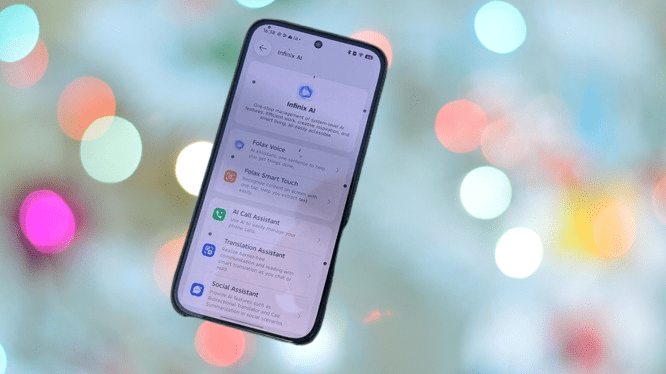
Dig into the settings, and there’s a good range of AI tools tucked away. Infinix doesn’t rely on Google Assistant or Gemini here. Instead, it uses its own Folax assistant, triggered by a half-second press of the power button. The feature set covers call summaries, bi-directional translation, circle to search, real-time subtitles, and a handful of other tools that are genuinely useful in day-to-day use.
On the generative AI side, the Note 60 Ultra can rewrite text, turn photos into live wallpapers and themes, and interpret finger-drawn sketches to generate a proper image from your rough doodle. That last one is where the “Note” in the name comes from.
Most of this processing likely runs on remote servers by default, but there’s a toggle in the settings to force everything on-device instead, which is a welcome option for anyone mindful of data privacy.
You may also like: OnePlus 15R Review: Built for Battery Life, Durability, and Everyday Work
Software support runs to three years of major OS updates and five years of security patches. It’s not the best you’ll find at this price point, but it’s not bad either.
Infinix Note 60 Ultra Camera
The camera system on the Note 60 Ultra is more than just a design statement. The triple setup on the back leads with a 200MP main sensor, supported by a 50MP 3.5x telephoto and an 8MP ultrawide. It’s a well-rounded configuration, and it holds up in real-world use.
The main camera is the clear highlight. It uses Samsung’s 1/1.4-inch ISOCELL HPE sensor, which is a meaningful step up from the previous generation and most of the competition around the $750 mark.
In daylight, shots come out detailed and sharp, with good contrast, accurate white balance, and good dynamic range. Colors look vivid without being pushed too far, and photos generally look finished straight out of the camera app.
The full 200MP mode exists, but it’s more of a spec sheet feature than something you’ll reach for regularly. It’s slower, produces very large files, and doesn’t add much visible detail over the standard shooting mode. Stick with the default, and you’ll get better results faster.
You may also like: Xiaomi 17T Pro Review: Big Battery, Familiar Design
The 50MP telephoto is another strong performer. At its native 3.5x zoom, images come out sharp and well-contrasted with consistent color and reliable white balance. Blues can run slightly oversaturated, and darker foliage doesn’t always resolve perfectly, but as a zoom lens you’ll actually use, it does the job well.
Go past that native zoom, and the quality drops off noticeably. At 7x, softness and digital artifacts become hard to ignore. Staying at or close to 3.5x gives you the best results.
The 8MP ultrawide looks underwhelming on paper, but it performs better than the number suggests. Detail is limited by the sensor size, but colors are accurate, dynamic range holds up, and the autofocus adds useful flexibility for close-up shots. It’s not a standout, but it’s not filler either.
The 32MP front camera also surprised. It doesn’t fully use every megapixel to its advantage, but selfies come out sharp with natural skin tones, good color, and solid dynamic range. It handles lower light better than most front cameras at this price, which is worth noting.
Infinix Note 60 Ultra Performance
The Infinix Note 60 Ultra runs on the MediaTek Dimensity 8400 Ultimate chipset, and it handles daily use without breaking a sweat. It’s not the most powerful option you’ll find at this price, but it’s more than capable for what most people actually do with a phone.
You may also like: OnePlus Pad Go 2 review: Better than all mid-range tablets
Whether you’re running demanding mobile games or just browsing through ad-heavy websites and apps, the chipset keeps things moving without slowdown or hesitation.
To put the performance into actual numbers, the Infinix Note 60 Ultra scored 1,298 on Geekbench 6 single-core and 6,435 on multi-core. For context, some cheaper phones running MediaTek’s 9500 chipset score higher on those tests. But those phones don’t come with a 200MP Samsung sensor or a Pininfarina-designed body.
In practice, the Note 60 Ultra handles demanding games like Neverness to Everness on max settings without issue. The trade-off is straightforward: you’re paying for the camera system and the design as much as the raw processing power.
Mobile chipsets across the board are strong enough that most users will never hit a wall in everyday use. That said, if your main priority is having extra headroom for whatever the next generation of mobile games demands, there are better-optimized options at this price.
Infinix Note 60 Ultra Battery Life
The Note 60 Ultra carries a 7,000mAh battery, which is slightly smaller than the 8,000mAh cell in the Poco X8 Pro Max but still very large by most standards. Both phones top out at 100W charging, so the Note 60 Ultra fills up faster but won’t stretch quite as far on a full charge.
In real use, it’s comfortably a two-day phone for most people. Taking it from 15% to full passively took well over 24 hours, and a quick 15-minute charge with the 100W charger was enough to add at least two days of standby time. Unless you’re running graphics-heavy games at full brightness for hours at a stretch, you’re unlikely to need to charge it daily.
You may also like: Nothing Phone 4a and 4a Pro Specs and Pricing Leak Ahead of March 5 Launch
Plugged in, the Note 60 Ultra charges to full in well under an hour. It also supports 50W wireless charging if you prefer a slower, cable-free top-up that’s easier on the oversized camera bump.
The included MagCase adds another layer of convenience. It uses a magnet system that works with MagSafe accessories, including the Apple MagSafe Battery Pack and third-party options like the Anker 3-in-1 MagSafe cube, which is a genuinely useful bonus for anyone already in that ecosystem.
Infinix Note 60 Ultra Verdict
The Infinix Note 60 Ultra has a lot going for it: a bold Pininfarina-inspired design, good battery life, and a set of features you won’t find on most phones at this price. But when you weigh it against the competition, rivals deliver better performance, cleaner software, and stronger overall value for the money. It’s worth considering if the design and unique extras are what you’re after, but if raw value is the priority, there are better options worth checking first.
Pros |
Cons |
| Distinctive Pininfarina-inspired design | Poor value versus rivals |
| Great battery life | Software feels cluttered |
| Handy satellite and IR features |
Final Thoughts
The Infinix Note 60 Ultra is a phone that’s easy to appreciate but harder to fully commit to, and it brings a lot of personality.
The Pininfarina design, the dot-matrix display, satellite support, the IR blaster, and the magnetic accessory system all make it stand out from the usual options at this price. The battery life is excellent, charging is fast, and the main camera delivers enough quality to back up the bold exterior.
The problem is that personality doesn’t cover everything at $750. The display lacks the visual punch you’d expect at this price, the software ships with unnecessary clutter, and competing phones offer more processing power and, in some cases, stronger overall camera performance for less money.
That puts the Note 60 Ultra in an awkward position. It’s distinctive enough to get attention, but not strong enough across the board to justify choosing it over better-value alternatives.
If the design and the unique feature set genuinely appeal to you, there’s real value here. If those things don’t matter much, spend some time looking at other options in the mid-range space before making a final call.