
Qualcomm just made picking a flagship Android phone slightly trickier this year. Normally, there is one top-tier chip to worry about, but this time around, there are two: the Snapdragon 8 Elite Gen 6 and the more powerful Snapdragon 8 Elite Extreme Gen 6.
The regular 8 Elite Gen 6 takes over from last year’s 8 Elite Gen 5 as the standard flagship chip for 2026 into 2027, while the Extreme version pushes performance even further.
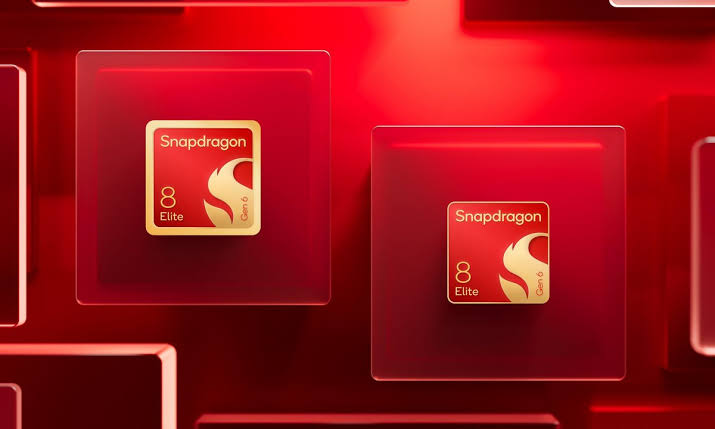
That leaves anyone shopping for a new phone with a simple question: do you actually need the Extreme, or does the regular 8 Elite Gen 6 cover everything you’d want? From what I’ve seen, the answer is fairly simple, and it turns out this difference really only matters to a specific type of buyer.
You may also like: Exynos 2700 May Beat Snapdragon 8 Elite Gen 6, Leak Says
Below, I’ve broken down the clearest differences between these two chips and what they actually mean for everyday use, in plain terms.
8 Elite Extreme Gen 6 vs. 8 Elite Gen 6 Full Specs
Both chips run on TSMC’s 2nm process, and their CPU design matches too: two prime cores clocked up to 5GHz alongside six performance cores. The modem, Wi-Fi, memory support, and other platform features are identical across both as well. Where things actually diverge comes down to four specific areas.
| Area | 8 Elite Gen 6 | 8 Elite Extreme Gen 6 |
| CPU performance | +10% vs. 8 Elite Gen 5 | +13% vs. 8 Elite Gen 5 |
| GPU performance | +35% | +44% |
| NPU performance | +14% | +35% |
| AI efficiency | +20% performance-per-watt | +33% performance-per-watt |
| NPU shared memory | Standard | 50% larger |
| GPU extras | Standard Adreno | Adreno Neural Fusion + 18 MB High-Performance Memory |
| Video recording | 8K @ 30 fps / 4K slow-mo @ 120 fps | 8K @ 60 fps / 4K slow-mo @ 240 fps + APV codec |
| Video codecs | H.265, VP9, AV1 | H.266 (VVC) + H.265, VP9, AV1 + APV |
8 Elite Extreme Gen 6 vs. 8 Elite Gen 6 Differences
Honestly, almost nothing changes here. Both chips handle daily apps, heavy multitasking, and endless social media scrolling without issue. If your phone use mostly involves browsing, messaging, or streaming video, you won’t notice any real difference between the two.
8 Elite Extreme Gen 6 vs. 8 Elite Gen 6: Gaming
Gaming is where the Extreme chip genuinely starts to separate itself. Higher GPU performance, Neural Fusion for AI-driven frame generation and upscaling, and 18MB of dedicated high-performance memory with better power efficiency add up to two real advantages.
Supported games can run at higher frame rates or better visual fidelity at the same power draw, and those efficiency gains should also push back thermal throttling.
You may also like: Intel Arc G3 Extreme Review: A Handheld Powerhouse
Most casual users and even regular gamers won’t notice much difference here, but competitive esports players stand to benefit most from the 8 Elite Extreme Gen 6.
As one analysis put it, Qualcomm can provide the GPU horsepower, AI acceleration, and developer tools, but how much any of that actually translates into a better experience still depends on how deeply individual game developers build it into their titles.
8 Elite Extreme Gen 6 vs. 8 Elite Gen 6: On-device AI
This is genuinely where the Extreme chip justifies its name. A faster Hexagon NPU paired with 50% more shared memory lets it run Mixture-of-Experts models with 30 billion or more parameters directly on-device, while keeping longer context windows responsive rather than sluggish.
In practice, that means a faster, smoother generative AI experience on phones running the Extreme chip. Think creating stickers from photos, generating or editing images and videos right on your device, summarizing lengthy documents, or handling multi-step agentic tasks that pull information across several apps on your phone.
You may also like: Snapdragon 8 Elite Gen 6 Pro Leak: 6GHz Speed with Samsung Cooling Tech
If any of that describes how you regularly use your phone, the Extreme Gen 6 is clearly the stronger pick. For lighter or occasional AI use, the standard 8 Elite Gen 6 handles things perfectly well.
8 Elite Extreme Gen 6 vs. 8 Elite Gen 6: Video Recording & Content Creation
Video capabilities make the gap between these chips much clearer. The standard 8 Elite Gen 6 tops out at 8K/30fps and 4K/120fps, while the Extreme pushes that to 8K/60fps and 4K/240fps. For anyone serious about content creation or smartphone videography, this might be the single most noticeable difference between the two chips in daily use.
So, should you care about the Extreme difference?
Not really, no. Not for most buyers, at least. The real dividing line here sits between serious users and actual professionals. The standard Snapdragon 8 Elite Gen 6 should satisfy most flagship buyers, whether for casual or dedicated gamers, photographers, or everyday videographers.
You may also like: Qualcomm Snapdragon C: Specs, Battery Life and Release Date
The Snapdragon 8 Elite Extreme Gen 6 targets a different crowd entirely: professionals whose work actually depends on how fast a game renders, how quickly they can generate images or short-form video content, or whether they can capture 4K slow-motion footage at 240fps.
Everyone else, myself included, can comfortably skip the “Extreme” label and just pick whichever phone offers the better overall package. In most situations, the regular Gen 6 delivers roughly 90% of the experience at a lower price point, which makes the Extreme’s extra power a hard sell unless you actually have a use for it.