
I got my first look at Intel’s new handheld chip back at Computex 2026, catching early hardware like the MSI Claw 8 EX AI+ and Acer Predator Atlas 8 running demos on the show floor. But watching a chip run a demo booth is nothing like putting it through actual real-world use. That chance finally came when MSI sent over the production version of the Claw for testing.
My time with it was brief, but it didn’t take long to see one thing clearly, and that is that Intel’s Arc G3 Extreme is a genuinely capable platform for handheld gaming.
Intel Arc G3 Extreme: A Handheld Built For Watt
What makes this chip stand out is that it isn’t just a repurposed laptop processor crammed into a smaller device. Intel built the Arc G3 Extreme specifically with handheld gaming in mind, tuning both power draw and platform design around portable use.
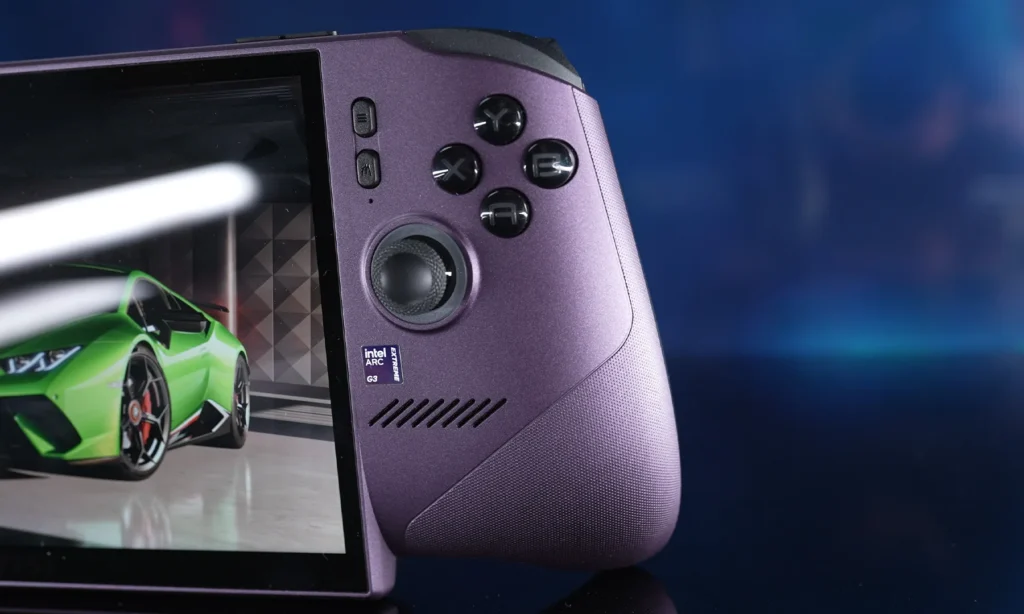
At its core sits the Arc B390 GPU, built on Intel’s Xe3 architecture, packing 12 Xe-cores, hardware ray tracing, and up to 113 TOPS of INT8 GPU compute. Alongside that, you get 14 CPU cores, an NPU, and support for LPDDR5X-8533 memory.
You may also like: Xbox Handheld Logo Spotted on Game Pages, Sparks Rumors
That distinction actually matters a lot, because handheld gaming ultimately comes down to a fight over watts. Power is limited, and every watt spent on the CPU is a watt taken away from graphics performance.
The Arc G3 Extreme leans harder into graphics, and after spending time with it, it’s clear Intel finally built a handheld chip that understands what this category actually needs.
Intel Arc G3 Extreme
One caveat before diving into numbers: my time with the MSI Claw was limited, so all my synthetic and gaming benchmarks ran at its 35W performance setting. This isn’t a full breakdown of how the Arc G3 Extreme behaves across every power level Intel supports. What it does show is what this chip is capable of when given a generous power budget to work with.
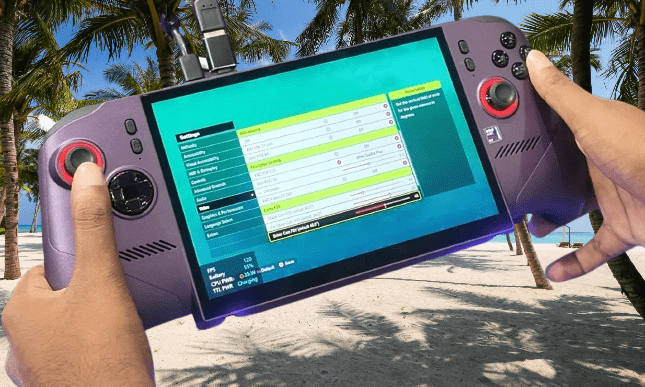
At 35W, the results are genuinely impressive. My synthetic tests showed a level of performance I haven’t seen from an Intel-powered handheld before. The CPU alone holds its own at laptop-class levels, but the real standout is the Arc B390 GPU.
| Benchmark | Score |
| Cinebench 2026 MT | 3646 |
| Cinebench 2026 ST | 497 |
| Cinebench R24 MT | 921 |
| Cinebench R24 ST | 122 |
| Cinebench R23 MT | 14720 |
| Cinebench R23 ST | 2003 |
| GeekBench 6 ST | 2777 |
| GeekBench 6 MT | 14173 |
| GeekBench OpenCL | 52812 |
| GeekBench Vulcan | 58710 |
| 3DMark Time Spy | 7098 |
| 3DMark Fire Strike | 12307 |
| 3DMark Night Raid | 44355 |
In gaming tests, it comfortably outpaced AMD’s Ryzen Z2 Extreme. As it stands, the Claw is the most powerful handheld gaming PC I’ve tested to date.
You may also like: Xbox Ally Handheld Gaming Console Gets 18% Discount on Amazon, Now Available for $489.99
The gaming benchmarks tell an even clearer story. Across the games and settings I ran, the Arc G3 Extreme consistently made 1080p gaming feel genuinely viable on a handheld, and it doesn’t need to rely entirely on upscaling to get there.
Native performance already holds up well, and XeSS 3 adds extra headroom in games that support it. Intel isn’t just closing the gap anymore. It’s competing right at the top of the handheld performance field.
Intel Arc G3 Extreme Performance
Raw power only tells half the story on a handheld. Any chip can look fast at 35W. What actually matters is how it behaves once that power budget shrinks.
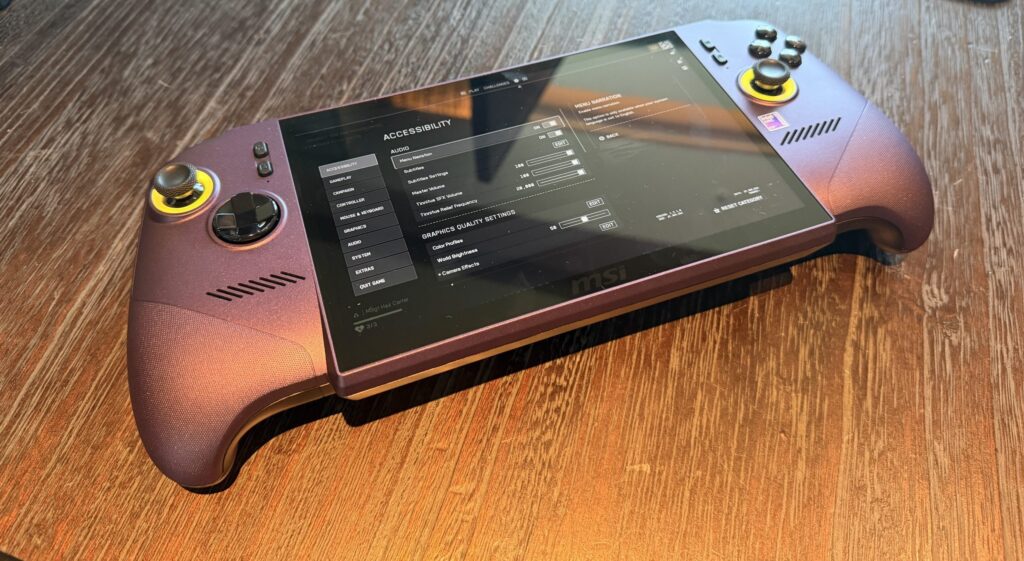
I didn’t have time to run a full breakdown across 17W, 20W, and 25W, so I approached it differently, testing efficiency the way an actual gamer would experience it day to day. I switched to Endurance Mode and played several hours of Sleeping Dogs.
The result was over four hours of continuous play, without the experience feeling watered down. That’s genuinely notable, because the same chip capable of that kind of performance at 35W can also scale down into something practical and battery-friendly.
You may also like: PlayStation 6 Release Date, Price, Specs, and Design: All PS6 Rumors and Leaks
Standby behavior might be my favorite improvement here. Idle drain during testing was practically nonexistent. Leave the Claw asleep overnight, and it wakes up with almost the same charge it had the night before. That matters more than it sounds, because few things kill the appeal of a portable gaming device faster than picking it up and finding a dead battery.
Intel’s Handheld Redemption
I’ve tested pretty much every major handheld out there, the Steam Deck, ROG Ally, ROG Ally X, and other AMD-based devices, and based on all of that, the Arc G3 Extreme is easily the strongest handheld platform I’ve used. That advantage shows up most clearly in demanding AAA titles, but Intel isn’t just throwing more watts at the problem. The chip also scales down intelligently when the workload gets lighter.
You may also like: Intel Arc Pro B70 Leak: 32GB VRAM Workstation GPU Launch Expected Soon
Some context is worth mentioning here. AMD’s Ryzen Z2 Extreme hit the market roughly a year before this, giving Intel time to study the handheld space, refine its drivers, and close the gap that existed.
And the first wave of Arc G3 Extreme devices isn’t cheap, so this won’t replace the Steam Deck or ROG Ally as the mainstream default overnight.
That said, pricing doesn’t take away from what Intel actually pulled off with this chip. Intel has genuinely arrived in handheld gaming, bringing enough raw performance to go toe to toe with AMD at the top of the market, while also nailing the efficiency side needed to make that performance useful once you’re away from a charger.
The original Claw made it obvious Intel wasn’t ready yet. The Arc G3 Extreme makes it just as clear that Intel finally is.