
Samsung just pulled the wraps off its newest flip phone, and naturally, the question on everyone’s mind is how it stacks up against last year’s model.
If you’re already carrying the Galaxy Z Flip 7, which earned a good 4.5-star rating, do you actually need to jump to the Z Flip 8? And if you’re new to flip phones and just now deciding to buy one, should you go with the newer Z Flip 8, or grab the Z Flip 7 and pocket the savings?
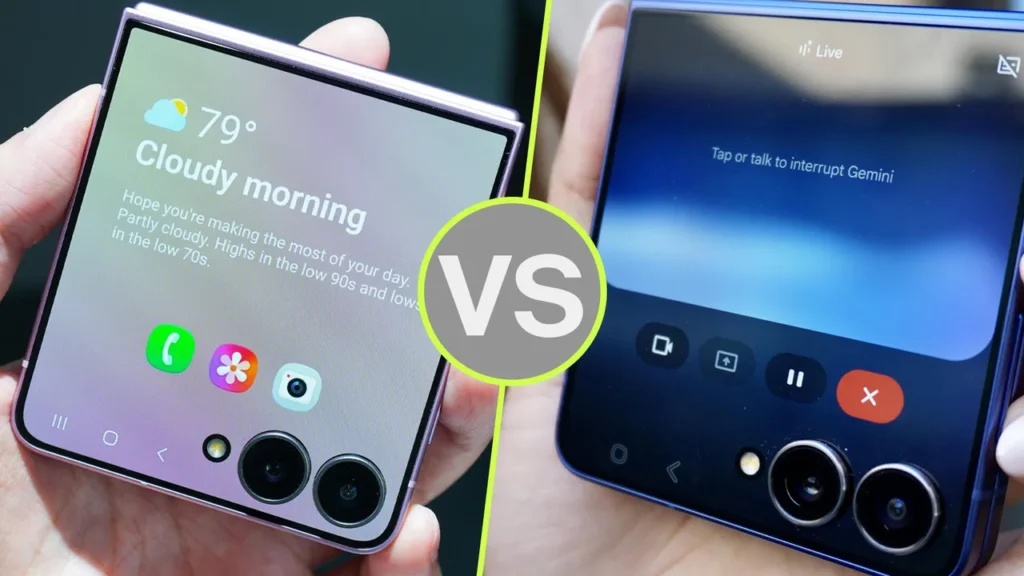
We put the specs of both phones side by side to break down what’s actually different and what’s basically the same, so you can figure out which one makes sense for you.
Galaxy Z Flip 8 vs Z Flip 7: Price and Availability
Right now, you can pre-order the Samsung Galaxy Z Flip 8 ahead of its official launch on August 7th. It starts at $1199.99, making it the most affordable phone in Samsung’s 2026 foldable lineup.
You may also like: Samsung Galaxy Z Fold 8 Display Upgrade: 20% Crease Reduction With Dual UTG Technology
The Galaxy Z Flip 7, meanwhile, carries an official price tag of $1394. That said, you can already find it discounted if you look around, and that price will likely drop even further once the Galaxy Z Flip 8 officially takes over.
Exynos 2600 vs Exynos 2500
The biggest gap between these two phones sits under the hood. Both run Samsung’s own chips, but the Z Flip 7 uses last year’s Exynos 2500, while the Z Flip 8 steps up to the Exynos 2600 for Galaxy.
You might notice the Snapdragon 8 Elite Gen 5 for Galaxy is missing here, and that’s a fair thing to wonder about. But it makes sense once you think about what the Flip line is for. This isn’t Samsung’s productivity phone, so leaning on Exynos instead of Qualcomm’s top chip tracks.
We haven’t tested the Exynos 2600 for Galaxy ourselves yet, but Samsung says it’s built to handle heavy daily use, with an NPU strong enough to run the full lineup of Galaxy AI features people expect on these phones now.
You may also like: Samsung Galaxy Z Flip 8: Price, Specs, and Release Date Leaks
As for the Z Flip 7, we tested the Exynos 2500 and came away impressed. It moved fast and handled everyday tasks without any lag or slowdown.
Our benchmarks showed it beats 2024’s Snapdragon 8 Gen 3, but it still fell short of 2025’s Snapdragon 8 Elite. Going by that pattern, we’re expecting the Exynos 2600 to bring a real performance jump this year, though it probably still won’t catch up to Qualcomm’s current flagship chip, the one running inside the Z Fold 8.
Galaxy Z Flip 8: Weight and Size
At a glance, the Z Flip 8 and Z Flip 7 look nearly the same, but Samsung made some real changes under that familiar shape. The clearest one is weight. The Z Flip 8 comes in at 180g, down from 187g on the Z Flip 7. Not a huge drop, but you’ll notice it.
Lighter doesn’t mean flimsier here, either. Samsung built the Z Flip 8 with Armor Aluminium casing and Gorilla Glass Victus 2, so it’s meant to take a beating. The hinge got an upgrade too, now using Armor FlexHinge, which is supposed to make opening and closing the phone feel smoother.
You may also like: Galaxy Z Fold 8 Now Remembers Rotation Lock Per Screen
Samsung didn’t stop at trimming weight; they cut down the thickness too. Unfold the Z Flip 7, and it measures 6.5mm. The Z Flip 8 beats that at 6.1mm, thin enough to put it just barely behind the Galaxy S25 Edge and iPhone Air in the slimness race.
Galaxy Z Flip 8 vs Z Flip 7: Inner Screens
Design tweaks aside, both phones keep the same screen sizes, a 4.1-inch cover display and a 6.9-inch inner one. Samsung sticking with these numbers makes sense, but it also means a few problems from last year probably haven’t gone anywhere.
You may also like: Google Pixel 10a Release Date Leaked: Launching February 17 at Lower Price
The cover screen was the sticking point on the Z Flip 7. We liked the bigger size on paper, but using it day to day felt clunky.
Samsung only lets you launch a handful of pre-approved apps from that screen. Want more than that? You’ll have to install Multistar to unlock it, which shouldn’t really be necessary. On top of that, typing on the cover screen keyboard felt slow and laggy, so firing off a quick reply to a text wasn’t really practical.
The inner screen tells a better story. It behaves almost exactly like a normal phone screen. You’ll still run into black bars on the sides when watching video shot in a standard aspect ratio, but that’s a minor complaint.
You may also like: Samsung Galaxy Z Fold 8 Review: Lighter, Smarter Design
Compared to earlier Z Flip models, the Z Flip 7’s inner display was a clear step up. Given the screen sizes are staying the same, we’re expecting the Z Flip 8 to deliver a pretty similar experience here.
Galaxy Z Flip 8 vs Z Flip 7: 50MP Main Lens
Camera hardware isn’t always where Samsung makes its big changes, and the Z Flip 8 follows that same pattern. Just like last year, you’re getting a 50MP main camera and 12MP ultrawide on the back, plus a 10MP front camera for selfies.
You may also like: Samsung Galaxy Z TriFold US Release Date: $2,899 Price, January 30 Launch Date
We tested the Z Flip 7’s camera and came away satisfied. Photos came out detailed and full of color without tipping into that over-saturated look some phones lean into.
The main lens also handles 2x zoom well, holding onto detail even without a dedicated telephoto lens backing it up, which is a nice touch. Low light is where it stumbled a bit, with images occasionally coming out hazy. Still, overall the camera setup held its own, and we’re expecting the Z Flip 8 to perform about the same.
Galaxy Z Flip 8 vs Z Flip 7: Early Verdict
Keep in mind, we haven’t actually reviewed the Galaxy Z Flip 8 yet, so this isn’t a final verdict. But based on what we know so far, we don’t think there’s enough here to justify upgrading if you’re already on the Z Flip 7.
If anything, the Z Flip 7 might be the smarter buy for anyone working with a tighter budget and still wanting a foldable, especially since you can find it discounted right now.
Yes, the Z Flip 8 is thinner, lighter, and running a newer chip. But strip that away, and you’re still looking at the same design, the same screens, the same cameras, and the same battery.