
Huawei just teased its next blood pressure watch, and it finally breaks away from the bulky design that’s defined this category since 2021.
The Watch D3 showed up unannounced at the European Society of Cardiology Congress in Munich this week, just days before its official reveal on September 2. Most smartwatches guess your blood pressure using wrist sensors. This one doesn’t guess. It takes real readings.
How does the Huawei Watch D3 work?
The Watch D3 uses an inflatable strap with a small pump built right in, basically packing a full blood pressure cuff into something you wear on your wrist. Huawei first introduced this approach back in 2021 with the original Watch D, then added 24-hour ambulatory monitoring with the Watch D2 in 2024.
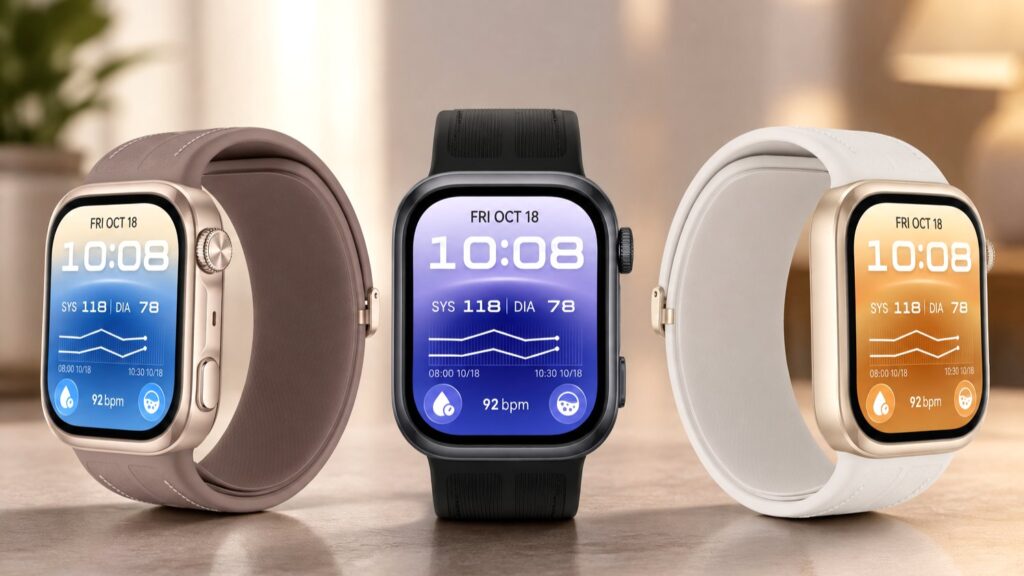
This third generation shrinks the case down to about 11.4mm thick, a real drop from the D2’s 13.3mm, putting it close to Apple’s Watch Ultra in terms of size. The screen also grows to 1.92 inches, and Huawei fitted it with a 540mAh battery rated for around six days per charge. Expect the Watch D3 to come in black, white, or brown straps, paired with either a silver or gold case.
Huawei Watch D3
Huawei says accuracy holds up even when your heart rate spikes, and the watch can now suggest workout intensity based on readings taken before and after exercise. It also prompts you to check your blood pressure during sudden temperature changes or high-altitude trips, and the whole system has earned CE MDR certification in the EU.
You may also like: Best Fitness Trackers 2026: Top Picks Tested and Ranked
The Watch D3 also brings deeper Health Glance data, plus upgraded sleep and emotional wellbeing tracking. It buzzes every 30 minutes as a check-in reminder, and it keeps monitoring through the night while you sleep.
Apple is working toward similar hypertension alerts for its own Watch lineup, but without dedicated hardware like this built in. Expect pricing around 449 Euros, and a US release still doesn’t look likely.