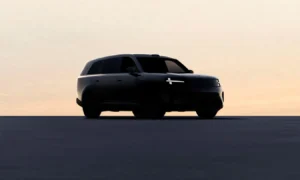

Volkswagen just launched a new sedan in China that’s turning heads for what it packs in, and what it costs. The ID. Era 5S starts at just 89,900 yuan, roughly $13,400, while combining a plug-in hybrid powertrain with up to 160km of electric-only range.
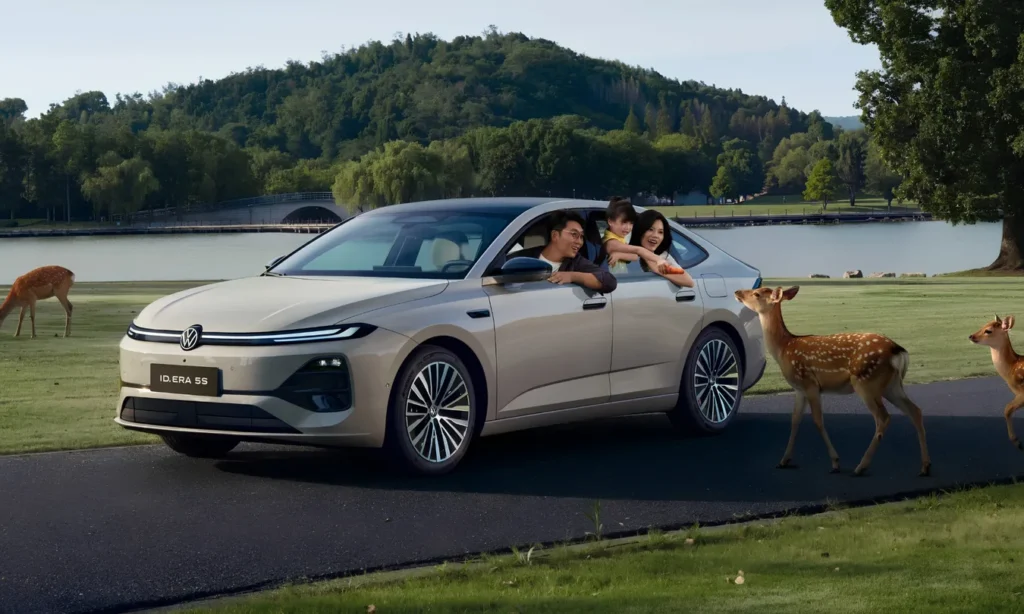
The car debuted officially at the 2026 Chengdu Auto Show, marking the second sedan in Volkswagen’s China-exclusive ID. Era lineup. Built through the SAIC-Volkswagen joint venture, the 5S targets China’s increasingly crowded market for affordable new-energy vehicles head-on.
Volkswagen and Chinese EV Market
Price is genuinely the biggest talking point here. At 89,900 yuan, the entry-level ID. Era 5S sits right alongside several conventional sedans and domestic EVs, including the BYD Qin Plus and Geely Galaxy Starshine 6, according to CarNewsChina’s pricing comparison.
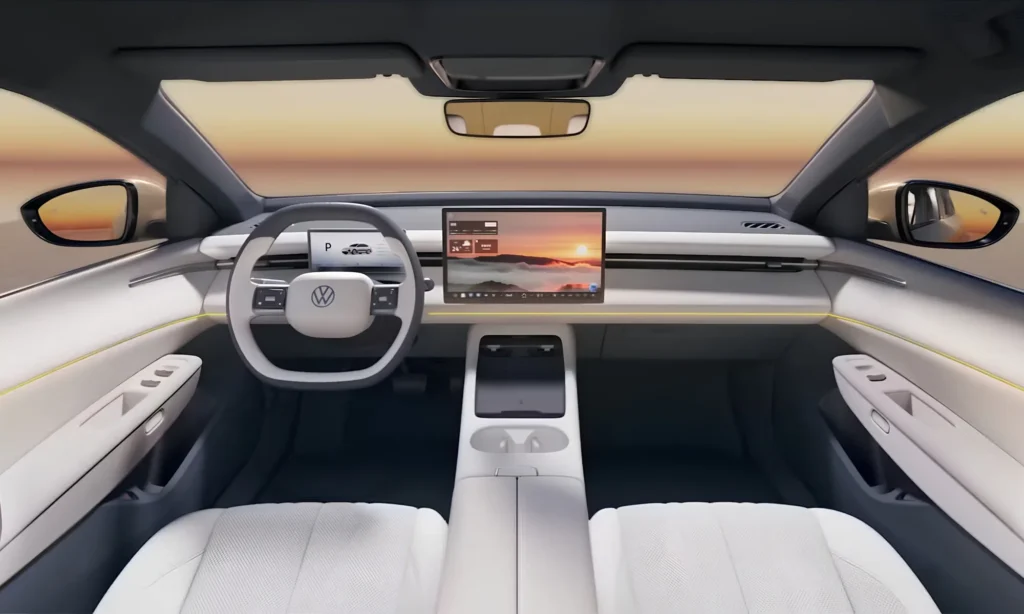
Under the hood, it pairs a 1.5-liter naturally aspirated engine with a 130kW electric motor and a 19.1kWh LFP battery sourced from Rept Battero Energy.
Volkswagen claims up to 160km of electric-only range under China’s CLTC testing cycle. Both AC and DC charging are supported, with DC charging capable of taking the battery from 30% to 80% in about 15 minutes. Vehicle-to-load functionality is included too.
You may also like: EV Batteries Last Longer Than Expected: Here’s the Data
The ID. Era 5S measures 4,836mm in length, riding on a 2,766mm wheelbase. Power routes to the front wheels, and the suspension pairs MacPherson struts up front with a multi-link setup out back.
Volkswagen is also leaning heavily into tech for this one. A 15.6-inch infotainment display sits alongside an 8.8-inch digital instrument cluster, and the car supports Apple CarPlay, Huawei HiCar, and CarLink. Higher trims add heated and ventilated seats, a 16-speaker sound system, and navigation-assisted driving features.
Volkswagen ID. Era 5S Pricing
The ID. Era 5S matters because Volkswagen is up against a genuinely tough challenge in China right now. Domestic brands have gotten remarkably good at building feature-rich EVs and plug-in hybrids at prices foreign automakers often can’t match.
You may also like: Xiaomi SkyNomad N90 Max Gets Pop-Up Roof Bedroom
When compared to the cars sold in the US, the ID. Era 5S looks even more striking. At around $13,400, this plug-in hybrid costs roughly half what many of America’s cheapest mainstream sedans go for, including the Kia K4, Nissan Sentra, Hyundai Elantra, Toyota Corolla, and even Volkswagen’s own Jetta. Move into electrified vehicles specifically, and the gap widens further.
The 2027 Chevrolet Bolt starts at $28,995, and the 2026 Nissan Leaf starts at $29,990, both more than double the ID. Era 5S’s price. Plug-in hybrids like the Toyota Prius Plug-in Hybrid also start above $30,000.
The comparison isn’t perfectly apples-to-apples, given differences in regulations, taxes, manufacturing costs, and market conditions across countries, but it illustrates just how aggressively China’s car market has driven electrified vehicle prices down.
You may also like: GM’s 2027 EVs Get Native NACS Ports for Tesla Chargers
A starting price around $13,400 gives Volkswagen a much stronger response to that pricing pressure. And since this isn’t a pure EV, it could appeal to buyers who want electric driving for short daily commutes without needing to think about charging infrastructure on longer trips.
Five variants make up the new lineup, officially priced at 119,900 yuan ($17,680), 129,900 yuan, 139,900 yuan, 144,900 yuan, and 149,900 yuan. SAIC Volkswagen is running limited-time incentives that bring those prices down to 89,900 yuan ($13,260), 99,900 yuan, 109,900 yuan, 114,900 yuan, and 119,900 yuan across the five trims.
You may also like: Next-Gen Toyota Corolla 2028 to Get Four Powertrain Options
Those incentives include a 30,000 yuan discount off list pricing, along with perks like a 1,000-yuan deposit that converts into a 5,000-yuan discount on the final payment, plus trade-in subsidies.
Pre-sales for the ID. ERA 5S opened on August 11 at a base pre-sale price of 115,900 yuan. Volkswagen hasn’t announced any plans to sell this car outside China. For now, its significance comes down to what it represents: a major global automaker attempting to compete on China’s own terms, with aggressive pricing, strong electric range, and plenty of onboard technology.