
Nothing launched its first over-ear headphones back in 2025, and based on how often I spot them out in public, they’ve done pretty well. The brand followed up with a cheaper option, the Headphone A, which ended up becoming my go-to pair for months. Now there’s a new addition to get familiar with and that is the Headphone 1 Pro.
These aren’t replacing the original model. Instead, they sit alongside it as a step up in price and positioning, running $339 compared to the Headphone 1’s current $330.
One interesting detail is that the KEF tuned the original Headphone 1, but the new Pro model skips that partnership entirely. I never tested the original myself, though I know its sound signature split opinion, while the Headphone A landed much better across the board. So dropping the KEF tuning might actually be a smart call here.
Still, at $399, this becomes Nothing’s most expensive headphone yet, putting it up against serious competition from established names in the space. The question is whether Nothing can actually hold its own here, or whether these are more style than substance.
Nothing Headphone 1 Pro Full Specs
Nothing Headphone 1 Pro Design
The Headphone 1 Pro pulls off a tricky balance. The design shifts just enough to feel new, while still holding onto the Nothing DNA, similar shape, materials, and overall design language as its predecessors. Personally, I’d call this Nothing’s best-looking headphone yet.
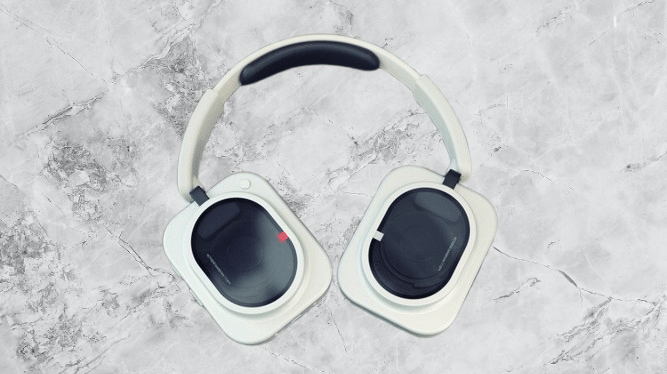
The standout feature is a glass window on each earcup, letting you see straight into the internals, all finished in a flawless matte black. Nothing has toyed with transparent designs since day one, but I’ve never seen a transparent section with this much visual depth before. It genuinely looks impressive.
You may also like: Nothing Headphone (a) Price and Release Date Leaked
Like the original Headphone 1, the Pro keeps a matte aluminum finish that stays cool to the touch and feels genuinely premium. The transparent section switches to shatter-resistant Panda Glass this time instead of plastic, adding to that premium feel while resisting scuffs better too. Surprisingly, none of this adds weight; in fact, the spec sheet lists the Pro as lighter than the original.
The earcup cushions got redesigned as well, now 50% softer. That makes a real difference for glasses-wearers like me, since it creates a better seal around the frames while staying comfortable. A new silicone baffle sits in the middle of each cushion too, reducing sound leakage and improving passive isolation.
The headband cushion also grew thicker and wider, easing pressure on the top of your head. Beyond that, the overall shape and button layout stay familiar if you’ve used other Nothing headphones before, which, honestly, is a good thing.
Every control has its own distinct shape, so you can identify what you’re adjusting purely by touch. There’s no touch-sensitive surface here; everything is fully tactile, and each control even makes a unique sound when pressed. I particularly like the ratcheting click that plays through the headphones as you turn the volume roller.
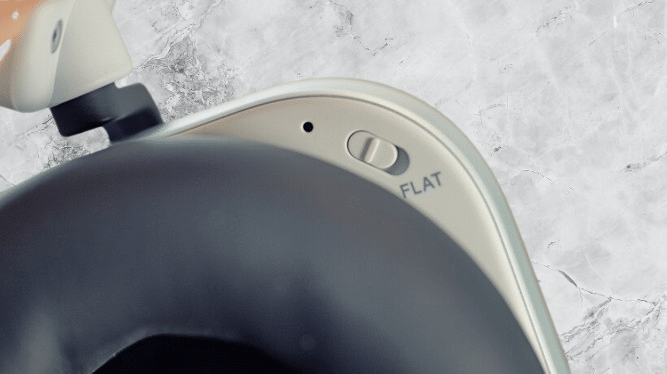
I’ve used the Headphone A daily since it launched, so these controls feel second nature to me already. The only real change is a new, well-hidden switch that activates Flat EQ; more on that shortly.
One issue I did run into is that, when wearing the Headphone 1 Pro around my neck, the volume occasionally shifts from brushing against my shoulders. That never happened with the Headphone A, and I suspect the heavier metal chassis on the Pro might be to blame.
On the upside, despite the added weight, comfort holds up just as well, if not better, than the lighter Headphone A. I wore them through nearly a full workday on multiple occasions with barely any discomfort.
The Headphone 1 Pro comes in Black or White, though I’d honestly describe the lighter option as more of a grey or silver shade. Nothing sent me both colors to compare side by side, and I genuinely struggled to pick a favorite. The lighter version stands out more visually, while the black model looks incredibly sleek. Either way, you won’t go wrong.
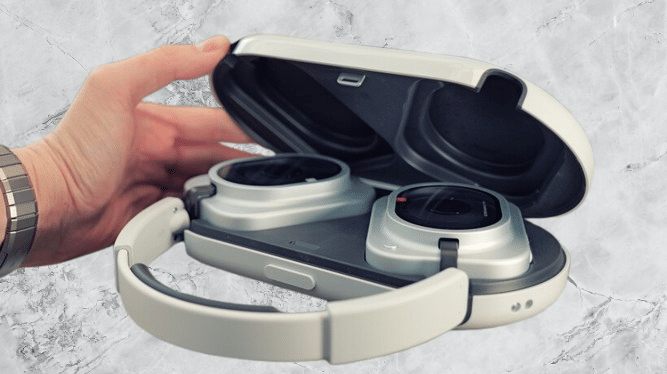
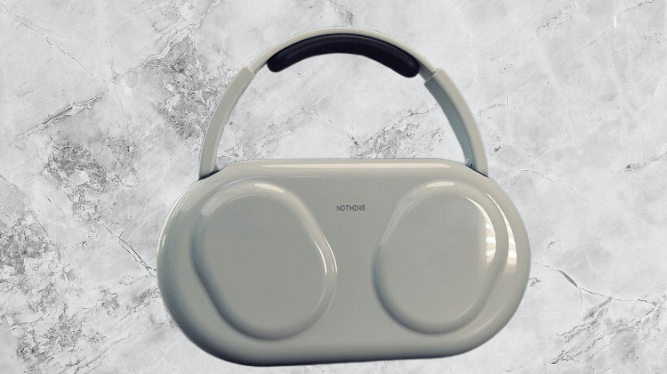
Whichever color you choose, you get the same glossy grey hardshell case in the box. Nothing says it drew inspiration from Peli Cases, the kind used to transport high-end camera equipment. It’s a hinged clamshell that opens with a push button, though it only protects the earcups, leaving the headband sticking out like a carrying handle.
You may also like: Lenovo Headphone Yoga PC Edition
There are attachment points on either side too, letting you add your own shoulder strap and carry the headphones like a handbag, though no strap comes included. It’s a fun concept, but with zero internal storage in the case, I imagine few people will actually use it that way regularly.
Still, the hardshell case brings something genuinely creative compared to the usual velvet pouch most brands include. The trade-off is that your headband stays exposed during travel, and I doubt that glossy plastic finish will stay pristine forever, though maybe that’s the point. Well-worn Peli Cases don’t look pristine either.
Nothing Headphone 1 Pro Features
The Nothing Headphone 1 Pro works with the Nothing X app, just like the rest of the lineup. You can handle the basics entirely through the onboard controls, but digging into the app settings is worth your time if you want to really customize the experience.
The app covers firmware updates, button remapping, managing connected devices, EQ, and spatial audio settings. You can even build a personalized sound profile tailored to your own hearing.
This version of the personal audio profile feels a bit more basic compared to what some competing brands offer, but the results hold up just as well. It’s not doing anything particularly advanced, no microphone measuring your ear canal like Nura once tried. Instead, it plays tones at different frequencies in each ear and asks whether you can hear them. Simple, but it works, and setup only takes a few minutes.
You may also like: Nothing Phone 4a Pro Review: Worth Buying in 2026?
Instead of the KEF partnership, Nothing teamed up with London-based Metropolis Studios this time. Together they built a new Flat EQ mode along with Studio B, a spatial audio preset modeled on one of Metropolis’s actual recording studios. Five additional Metropolis-approved EQ modes round things out: Bass, Neo Jazz, Electronica, British Rock, and Grime.
The spatial audio effects genuinely impress, noticeably altering the sound without any real quality loss. There’s a head tracking option too, which creates the sensation of sound coming from a fixed point in space around you.
Personally, spatial audio has never fully won me over. I appreciate a wide soundstage, but virtualized echoes and reverb don’t do much for me. I’d rather hear music the way it was originally mixed. That said, the feature is there for anyone who enjoys it, and it works well.
EQ options suit my taste far more, and these headphones offer some of the most thorough EQ controls I’ve encountered. Simple mode gives you five basic presets, plus a custom option with three sliders covering Bass, Mids, and Treble.
If you want deeper control, switching to the Advanced tab lets you build custom EQ curves, up to six bands for the main drivers, plus four extra bands for the precision driver. You can also import those Metropolis Studio presets I mentioned and work from there.
These controls genuinely reshape the sound output. So if the default tuning doesn’t grab you right away, spending some time tinkering here can likely get you close to whatever profile fits your ears best.
Nothing Headphone 1 Pro Noise Cancellation
The Headphone 1 Pro’s ANC now runs on 10 inward-facing microphones, five per side, up from six on the Headphone 1 and just four on the Headphone A. Nothing says positioning the mics inward significantly cuts down wind interference, and overall noise reduction improves by an extra 5dB.
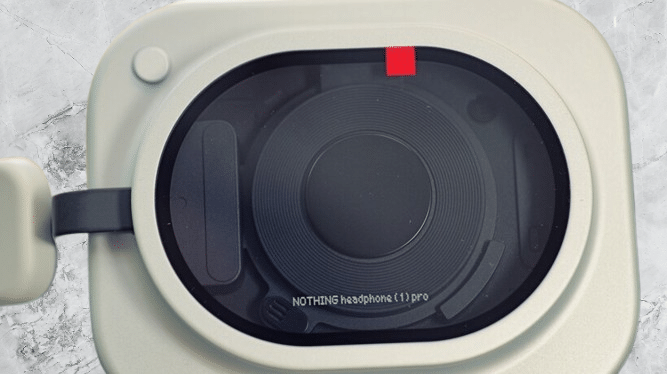
Since I use the Nothing Headphone A nearly every day, the jump here feels huge; the Headphone 1 Pro operates on an entirely different level. Wind noise was always my biggest complaint with the A, and it’s almost completely resolved on the Pro.
You may also like: Marshall Milton ANC: Specs, Battery Life and Price
Background hums disappear entirely too, and the ANC does a genuinely good job muting nearby conversations, something plenty of headphones still struggle with. Transparency mode holds up well too, which comes in handy at home when you’re trying not to seem completely checked out from everyone around you.
Nothing Headphone 1 Pro Battery Life
Battery life holds up well, though it falls short of Nothing’s cheaper models, which feels like a slight step backward. Nothing rates the Pro at 30 hours with ANC or transparency mode running, or 68 hours with both switched off. For comparison, the Headphone A claims 75 hours with ANC active.
Even so, it’s more than enough for how I use them day to day. Despite wearing these for several hours daily, I still only needed to charge them about once a week. Charging is fast too: a full charge takes 2 hours, and just 5 minutes on the charger gives you another 2 hours of listening with ANC on.
Nothing Headphone 1 Pro Sound Quality
The Nothing Headphone 1 Pro uses a genuinely unusual driver setup. Each earcup houses three separate drivers: a standard 40mm dynamic driver, a precision dynamic driver, and an xMEMS solid-state treble driver.
This marks the first time xMEMS drivers have appeared in an over-ear design; they’re typically found in in-ear monitors instead. Here, they handle the 10-40kHz treble range exclusively, while the precision dynamic driver takes care of vocals and mid-range instruments, and the 40mm driver delivers the low-end punch.
As I mentioned, EQ adjustments genuinely transform how these sound, almost like adjusting the volume of each driver as you tweak settings. For simplicity, I’ll focus mainly on the default Balanced EQ mode these ship with.
You may also like: Best Bose Headphones and Earbuds to Buy in 2026
I never tested the original Headphone 1, so comparing directly is tricky, but side by side with the Headphone A, this is a completely different sound signature. The Headphone 1 Pro sounds noticeably more balanced, with excellent clarity across the mids and highs. I wouldn’t call it bright exactly, but it’s brighter than the Headphone A, with less emphasis on the low end.
These headphones can still reach the deepest sub-bass tones, and yes, “Three Ralphs” by DJ Shadow remains my go-to test track for that, but the bass here stays precise rather than exaggerated. The Headphone A practically shakes your head on a track like that, while the Headphone 1 Pro reproduces every tone accurately without leaning into that boomy quality.
I lean toward bass-heavy sound personally, and boosting the low end in the EQ suited my taste better. Even then, though, you won’t quite match the subwoofer-like rumble the Headphone A delivers naturally.
Clarity, on the other hand, isn’t even a contest. The Headphone 1 Pro operates in a completely different league here: airy vocal reproduction, a wider soundstage, and genuinely impressive instrument positioning. Playing “I Can See Clearly Now” by Johnny Nash, I picked out breaths and instrumental details I’d never noticed on other headphones before. It’s seriously impressive stuff.
Another major addition is Flat EQ mode, designed to turn these into near-professional monitors with a single switch. It transforms the sound completely, and for some reason, it disables transparency mode whenever it’s active, leaving you with just ANC on or off as options.
Flat mode definitely isn’t built for casual listening enjoyment. Clarity remains superb, but the sound turns noticeably less lively and vibrant. That’s the intended trade-off, though. I’ve been using this mode for video editing work, and it makes normalizing output levels and dialing in compression settings much easier. Music producers will likely appreciate it even more than I do.
Nothing Headphone 1 Pro Verdict
The Nothing Headphone 1 Pro delivers outstanding clarity and detail, wrapped in a stylish, premium design that doesn’t break the bank. If you want a headphone that handles daily commuting just as well as semi-professional monitoring work, this is the one to get.
Pros |
Cons |
| Super-premium build with excellent audio quality | Nothing’s most expensive headphone |
| Improved ANC | Some controls can be knocked accidentally |
| Highly adaptable EQ |
Final Thoughts
In a lot of ways, the Nothing Headphone 1 Pro carves out its own space in the market. It blends the portability and strong ANC you’d expect from options like the Sony WH-1000XM6 or AirPods Max 2 with an audiophile-grade triple-driver setup, plus a Flat EQ mode built for semi-professional use.
Personally, I’d call these the best-looking headphones on the market right now, and they feel just as premium as they look, thanks to that aluminum and glass earcup design. I won’t claim the ANC here beats everything else available, but it’s genuinely close behind names like Sony and Bose.
At £349, the Headphone 1 Pro sits in direct competition with the Sony WH-1000XM6, while still undercutting both the AirPods Max 2 and Bose QC Ultra Headphones Gen 2 on price.
Where Nothing’s latest really pulls ahead is detail and precision in the higher frequencies. Whether you’ll personally prefer that sound signature is impossible to say for certain, but you’ll almost certainly hear more detail than you’re used to.
If you’re shopping in this price range, the Nothing Headphone 1 Pro genuinely deserves a spot on your list. I’ve thoroughly enjoyed using them, and they’ve become my go-to pair for video editing work.