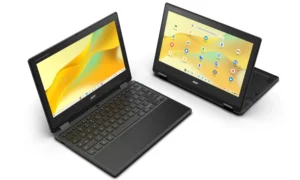

Chromebooks have built their reputation on being cheap laptops meant mainly for browsing. Acer looks ready to challenge that with its upcoming Googlebook 14 GP714-91N, which has already turned up in retailer listings and product databases.
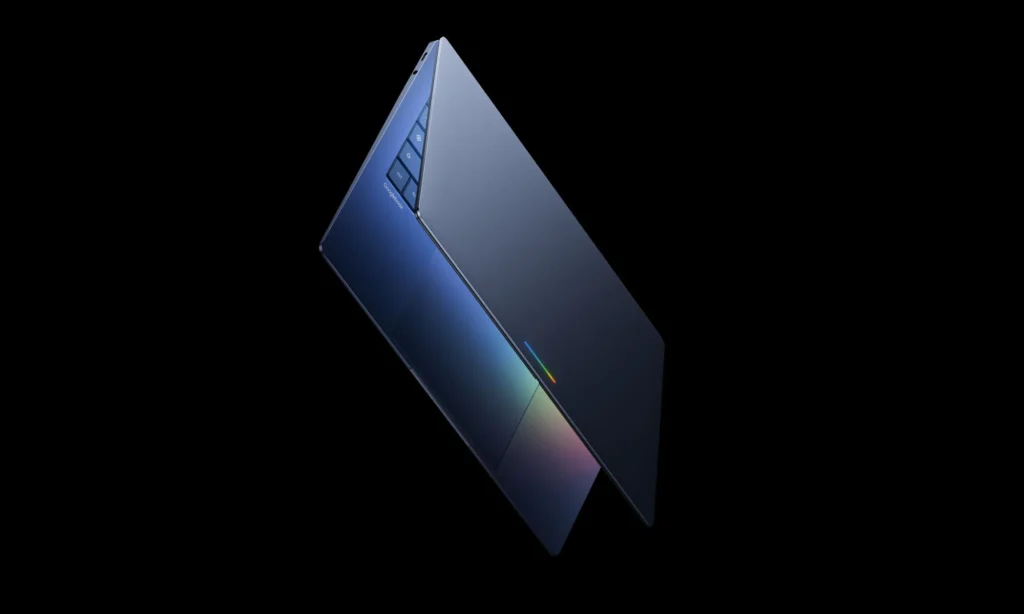
Reported configurations point to Intel’s Core Ultra 7 355, up to 32GB of RAM, and a 2.8K OLED display. NotebookCheck ties this device to Acer’s Moonstone Googlebook project currently in development.
Acer Googlebook 14 Is Not Ordinary Chromebook
What really grabs attention here is the hardware itself. Pairing a Core Ultra 7 355 with 32GB of memory isn’t the setup you’d choose for a laptop meant to just browse the web, stream video, or handle light typing.
The 2.8K OLED display running at 120Hz pushes it further into premium territory too. Benchmarks that surfaced through GbookHub also point to a second configuration, this one running a Core Ultra 5 325 with 16GB of RAM, a 256GB SSD, and the same 14-inch 2.8K 120Hz OLED screen.
You may also like: Acer Chromebook 311 and Spin 311 Specs, Durability, Price, and Release Date
That matters more than it might seem. Premium Chromebooks have always run into the same wall: once the price gets high enough, people start asking why they wouldn’t just buy a Windows laptop instead.
Real, high-end hardware gives Google’s new platform something to compete on besides a low price tag, which is exactly what’s been missing until now.
Acer Googlebook 14 Software
Good hardware alone won’t carry the Googlebook 14 to success, though. Google still has to prove that Android apps, Gemini features, and desktop-style workflows actually feel natural on a laptop screen rather than a phone or tablet.
Stuffing in 32GB of RAM does nothing if the software underneath still feels stretched out of shape, like a tablet interface forced onto a bigger display.
You may also like: Google Chrome Installs 4GB AI Model Without Your Permission
Then there’s the question that decides everything but price. Hardware like this doesn’t come cheap, and it could push the Googlebook well past what people expect to pay for a machine wearing the ChromeOS badge. But if Acer manages to pair this hardware with software that actually feels finished, and prices it sensibly, this could be the moment Google’s laptop platform earns something it’s rarely had: a real case for existing outside the budget aisle.