
Every transparent OLED demo looks impressive at first glance. Then you notice how dim or washed out the image actually is.
The electrode is a big part of the problem. A transparent display needs a see-through electrode sitting directly on top of the organic light-emitting layers, which are extremely delicate. Most available materials either conduct electricity poorly or damage those layers during the manufacturing process.
How is the new electrode produced?
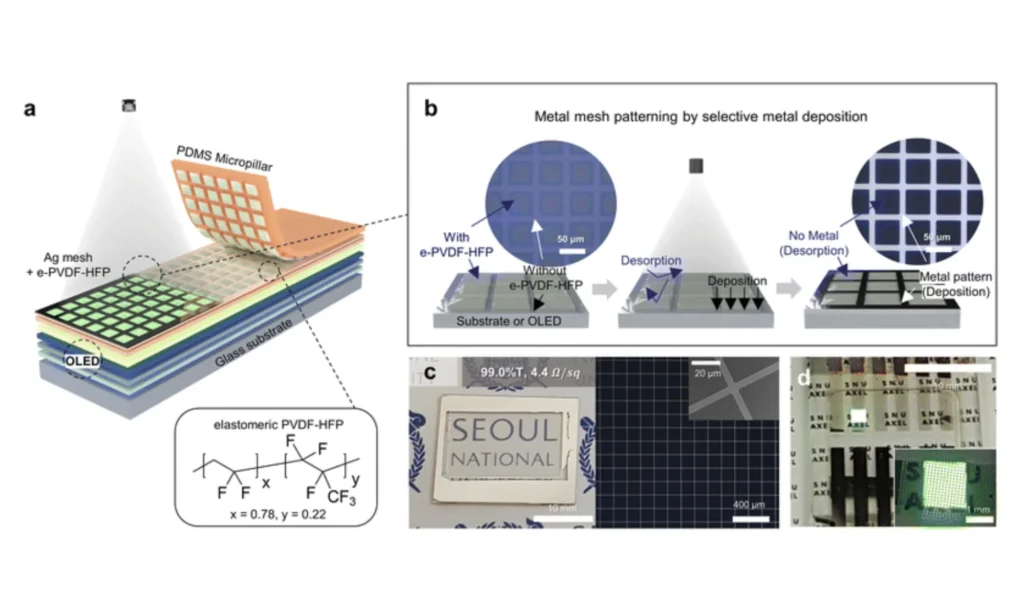
Researchers at Seoul National University found a way around this. Professor Yongtaek Hong’s team developed a process that avoids the harsh chemicals and etching methods that typically damage the underlying organic layers.
You may also like: New OLED Technology Makes Phone Screens Twice as Bright Without Draining Battery
Their approach starts before the metal layer is added. The team first stamps a patterned coating onto the surface, setting up the structure in a way that protects what is underneath.
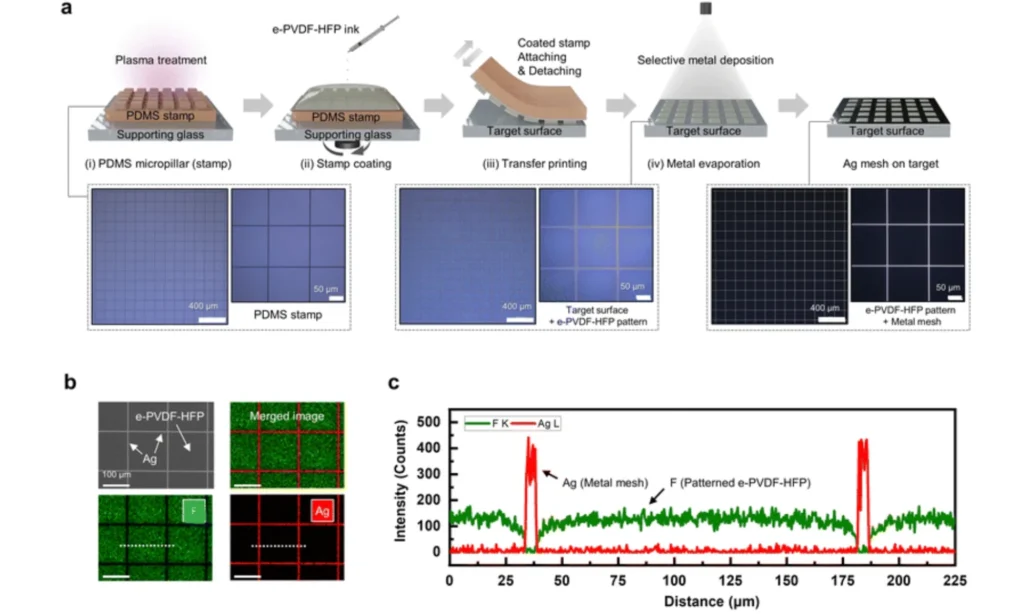
The coating acts as a repellent. When metal vapor is applied over it, the metal bonds to every surface except where the elastomer coating sits. The coating pushes it away.
The result is a self-aligned metal mesh electrode that forms without any rinsing or lift-off process. It achieves 93.6% to 99% transparency, with sheet resistance as low as 1.1 Ohm per square.
For a transparent electrode, that is an exceptionally low number, and lower resistance means better electrical conductivity. The findings were published in Materials Horizons.
Why is the electrode important
This one component had been holding transparent displays back for years. The team’s electrode scored a figure of merit above 10,000, which they describe as one of the best results ever recorded for something this thin.
You may also like: Samsung Odyssey OLED G9 49-Inch Ultrawide 240Hz Monitor at $999
Hong believes the technique could become a standard method for transparent and flexible displays, AR devices, car screens, smart windows, and under-display facial recognition panels.
That does not mean a transparent iPhone or Galaxy S is coming next year. But solving a manufacturing problem like this is exactly how a technology moves from a trade show demo to something worth owning.