
When is the last time you had your cholesterol checked? For most people, the honest answer is “years ago,” since it usually means booking a lab appointment and sitting through a blood draw.
Researchers at Caltech just built something that could change that. It’s a small patch you stick on your skin, and it reads your cholesterol and triglyceride levels continuously, using sweat instead of blood.
How Sweat Patch Cholesterol Monitor Works
Sweat and blood don’t line up in any simple way, so you can’t just measure cholesterol in sweat and assume it matches a blood test result.
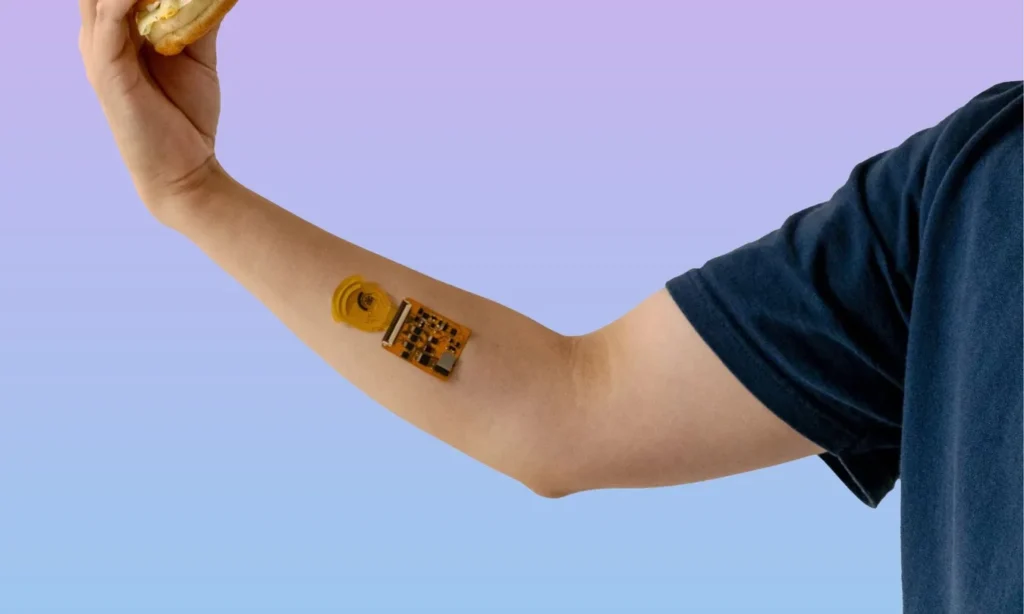
Professor Wei Gao’s team solved that by pairing the physical sensor with a machine learning model that factors in things like your BMI, gender, and how much you’re actually sweating, then uses all of that together to estimate your blood lipid levels accurately.
You may also like: How Amazon’s AI Platform Is Giving Doctors More Time to Focus on Patients
There was a chemistry problem too. Most of the cholesterol found in sweat sits in a form the sensor can’t detect directly. To get around that, the researchers built a two-step chemical reaction that converts it into something the sensor can actually read. They walk through the full process in their published paper.
Sweat-based health monitoring isn’t entirely new either. The US Air Force has tested similar patches before, using them to track hydration and stress levels in demanding environments.
How Caltech Solved the Triglyceride Problem
Measuring triglycerides has its own hurdle. The sensing reaction needs a steady flow of ATP, the molecule your cells use for energy.
You may also like: Samsung Smart Glasses Confirmed: What We Know About the Camera, AI, and Launch Date
To solve that, the team built a special polymer right into the patch that slowly releases stored ATP over time, essentially feeding the sensor a constant supply so it can keep delivering accurate triglyceride readings for over 20 hours instead of quitting after just a few minutes.
So far, this has only been tested on 24 people in an early study, so don’t expect to find it at your pharmacy anytime soon.
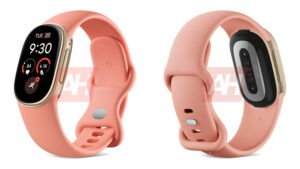
Still, the science behind it marks real progress toward continuous health monitoring without needles. If research like this keeps moving forward, a future smartwatch might eventually read your sweat to give you useful health insights on the spot.