
Xiaomi has built a good reputation by making phones that deliver more than their price suggests, and the Redmi Note 15 Pro Plus 5G is the latest example.
It’s the brand’s top Note model heading into 2026, and it comes with clear improvements over last year’s Note 14 Pro Plus 5G.
You get a larger AMOLED screen, a better IP rating for dust and water resistance, a new Snapdragon chip under the hood, and a lighter frame overall.
Each change on its own is incremental, but together they make a case for the Note 15 Pro Plus being the most well-rounded Redmi Note phone Xiaomi has put out so far.
At $424, the Note 15 Pro Plus costs more than its predecessor and more than the standard Redmi Note 14 Pro from 2025. That price point also puts it in direct competition with some strong alternatives, including the Google Pixel 9a, Motorola Edge 60 Neo, and Honor Magic 8 Lite. Xiaomi isn’t operating in an easy market here.
To find out whether the Note 15 Pro Plus is actually worth this price, I spent the last few weeks using it as my main phone.
Xiaomi Redmi Note 15 Pro Plus 5G Specs
| Xiaomi Redmi Note 15 Pro Plus 5G Review | |
|---|---|
| Battery | 6500 mAh |
| Chipset | Qualcomm Snapdragon 7s Gen 4 |
| Colours | Black, Blue, Brown |
| Fast Charging | Yes |
| First Reviewed Date | 18/02/2026 |
| Front Camera | 32MP selfie |
| HDR | Yes |
| IP rating | IP69K |
| Manufacturer | Xiaomi |
| Operating System | Android 15 |
| Ports | USB-C, SIM |
| RAM | 12GB |
| Rear Camera | 200MP wide, 8MP ultrawide |
| Refresh Rate | 120 Hz |
| Release Date | 2026 |
| Resolution | 1280 x 2772 |
| Screen Size | 6.83 inches |
| Size (Dimensions) | 78.3 x 163.3 x 8.2 MM |
| Storage Capacity | 512GB |
| UK RRP | £429 |
| Video Recording | Yes |
| Weight | 207 G |
Xiaomi Redmi Note 15 Pro Plus Design
Xiaomi didn’t change the design of the Note 15 Pro Plus, but the changes it did make are the right ones. The biggest change is the move to a polycarbonate chassis, which brings the weight down to just 207g in the black version I tested.
The faux leather Mocha Brown model adds one gram, so either way, you’re holding one of the lighter phones available at this price.
The lighter build doesn’t make the phone feel cheap. It feels good in the hand, and the slimmer profile compared to previous Pro Plus models is noticeable day to day.
You may also like: OnePlus 15R Review: Built for Battery Life, Durability, and Everyday Work
If neither black nor brown appeals to you, Xiaomi also offers a Glacier Blue option for something a bit more eye-catching.
The Note 15 Pro Plus has curved edges on both the front and back, which make it different from the other phones in the Note 15 lineup.
Curved displays have fallen out of fashion a bit in recent years, but from a comfort standpoint, they still make sense. The phone sits well in the hand and doesn’t feel awkward during long sessions.
For ports, you get a USB-C connection for charging and a SIM slot on the left side. There’s no headphone jack and no expandable storage, which is now the norm at this price rather than the exception.
Water and dust resistance is where the Note 15 Pro Plus genuinely surprises for its price. It carries IP66, IP68, IP69, and IP69K certification, which is the kind of protection you would normally expect from a flagship phone. That’s a real improvement over the previous model and a meaningful advantage over most competitors at this price point.
The display is protected by Corning Gorilla Glass Victus 2, which adds solid scratch and drop resistance. Xiaomi also ships the phone with a plastic screen protector already applied and a TPU case in the box, so you don’t need to buy anything extra before you start using it.
Xiaomi Redmi Note 15 Pro Plus Screen
Xiaomi bumped the screen size from 6.67 inches to 6.83 inches on the Note 15 Pro Plus, making it one of the largest displays the company has put on a phone at this price.
The panel is AMOLED with a 1280×2772 resolution, and it appears to be the same screen used in the more expensive Xiaomi 15T, which is a genuine win for buyers stepping down from that tier.
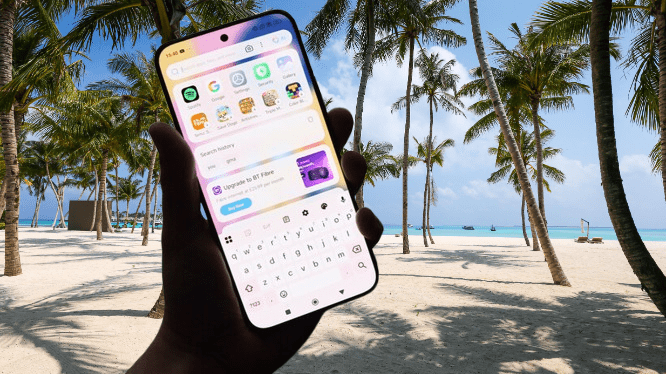
Brightness numbers look good on paper, with up to 1,800 nits across the full panel and 3,200 nits at peak. In daily use, those figures held up. Whether I was watching videos indoors or using the phone outside in direct sunlight, the display stayed clear, and colors looked accurate and vivid.
The panel also supports HDR10+ and Dolby Vision, so compatible content on streaming apps looks noticeably better than it would on a standard display.
You may also like: OnePlus Pad Go 2 review: Better than all mid-range tablets
The display runs at up to 120Hz, which makes scrolling and general navigation feel smooth. It doesn’t use LTPO technology as higher-end phones do, so the refresh rate doesn’t adjust as fluidly between different levels.
In practice, the screen mostly stays at 120Hz, which is fine for everyday use and not something you’ll notice as a problem.
Xiaomi uses an optical under-display fingerprint sensor here, placed fairly low on the screen. It works reliably enough, but it’s a step below the ultrasonic sensors you get on more expensive phones in terms of speed and consistency.
Xiaomi Redmi Note 15 Pro Plus Cameras
Xiaomi’s partnership with Leica hasn’t extended to the Redmi line yet, so don’t expect any of that collaboration to show up here.
The Note 15 Pro Plus keeps things simple with a dual camera setup, a 200MP main sensor with a 1/1.4-inch size, and an 8MP ultrawide.
The setup is similar to what the previous model offered, and the same advice applies. Stick to the main 200MP camera as much as you can. It delivers the most detail, the most natural colors, and the most consistent results overall for a phone in this price range.
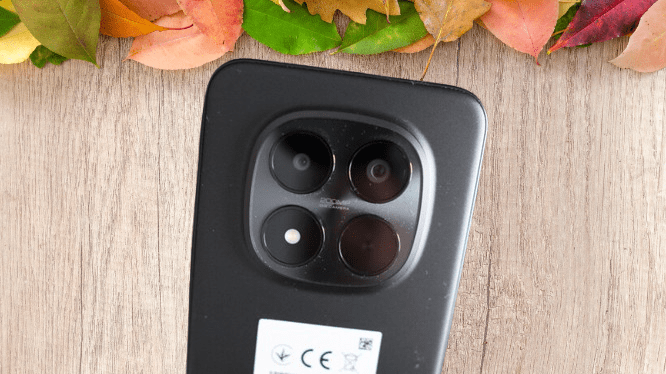
In good light, the main camera produces clean, natural-looking shots. Colors aren’t oversaturated or artificially boosted, detail is sharp, and the dynamic range handles mixed lighting well.
The 1/1.4-inch sensor size plays a big role in that, as it’s larger than what you’d typically find on a phone at this price.
Low light performance is decent but not exceptional. The camera performs well in dim conditions, but when you push it into very dark environments, the images start to lose sharpness. The detail breaks down in the darker areas of the frame, as I noticed in some indoor shots where the lighting was minimal.
Without a dedicated telephoto lens, Xiaomi relies on cropping into the 200MP sensor to simulate zoom. It works reasonably well up to around 4x, where images still hold decent detail. Go beyond that, especially at 10x or higher, and the quality drops sharply.
Sharpness and detail both suffer noticeably at those ranges, which is the expected tradeoff when working with digital zoom alone.
You may also like: Nothing Phone 4a and 4a Pro Specs and Pricing Leak Ahead of March 5 Launch
The front camera is a 32MP shooter, which handles standard selfies well enough. The main drawback is the lack of autofocus, so keeping yourself sharp in the frame isn’t always guaranteed. Portrait mode adds a pleasant background blur, but some shots can come out looking a bit soft overall.
The rear camera records up to 4K at 30fps, and the footage holds up well. The detail is good, and zooming in during video feels smooth. The front camera tops out at 1080p at 60fps, which feels like a step down in comparison. Sharpness and overall quality are noticeably lower than what the main camera delivers.
Xiaomi Redmi Note 15 Pro Plus Performance
Xiaomi moved to the Snapdragon 7S Gen 4 for the Note 15 Pro Plus, stepping up from the Gen 3 chip in last year’s model. My review unit came with 12GB of RAM and 512GB of storage, which is a generous configuration for the price.
In Geekbench 6 testing, the numbers show a modest improvement over the previous model, but nothing dramatic. Performance sits roughly where you would expect from a capable mid-range chip, comparable to what flagship phones delivered a few years ago.
It keeps pace with rivals like the Motorola Edge 60 Neo, though if raw performance is your main priority, the OnePlus Nord 5 still leads the pack at this price point.
The benchmark numbers don’t tell the whole story here. In day-to-day use, the Note 15 Pro Plus feels responsive and quick. Switching between apps, scrolling through social media, streaming music on Tidal, and casual gaming all felt smooth with no noticeable lag or hesitation.
Heavier multitasking can occasionally produce minor stutters, though the processor itself isn’t really the bottleneck. The LPDDR4X RAM and UFS 2.2 storage are the slower components here, and they show their limits when you push the phone harder.
Gaming works well for most titles. When you open a game, Xiaomi’s Game Boost feature activates automatically, giving you options to clear background RAM and switch to a higher performance mode.
The GPU is capable enough to run games like Call of Duty Mobile at 60fps, which covers most of what the average mobile gamer will want to play.
You may also like: Samsung Galaxy A57 Design Leaked: Thinner Profile, Better Specs Than Galaxy A56
During longer, more demanding sessions, the phone does build up some heat. That said, the vapor chamber cooling system keeps temperatures in check well enough that it never gets uncomfortable to hold or starts throttling performance noticeably.
Xiaomi Redmi Note 15 Pro Plus Software and AI
HyperOS, Xiaomi’s Android skin, has never been my favorite because it feels less refined and comes loaded with pre-installed apps you didn’t ask for and likely won’t use.
The iOS influence is hard to miss, particularly in the quick settings panel. You access it by swiping from the right side of the screen, and the layout, including how brightness and volume controls are handled, feels very Apple.
It’s similar to Honor’s MagicOS in that regard, so if you’ve used that before, the adjustment is minimal. If you are coming from stock Android or Samsung, it takes some time to get comfortable with.
On the AI side, you get Google’s Circle to Search and Gemini as the default assistant. Xiaomi also adds its own AI tools, mostly found inside the gallery app.
These include object removal, portrait blur with an artificial bokeh effect, background removal, field of view expansion, and automatic video editing. They work as advertised and add some practical value for photo editing on the phone.
The bigger complaint with HyperOS is the bloatware. The phone comes with Xiaomi’s own MI app store, OneDrive, the Opera browser, and Booking.com already installed.
None of these are apps most people would choose to have, and they take up space and clutter the app drawer from day one. Honor does the same thing, and it’s a habit that more Android manufacturers should drop.
The bigger issue is the ads. They show up constantly throughout the interface, and most of them are for Temu. It makes the software feel cheap in a way that undercuts everything else the phone does well. For a phone at this price, it’s a frustrating experience that Xiaomi really should have addressed by now.
You may also like: Snapdragon 8 Elite Gen 6 Pro Leak: 6GHz Speed with Samsung Cooling Tech
On software support, Xiaomi is promising four years of OS updates and six years of security patches. That’s acceptable but not class-leading. Google offers seven years across both for its Pixel phones, so Xiaomi still has ground to cover on that front.
Xiaomi Redmi Note 15 Pro Plus Battery Life
The 6,500mAh battery is one of the largest you’ll find on a phone at this price, and it shows in real use. Getting through a full working day without thinking about charging is easy, and a small top-up before bed is all it takes to carry that charge into the next day comfortably.
The phone supports up to 100W wired fast charging, but Xiaomi doesn’t include its proprietary charger in the box.
You may also like: Xiaomi 17 Review: Best Compact Flagship of 2026
Using a 66W third-party charger during testing, it took 75 minutes to reach 50 percent and well over two and a half hours for a full charge. That’s slow for a phone claiming 100W support, and you’ll need to buy the right charger separately to get anywhere near those speeds.
There’s also no wireless charging at all, which is a noticeable gap in 2026. Several competitors at this price already offer it, so its absence here is hard to overlook.
Xiaomi Redmi Note 15 Pro Plus Verdict
The Redmi Note 15 Pro Plus 5G gets the basics right. Performance is quick enough for everyday use, the AMOLED screen is large and detailed, and the 200MP main camera produces sharp, natural images. Battery life stands out as one of the phone’s clearest strengths.
You may also like: iPhone 18 Release Date, Price, Specs, and Features: Everything We Know So Far
Where it falls short is in software and competition. For around the same money, other phones offer more processing power and a cleaner Android experience without the ads and bloatware that come baked into HyperOS.
Pros | Cons |
| Excellent battery life | Ad-riddled OS leaves a sour taste |
| Reasonable price to performance | Much more expensive than its predecessor |
| Vivid, detailed OLED screen |
Final Thoughts
The Redmi Note 15 Pro Plus 5G is a good mid-range option. The performance holds up well in daily use, the AMOLED display is large and sharp, and the 200MP main camera captures plenty of detail. Battery life is genuinely one of its strongest points.
That said, it’s not without competition. At a similar price, you can find phones with better performance and a cleaner software experience. The ads baked into HyperOS and the missing wireless charging are real drawbacks that are worth factoring in before you commit.
If raw performance is a priority, the Google Pixel 9a and OnePlus Nord 5 both edge ahead of the Note 15 Pro Plus. Google’s version of Android is also cleaner and more pleasant to use daily, and the Pixel camera continues to be one of the best at this price.
The Nord 5 doesn’t match Xiaomi’s battery life, but OxygenOS keeps things simple with no ads and a much lighter AI footprint than HyperOS.
The Note 15 Pro Plus still has plenty going for it, particularly if you value battery life, a large, bright display, and strong water resistance at this price. It’s a competent phone that delivers on most fronts, just not all of them.