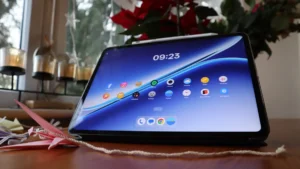

Xiaomi’s flagship camera phone for 2026 is here. This is the Xiaomi 17 Ultra. One thing worth clearing up before we get into it: there is no Xiaomi 16.
The company skipped that number entirely and went straight to 17. The reasoning hasn’t been officially confirmed, but the timing lines up with Xiaomi closing the gap on Apple’s model numbering.
Beyond the number skip, the Xiaomi 17 Ultra comes with a set of meaningful upgrades. You get a new optical zoom system, a redesigned front camera, a better display, the latest Snapdragon processor, and a larger battery than its predecessor.
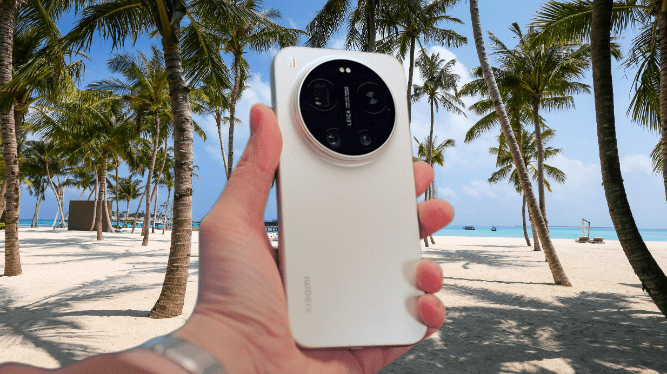
Xiaomi is positioning it directly against the Samsung Galaxy S26 Ultra, Honor Magic 8 Pro, and Oppo Find X9 Pro for the title of best camera phone you can buy. The spec sheet makes a good case. I spent several weeks using it to see whether the real-world results back that up.
Xiaomi 17 Ultra Specs
Xiaomi 17 Ultra Design
The Xiaomi 17 Ultra shares a familiar silhouette with its predecessor; it comes with the same shape, and the large circular camera module remains centered on the back.
The more notable change is the move away from the curves. Both the display and rear panel are now fully flat, replacing the subtle rounded edges the previous model had. That change makes fitting a screen protector much easier, and the overall look feels cleaner. Some people will miss the curved design, but the flat build is the better practical choice.
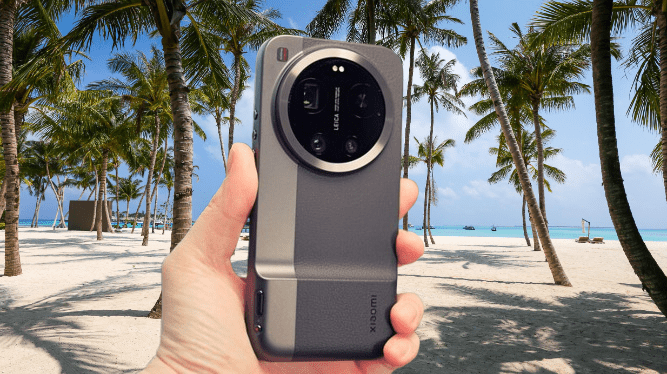
It’s a large phone with some weight to it, which is typical for a device in the Ultra category. The weight increase over the previous model is less than 2 grams, so Xiaomi kept it in check. It’s not light, but it hasn’t gotten any heavier than it needs to be.
You may also like: Xiaomi Redmi Note 15 Pro Plus 5G Review: Strong Battery and Sharp Display
The IP rating gets an upgrade this time. The Xiaomi 17 Ultra carries both IP68 and IP69K certification, compared to IP68 alone on the previous model. That means it can handle submersion at up to 6 meters for 30 minutes, four times deeper than the 1.5 meter standard. The IP69K rating adds resistance to high-pressure hot water jets, which covers situations such as accidental exposure in a hot tub.
A clear case comes with the box, but it’s not the standard flexible TPU type you’d usually expect. This one is rigid, which should help it resist yellowing over time. The tradeoff is that harder cases tend to pick up scuffs more visibly with regular use, so it may not stay looking clean in the long run.
The Xiaomi 17 Ultra keeps the button layout simple, with just a power button and volume rocker. No extra controls are added to the standard model.
That changes if you opt for the Leica LeitzPhone edition. That version adds a rotary dial around the camera module that you can use to adjust zoom.
It’s an interesting idea on paper, and the kind of physical control that photography enthusiasts tend to appreciate. My review unit is the standard model, so I can’t give a hands-on verdict on how well it works in practice.
One concern is that a dial in that position could be easy to nudge by accident during normal handling, but that’s speculation until tested properly.
The Xiaomi 17 Ultra comes in three colors for the global market, which are black, white, and green. My review unit is the white version, which has a clean, understated look with a uniform matte finish on the back and matte aluminum rails on the sides.
The black model follows the same approach, with dark matching rails and a subtle red ring around the camera housing.
The green is the one that draws attention. It features a flecked texture on the rear panel that sets it apart from the other two options, with matching side rails to tie it together.
The Leica LeitzPhone edition offers black and white options, both finished with a vegan leather back panel, two-tone detailing, and the recognizable circular red Leica badge.
An optional photography grip accessory is also available for that version, similar in design to what was offered with the previous generation.
Xiaomi 17 Ultra Display
The Xiaomi 17 Ultra has a 6.9-inch OLED display with a 120Hz refresh rate and a peak brightness of 3500 nits. That’s a step up from the 3200 nits on the previous model.
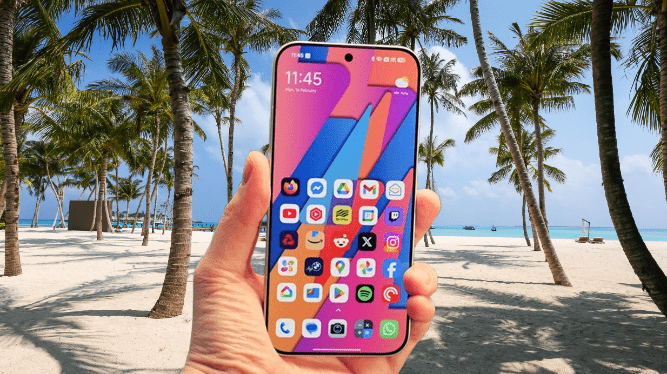
The other change on the display side is PWM dimming, which moves from 1920Hz to 2160Hz. For most people, that difference won’t be noticeable in everyday use. But for those who are sensitive to screen flicker, the higher frequency can reduce eye strain, and that’s a meaningful improvement for that group of users.
You may also like: OnePlus 15R Review: Built for Battery Life, Durability, and Everyday Work
The switch to a flat display made the most noticeable difference to me personally. Curved screens have a nice feel for gesture navigation, but flat panels hold up better against drops, produce less glare in bright conditions, and work with a much wider range of screen protectors. On balance, the flat display is the better choice.
Beyond that, the screen performs exactly as the specs suggest it should. Colors are vivid and accurate, outdoor visibility is good, and HDR content looks sharp and well-defined.
Xiaomi gives you color calibration options if you want to adjust the output, but the default settings are good enough that most people won’t feel the need to adjust them.
Xiaomi 17 Ultra Cameras
Xiaomi made a significant change to the rear camera setup. The previous four-sensor layout is gone, replaced by three cameras. The two separate periscope telephoto lenses have been consolidated into a single 200MP unit that covers an optical zoom range between 3.2x and 4.3x.
Sony has used similar variable zoom technology in its Xperia lineup, but the Xiaomi 17 Ultra distinguished itself with a much larger sensor and higher resolution. The Zoom camera uses a 1/1.4-inch sensor paired with 200MP resolution, putting it in the same category as the Vivo X200 Pro and Honor Magic 8 Pro.
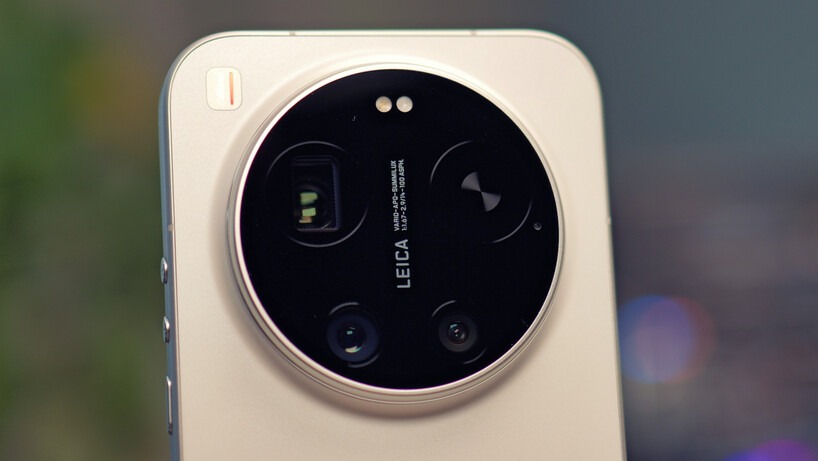
The technology behind it is genuinely impressive. The disappointment comes when you look at the actual zoom range. In full-frame terms, that 3.2x to 4.3x range translates to roughly 75mm to 100mm. That’s a narrow window, and the difference in framing between those two ends is subtle enough that most people won’t notice it in practice.
Beyond the optical range, you’ll be relying on digital zoom. But the combination of that high-resolution sensor and Xiaomi’s image processing means the cropped results hold up far better than you’d expect. The output at higher zoom levels is genuinely good.
You may also like: OnePlus Pad Go 2 review: Better than all mid-range tablets
The area that let me down was close-up telephoto shooting. The new optical zoom configuration limits how close the lens can focus, and it falls short of what the Xiaomi 15 Ultra could do in that regard.
Rivals like the Honor Magic 8 Pro and Vivo X200 Pro also have the edge here. Macro shots are still possible, but you’ll need to rely on digital cropping to get enough framing, whereas the previous model let you move closer to the subject.
The main camera and ultrawide still come with the previous generation specs, and that’s not a problem. Both deliver good results. The main camera stands out, particularly in how it handles low-light conditions well and produces natural background blur, thanks to its large 1-inch type sensor.
The front camera gets an upgrade as well. It moves from 32MP to 50MP and gains a larger sensor, which makes a real difference in lower light. Selfies come out sharp, detailed, and with good dynamic range across different lighting conditions.
Looking at the overall camera experience, the Xiaomi 17 Ultra impressed me. The image processing feels more mature than previous generations.
The slight overexposure and heavy-handed sharpening that used to be a Xiaomi trademark are largely gone. Photos from this phone look natural and well-balanced, closer to what you’d get from a dedicated mirrorless camera than what you’d typically expect from a smartphone.
The video is equally good. The main and telephoto cameras can record at up to 4K 120fps, while the ultrawide and front camera top out at 4K 60fps. You also get a Log profile for color grading in post, along with Dolby Vision HDR recording.
The Xiaomi 17 Ultra is among the best camera phones available right now. Portraits, fast-moving subjects, landscapes, long-distance shots; it handles all of them at a high level.
The one area where it gives ground to some competitors is close-up telephoto shooting. How much that matters comes down to your shooting habits. If macro photography isn’t part of your regular use, it’s unlikely to affect your experience in any meaningful way.
Xiaomi 17 Ultra Accessories
Xiaomi has offered optional photography grips with its Ultra phones for several years, so an accessory for the 17 Ultra was expected. What’s new this time is that there are two separate kits to choose from rather than just one.
You may also like: Nothing Phone 4a and 4a Pro Specs and Pricing Leak Ahead of March 5 Launch
The version most people will recognize, with a detachable battery grip and a standalone phone case, is now called the Photography Kit Pro. The standard Photography Kit is a newer, slimmer option that combines everything into a single all-in-one unit.
The newer standard kit is essentially a phone case with a contoured grip built into the lower section. It has a two-stage shutter button and a dedicated video record button, both connected to the phone via Bluetooth. There’s a small internal battery, but it only powers the Bluetooth connection rather than adding charge to the phone itself.
The video button can be mapped to almost any function within the camera app, which gives you some flexibility. The shutter button is more limited, supporting single-shot or burst mode only.
It does support a half-press to lock focus before taking the shot, which is a useful feature for anyone who wants more control over when the camera actually fires.
The standard kit has a two-tone design with textured vegan leather on the lower half and a smooth finish on the upper section, similar to the Leica edition phones. It looks good, but it gives up some practicality compared to the Pro version. You can’t attach lens filters, and it doesn’t provide access to the control ring on Leica edition handsets.
The Photography Kit Pro is largely unchanged from previous generations, with a few cosmetic updates. It includes a 2000mAh battery that charges the phone while you shoot, along with a physical shutter button, video record button, zoom rocker, and control dial. If you want the most complete shooting experience, the Pro kit is the more capable option.
The Pro kit adds MagSafe-compatible magnets this time around, so it works with both MagSafe accessories and standard Qi wireless chargers.
You may also like: Xiaomi 17 Review: Best Compact Flagship of 2026
There’s also a new 67mm filter mounting ring that rotates independently, which means you can attach an ND filter or a mist filter while still being able to operate the zoom ring on Leica edition phones. That’s a practical solution to a problem that would have made filter use frustrating on those models.
The Pro kit is a good option overall when it comes to features. But if you don’t use filters and want something more affordable and easier to carry, the standard kit is a good alternative. Having both options available is a worthwhile addition to the lineup.
Xiaomi 17 Ultra Performance
The Xiaomi 17 Ultra is built around Qualcomm’s Snapdragon 8 Elite Gen 5, paired with either 12GB or 16GB of RAM and a choice of 512GB or 1TB of storage. My review unit is the 16GB RAM and 512GB storage configuration.
The performance matches those specs. Video editing, running AI tasks, and graphically demanding games; the phone handles all of it without any compromise. If raw performance is a priority for you, this phone has no weak points in that area.
It runs on Genshin Impact at maximum settings for about 45 minutes, and the phone stayed cool and delivered smooth performance throughout. Not a single frame drop, and no noticeable heat buildup. The internal cooling system is clearly doing its job well.
You may also like: Samsung Galaxy A57 Design Leaked: Thinner Profile, Better Specs Than Galaxy A56
The built-in game overlay adds some useful controls without getting in the way. You can push performance up, mute notifications, lock screen brightness, and open messaging apps in a floating window over your game. It covers the basics and a bit more.
The speakers are worth calling out separately. The bass output is stronger than most Android flagships, and it stays tight and controlled rather than sounding bloated. The Honor Magic 8 Pro has good audio, but the low end on the Xiaomi 17 Ultra is better balanced. Detail and stereo separation are both good as well.
Xiaomi 17 Ultra Software and AI
The Xiaomi 17 Ultra runs HyperOS 3, built on top of Android 16. The core functionality is close to HyperOS 2, but the visual design has been modified significantly, and the iOS influence is more visible than it’s ever been on a Xiaomi device.
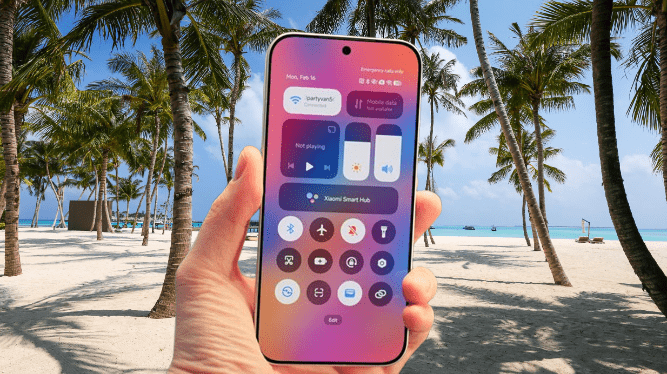
The lock screen options lean heavily in Apple’s direction. You can set a large clock, enable depth effects that place the clock behind elements of your wallpaper, or use generative AI to animate your background. The options are genuinely fun to play with.
Xiaomi also has its own take on Dynamic Island, called Hyper Island. It’s not a new concept, but it works well in practice. Quick access to whatever music is playing, active timers, or turn-by-turn navigation from a small persistent indicator at the top of the screen is the kind of feature that becomes hard to go without once you’ve used it for a few days.
AI features are spread throughout the system. Translation and writing assistance are both present, as expected. The one that stood out most in daily use is the ability to generate live subtitles for any video you’re watching, regardless of which app is playing it. That works better than you’d expect and covers a wide range of content.
You may also like: iPhone 18 Release Date, Price, Specs, and Features: Everything We Know So Far
Photo editing gets a good set of AI tools as well. Outpainting lets you extend the frame of an image beyond its original edges, object removal works cleanly, and you can add background blur to any photo after the fact without needing to have shot it in Portrait mode. All three are practical tools rather than gimmicks.
On software support, Xiaomi is committing to 4 major OS updates and 6 years of security patches. Google and Samsung both offer longer windows, so Xiaomi still trails the leaders there. But compared to where the brand stood a few years ago, it’s a meaningful step forward.
Xiaomi 17 Ultra Battery Life
The battery situation on the Xiaomi 17 Ultra is a bit unusual. The global version comes with a 6000mAh cell, which is a good improvement over last year’s 5410mAh. However, the Chinese version of the same phone ships with a 6800mAh battery. That’s a significant gap between the two variants.
A size difference between regional versions isn’t uncommon. Shipping regulations in Europe usually result in reduced battery capacities on Chinese phones sold globally.
What makes this case stand out is that the smaller, cheaper Xiaomi 17 actually ships globally with a larger 6300mAh battery than the Ultra. That’s an odd situation for a flagship to be in.
In practice, the 6000mAh cell still holds up well for everyday use. The phone gets through a full day without any concern, and I typically end the day with around 30% remaining. It won’t stretch to two days the way the Oppo Find X9 Pro can, but one full day with a charge to spare is a reliable outcome.
Charging speed is one of the Xiaomi 17 Ultra’s good points. It supports up to 90W wired and 50W wireless. No charger is included in the box, so you’ll need to factor in the cost of a fast wall adapter separately.
In testing with a third-party charger, 30 minutes on the cable brought the phone to just over 60%. A full charge took a little over an hour. Using an official Xiaomi adapter could push those numbers slightly faster, but the third-party results are already competitive.
Xiaomi 17 Ultra Verdict
The Xiaomi 17 Ultra covers all the bases a flagship phone should. The cameras are exceptional, performance is fast, the display and speakers are both strong, battery life is reliable, and charging is quick. It works well for most users, but if photography is your main reason for buying a phone, this one is particularly hard to beat.
Pros |
Cons |
| Brilliant cameras | Not so good for macro photography |
| Lightning quick | Its expensive |
| Great display and speakers |
Final Thoughts
The Xiaomi 17 Ultra delivers across every category you’d expect a flagship to cover. Performance, display quality, audio, battery life, charging speed, and cameras all hold up at a high level. There are no obvious weak spots.
That said, the people who will get the most out of this phone are those who shoot a lot of photos and video. The camera system is that good. Spending time with it, there are moments where it feels less like using a phone and more like carrying a dedicated camera that happens to make calls.
No phone gets everything right, and the Xiaomi 17 Ultra has a few areas where competitors have the edge. Oppo Find X9 Pro and Honor Magic 8 Pro both lasted longer on a charge in my experience, and both handle close-up telephoto shooting better than the 17 Ultra does.
That doesn’t automatically make them the better buy, though. Xiaomi’s image processing and the range of available filters mean the 17 Ultra usually produces photos I prefer over what those rivals deliver. It also holds its ground in every other category, and it stands as the best camera phone of 2026.