
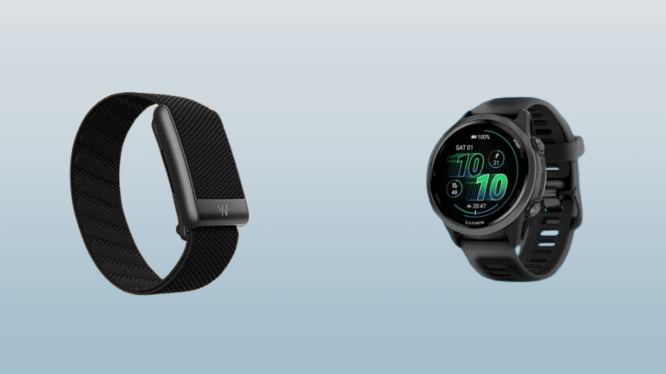
Choosing between a Whoop strap and a Garmin smartwatch takes some thought. Both track fitness data accurately, but they serve different purposes.
We’ve tested multiple Garmin smartwatches and Whoop straps. Below, we compare our experiences and answer the questions that matter most about each brand.
If you use an iPhone, an Apple Watch might better suit your needs. Our Whoop vs Apple Watch and Garmin vs Apple Watch guides help you decide which wearable works best for iPhone users.
Whoop vs Garmin Smartwatch: Price and Subscription
Buying a Whoop works differently from buying a Garmin tracker. Whoop uses a subscription model. You pay an annual membership fee to access the app and its features.
There are three membership options available: the One, Peak, and Life. We’ll cover the main differences here.
The cheapest option is $169 for 12 months, which includes a Whoop 5.0 device, charger, and a Jet Black CoreKnit band.
Peak sits in the middle at $229 for 12 months. This plan includes a Whoop 5.0 device, a wireless PowerPack, and an Obsidian SuperKnit band.
Life is the most expensive subscription; it cost $349 for 12 months. This plan includes an upgraded Whoop MG device, a wireless PowerPack, and a Titanium SuperKnit Luxe band. We mention both the Whoop 5.0 and Whoop MG throughout this article.
Whoop currently offers a one-month trial if you want to test the service before committing to a full-year subscription. The trial includes a new or certified pre-owned Whoop 4.0 device, wireless battery pack, and a new SuperKnit band.
You may also like: Amazfit T-Rex Ultra 2 Launches with 30-Day Battery Life and Offline Maps for $549
Garmin offers a subscription called Connect Plus, but you don’t need it to use any Garmin smartwatch. Garmin sells a series of smartwatches and fitness trackers, which start at $149.99 and go up to $1199.99 in subscription plan.
Whoop vs Garmin Smartwatch: Battery Life and Charging
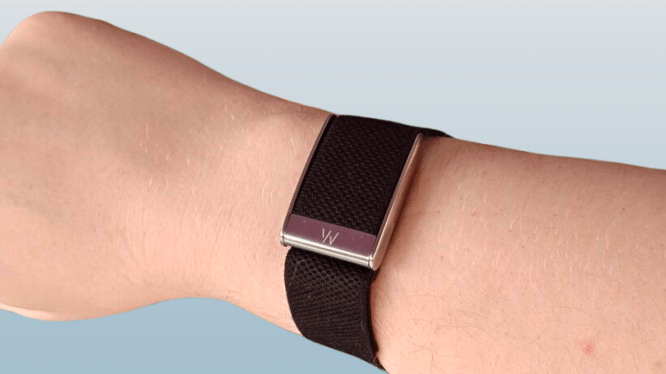
Whoop bands don’t have screens, but every Garmin smartwatch and tracker has one. This might seem odd, but Whoop says the design helps you focus on your health without getting distracted by notifications.
Garmin smartwatches have some of the longest battery life among wearables. The Garmin Fenix 8 lasts up to 29 days in smartwatch mode. The Instinct 3 includes a Solar display that charges the device using sunlight.
When you need to fully recharge a Garmin, you have to take it off. This means you lose some tracking data during that time.
Whoop works differently. The wireless Power Pack charges your device while you keep wearing it. You can buy the Power Pack separately, but it Whoop usually comes with the power pack charger when you subscribe to the Peak and Life subscription during purchase time.
This setup means you don’t lose any tracking data during charging. Your data collection continues without interruption.
Whoop vs Garmin Smartwatch: Which is Better?
Whether Garmin beats Whoop or the other way around depends on what you need from a wearable. If you don’t want a screen showing notifications while you work out, the Whoop makes sense. It has no screen at all. If you want a smartwatch that works like an extension of your phone, Garmin is the better choice for you.
You may also like: Amazfit Watches Get Runna App Support and Zepp App Redesign
Design isn’t the only factor to consider; there are other differences that determine which option fits you better.
Whoop gives you a deeper look at your health and fitness with personalized insights based on your data. But Whoop doesn’t include built-in GPS.
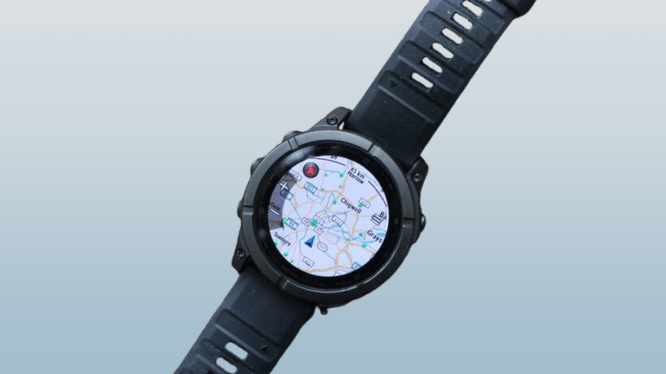
The GPS feature should be considered if you want to track your routes accurately without carrying your phone. The Garmin handles this so well because it comes with a built-in GPS feature in most of its devices.
Many newer Garmin wearables include multi-band GPS. This provides accurate route tracking if you’re running between tall buildings or hiking in open terrain. Garmin is the perfect wearable for runners, hikers, and mountain bikers. Garmin is probably the better option.
Both Garmin and Whoop track most sports and workouts. Whoop tracks accurately and gives useful insights, but it doesn’t always detect lighter workouts automatically.
You may also like: Whoop vs Apple Watch: Full Comparison 2026
You can manually start an activity or add one later, but better automatic detection for lighter exercises would improve the experience.
Whoop vs Garmin Smartwatch: Which Wearable is Accurate
Both Whoop and Garmin trackers provide accurate data in our testing. The lack of a screen on Whoop creates an issue for some users. You can’t check your real-time data without pulling out your phone.
The Whoop MG has another limitation. While it includes automatic exercise tracking, the feature works inconsistently. We noticed it often missed periods of low to mid-effort exercise. This means you might need to manually log lighter workouts to keep your data complete.
Whoop doesn’t have a built-in GPS feature. All location tracking relies on your paired smartphone. Garmin’s latest multi-band GPS appears in devices like the Forerunner 970 and Instinct 3.
We found this to be the most accurate tracking performance available on a smartwatch. The lack of GPS on Whoop limits its usefulness for outdoor activities.
You may also like: Moto Watch brings Polar’s pro-tier fitness perks
For general health, well-being, and sleep metrics, both Whoop and Garmin trackers provide accurate measurements. They both handle these core functions very well.
Whoop vs Garmin Smartwatch: Which is the Most Accurate Tracker?
Both Whoop and Garmin deliver reliable tracking results, but they take different approaches when it comes to data presentation.
Whoop uses three scores, which are sleep, recovery, and strain. Each score evaluates your metrics and gives you a number that shows how you performed during the day.
The recovery score looks at factors like HRV, body temperature, and daily habits. All of these contribute to your final score.
Garmin offers a similar approach with its morning and evening reports. These give you an overview of your sleep, recovery, and HRV status. The reports also suggest whether you should work out or rest based on your current condition.
Whoop’s sleep tracking is among the most accurate we have tested. The score matches how we actually felt the next morning. Unlike other trackers, it detects when you fall asleep instead of when you lie down in bed. This distinction matters because lying in bed and sleeping are different states.
The Whoop MG includes blood pressure readings. The device infers these readings from heart rate data rather than measuring blood pressure directly. This makes it less accurate than a traditional blood pressure monitor.
Whoop’s exercise tracking falls short in accuracy and reliability. The automatic exercise tracker works inconsistently, as we mentioned earlier. The overall functionality is basic, considering how much the tracker costs.
Many Whoop users wear Whoop with another smartwatch. The second device provides better exercise functionality and more advanced metric tracking. This dual-watch approach fills the gaps that Whoop leaves in workout data.
Whoop isn’t clearly the most accurate tracker when you consider these limitations. If you want both health and fitness tracking tools, a Garmin smartwatch makes more sense. Even cheaper options like the Vivoactive 6 deliver “reliable continuous data” across both categories.
That said, Whoop works well as a health tracker. If health metrics matter more to you than detailed workout tracking, a Whoop band is still a good choice.
How accurate is Whoop’s VO2 max?
Whoop’s VO2 Max measures the maximum amount of oxygen your body can use during exercise. Higher numbers indicate better cardiovascular fitness.
You may also like: Apple Watch Ultra 2 Deal: $599 (Save $200) on GPS and Cellular Model
Whoop estimates VO2 Max using what it calls a “proprietary algorithm.” This algorithm pulls from multiple data points, including physiological metrics, activity levels, and demographic information. According to Whoop, the results are “highly personalized” and tailored to your specific physiology and lifestyle.
Whoop claims its algorithm meets “stringent accuracy requirements” for VO2 Max readings, but verifying this independently is difficult.
Many premium Garmin smartwatches, like the Instinct 2, also provide VO2 Max readings. Garmin estimates these values by analyzing your performance data during activities like running and walking.
Whoop vs Garmin Smartwatch: Verdict
Before you spend money on a Whoop or a Garmin watch, think about what you actually need from a wearable.
If you want a smartwatch that shows your notifications and includes accurate built-in GPS, get a Garmin. Garmin offers a series of devices, so you’ll find one that fits your needs. If you don’t want a large watch on your wrist, choose the sleek Venu 4 instead of the rugged Fenix 8 Pro.
If you want a simple but smart wearable that tracks health and fitness without the extras found on most smartwatches, Whoop is a good option. It ranks among the best fitness trackers you can buy.
The lack of a screen lets you track your health and fitness quietly without notifications interrupting you. If you want to check your performance in real time, you can look at the smartphone app instead.
I prefer not to constantly check movement and metrics during exercise, but this is just a personal preference.