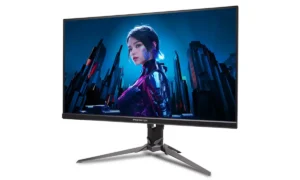

A gaming monitor running at 610Hz with QHD resolution is the kind of specification that grabs attention, even from people who’ve seen it all. If manufacturers actually ship this, motion clarity during critical moments could improve noticeably. Those split-second situations where you’re adjusting your aim, tracking a moving target, or making quick corrections.
The combination is what stands out here. This is a 27-inch panel running at 2560×1440 resolution. Most ultra-high refresh rate monitors drop to 1080p to hit extreme speeds. This one keeps the sharper 1440p image quality while pushing refresh rates into new territory.
If you play competitive games but hate the softer look of 1080p, this could be the first monitor that doesn’t force you to choose between visual quality and maximum performance.
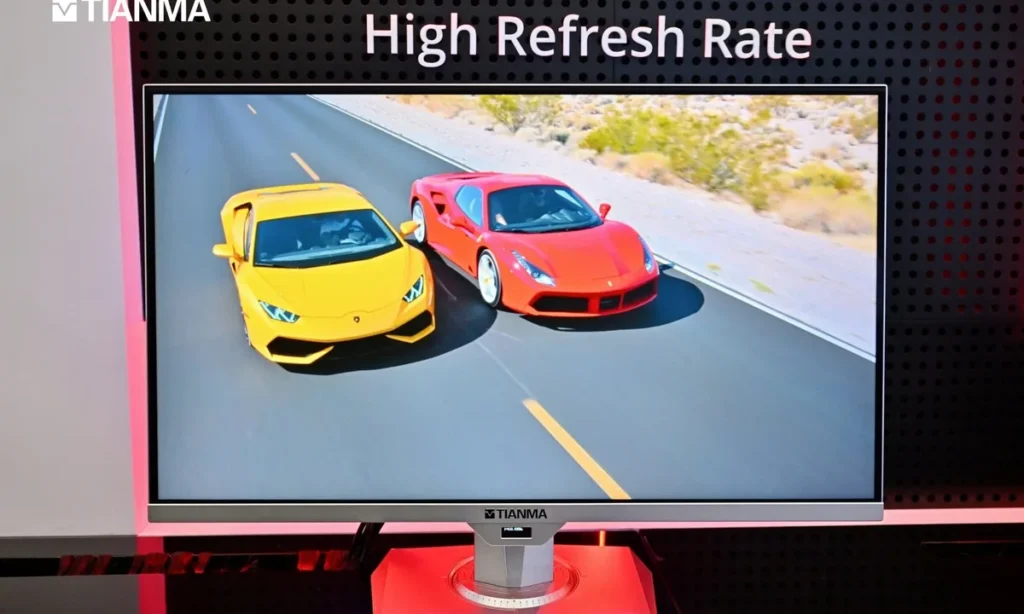
Keep your expectations measured for now. Tianma is showing this as a panel demonstration at CES 2026, not a finished product ready to buy. You need an appointment just to see it. That means we’re looking at technology that exists in a controlled environment, not something shipping to stores next month.
Panel makers often show impressive demos that take months or years to reach actual products. Sometimes the specs change. Sometimes the price makes them impractical. Sometimes other technical issues appear when they try to mass-produce them.
This panel proves 610Hz at 1440p is possible. Whether it becomes affordable, reliable, and widely available is the next question. Worth watching, but not worth planning your next build around yet.
How Tianma QHD Oxide Display monitor gets 610Hz
The 610Hz claim comes from changes in how the panel is built. Tianma uses oxide TFT-LCD technology, a positive-mode liquid crystal material, an optimized alignment layer, and a refined TFT structure.
Here’s what that means in normal language. They’re making the panel physically faster instead of using software tricks or shortcuts that create other problems.
Some high refresh rate monitors boost speed by reducing image quality, adding motion blur in certain situations, or creating visual artifacts. This approach tries to avoid those compromises by improving the core hardware.
The question is whether this works in real products. Demo panels at trade shows run in perfect conditions with careful calibration. Mass production is different. Factories need to make thousands of identical panels that all perform the same way.
Quality control also becomes harder. Costs go up. Sometimes the technology that works great in a demo doesn’t translate to affordable retail monitors.
You can see what high refresh rates already look like in shipping products. Samsung released the Odyssey OLED G6 with a 500Hz refresh rate. That gives you a reference point for how smooth motion can get with current technology.
The jump from 500Hz to 610Hz might sound massive, but the difference in actual gameplay gets smaller as numbers climb. Going from 60Hz to 120Hz is obvious. Going from 240Hz to 360Hz is noticeable if you look for it. Going from 500Hz to 610Hz? You’d probably need a side-by-side comparison to spot it consistently.
Still, pushing technology forward matters even when gains get incremental. What seems excessive today often becomes standard tomorrow.
Tianma 27″ QHD 610Hz Oxide Display monitor, More than just refresh rate
Refresh rate gets the attention at CES, with companies competing to push numbers higher each year. The other specs matter just as much if you want motion to actually look clearer during gameplay.
This panel lists a 1ms gray-to-gray response time. That’s the other number gamers focus on when trying to eliminate motion blur. Response time measures how fast pixels change color. Slower response times create ghosting and smearing when objects move quickly across your screen.
The panel includes anti-glare and anti-reflection treatment. This might not sound exciting, but it makes a real difference in daily use. If you play under ceiling lights or have windows in your room, reflections constantly distract you during matches.
You end up adjusting your seating position or closing blinds just to see clearly. Good anti-glare coating fixes this quietly.
Image quality specs look solid on paper. The panel hits 350 nits brightness, 1200 to 1 contrast ratio, and 100% DCI-P3 color coverage. If these numbers hold up in the final product, you won’t sacrifice visual quality for speed.
Many fast gaming monitors look washed out or dull because manufacturers prioritize response time over everything else. Colors look flat. Blacks look gray. Bright scenes lack pop. This panel suggests you might get both speed and decent image quality in the same package.
Remember, these are claimed specs from a demo unit. Real products sometimes fall short once they hit mass production. Panel lottery exists where different units of the same monitor perform differently. Wait for professional reviews with measurements before assuming any monitor delivers exactly what the spec sheet promises.
Be on the lookout for Tianma 27″ QHD 610Hz Oxide Display monitor
The information we don’t have yet is what actually matters for buyers. No price announced. No release date. No confirmed monitor brands are planning to use this panel.
If you’re planning to buy a gaming monitor in the next few months, don’t wait around for 610Hz. You could be waiting a long time, and there’s no guarantee it will be affordable when it arrives.
Here’s what to watch for instead. Wait until an actual monitor company like ASUS, LG, or Samsung announces a specific model using this panel. Not a concept or a demo, but a real product with a price and a ship date.
Then wait for independent reviewers like GadgetCV to test it. You need to know how it performs in real conditions, not controlled demos. Does motion clarity actually improve in fast-paced games? How does response time behave across different refresh rates? Are there any visual issues like ghosting or overshoot?
There’s also a practical question nobody’s answering yet. Can your PC even push 610 frames per second at 1440p resolution? You’d need a high-quality graphics card running optimized competitive games at low settings. Most people won’t hit 610fps consistently, which means you’re paying for speed you can’t use.
Even professional esports players often run 1080p at lower refresh rates because maintaining consistent frame rates matters more than hitting peak numbers.
This panel is an interesting technology. It shows what’s becoming possible. But interesting technology and smart purchases are different things. Buy what’s available and tested today. Keep an eye on this for later.