
Tesla CEO Elon Musk has laid out another ambitious timeline for the company’s humanoid robot, Optimus. Speaking at the World Economic Forum in Davos, Musk said Tesla plans to begin selling Optimus robots to the public by the end of 2027.
This assumes the machines has reach the levels of reliability, safety, and functionality the company is targeting.
The comments follow years of development milestones. Optimus, originally unveiled as the Tesla Bot in 2021, has undergone multiple prototype versions and already handles simple tasks at Tesla factories.
According to Musk, those internal deployments will become more complex later this year, helping prepare the robotics platform for broader use.
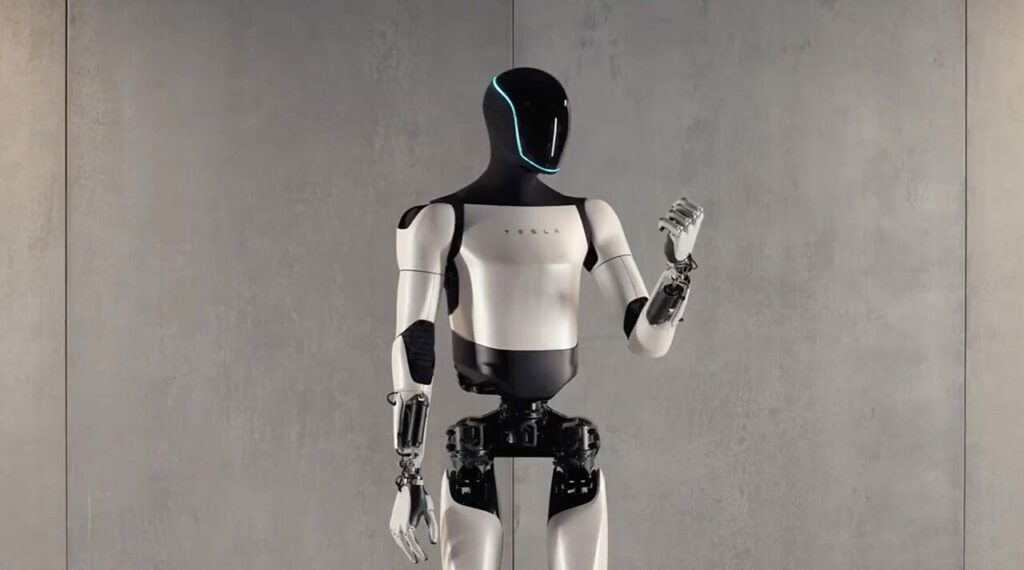
Musk has a history of announcing optimistic timelines that often get delayed. His predictions for autonomous driving, vehicle production targets, and other projects have frequently missed their original dates by years.
This doesn’t mean Optimus won’t happen, but the 2027 date should be viewed with appropriate skepticism.
Tesla has made real progress with Optimus. The robot has evolved from a person in a suit at the 2021 announcement to actual working prototypes performing tasks in factories. Videos show Optimus walking, manipulating objects, and completing basic assembly work.
You may also like: Google Removes Dangerous AI Health Summaries After Accuracy Concerns
The jump from factory prototype to consumer product remains significant. Factory environments are controlled and predictable. Consumer homes vary widely in layout, conditions, and requirements. Making Optimus reliable and safe enough for general public use has engineering challenges beyond what Tesla has demonstrated so far.
Tesla Optimus Robots’ Ambition
Musk’s timeline is bold by any industry standard. Humanoid robotics has struggled with major challenges in hardware design, artificial intelligence, and large-scale manufacturing.
Speaking at Davos, Musk stressed that Optimus won’t go on sale just to meet a deadline. Instead, he said consumer availability depends on the robots proving themselves reliable and safe. Sales would only begin once reliability and functionality are “very high.”
You may also like: Robots Are Finally Learning to Feel: Artificial Skin Brings Human-Like Touch to Machines
Tesla’s long-term vision for Optimus goes far beyond factory work. Musk has described a future in which humanoid robots handle everyday tasks, such as household chores and elder care.
He believes they will eventually become as common and useful as personal computers or smartphones. He has even suggested there could be “more robots than people” one day, showing how central he thinks robotics will be to everyday life.
This vision sounds like science fiction, but the underlying economics could make sense. If Tesla can manufacture Optimus at scale for a reasonable price, the market could be enormous.
Many households would pay for a robot that reliably does laundry, cleans, or helps care for elderly members of a family.
The challenge is execution. Getting from today’s prototype, which performs scripted tasks in controlled environments, to a robot that handles unpredictable home situations requires massive advances in AI and mechanical reliability.
You may also like: ChatGPT Age Prediction System Now Rolling Out to Identify Teen Users
Tesla’s advantage lies in its experience with AI through autonomous-driving development and its manufacturing capabilities.
The company knows how to build complex products at scale. Whether these advantages translate to successful consumer robotics remains uncertain.
That optimism comes with real skepticism, though. The last public demonstrations of Optimus revealed that the robots were being remotely controlled by human operators, not acting on their own.
Combined with Musk’s history of aggressive timelines, many experts remain cautious. They note that truly general-purpose humanoid robots remain an unsolved problem.
You may also like: FLEXI: The Hair-Thin Flexible AI Chip That Could Transform Wearables
For now, Musk says commercial deployments could begin in 2026, with public sales following in 2027. But this only happens if Tesla is confident the robots meet strict standards for reliability, safety, and functionality. Whether that caution is realistic or just a built-in excuse for delays remains to be seen.
The remote control revelation during demonstrations raised serious questions about Optimus’s actual capabilities.
If the robots still need human operators to function, they’re essentially expensive mechanical avatars rather than autonomous helpers. This gap between demonstration and claimed capability fuels skepticism about the 2027 timeline.
Tesla needs to show Optimus performing complex tasks autonomously in varied environments before the robotics community will take the timeline seriously.
Factory tasks are relatively simple and repetitive. Home environments require navigating unpredictable spaces, understanding context, and adapting to changing situations.
You may also like: Meta Shifts Horizon Worlds from VR to Mobile in Major Metaverse Strategy Change
Musk has delivered transformative products before. Tesla popularized electric vehicles when critics said it was impossible.
SpaceX landed reusable rockets despite aerospace experts’ doubts. His track record shows he can eventually achieve ambitious goals, even if timelines slip significantly.
The question isn’t whether humanoid robots will eventually become practical consumer products. The question is whether Tesla can deliver that breakthrough in 2027.