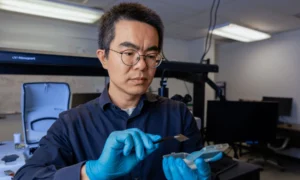

Scientists from the University of Colorado Boulder, the University of Arizona, and Sandia National Laboratories built a device that creates tiny vibrations on microchips. These vibrations could make future smartphones thinner, faster, and better at processing wireless signals.
The team calls their invention a surface-acoustic-wave phonon laser. Think of it as creating miniature earthquakes on a chip surface. But instead of producing light like a regular laser, this one sends mechanical waves across the material.
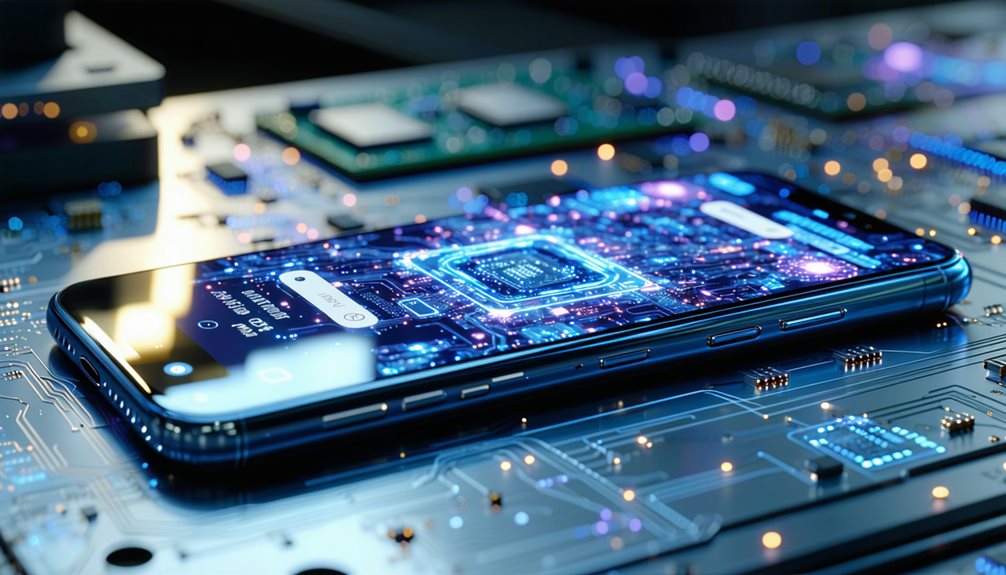
Your phone already uses surface acoustic waves to filter and clean up wireless signals. The problem is that current technology needs several separate parts to do this job. Each part takes up space inside your phone.
This new device does the same work but squeezes everything into one small chip. Less space means phone makers can design slimmer devices or add other features in the space they save.
You may also like: Google Pixel 10a Release Date Leaked: Launching February 17 at Lower Price
The performance boost matters too. When your phone processes signals more efficiently, it uses less battery power and handles data faster. You get better call quality, faster downloads, and longer battery life.
This technology exists in the lab for now. Commercial phones using this approach are still years away. But the research shows a clear path to making phones smaller and more capable at the same time.
How this technology could change phone hardware
The chip uses three stacked layers. The first layer is silicon, which sits at the bottom, and is the same material used in most electronics today. The second layer is lithium niobate, a special material that converts electrical signals into physical movement. The third layer is indium gallium arsenide, which accelerates electrons as electricity passes through.
You may also like: New Infrared Lens Technology Could Bring Thermal Cameras to Smartphones and Cars
When you turn it on, the chip creates surface vibrations. These vibrations bounce around and build on each other until they release in a steady, controlled stream.
The process works similarly to how a standard laser releases light, except this produces mechanical waves instead.
These vibrations run at about one gigahertz for now, and that frequency already matches what phones use for wireless communication.
You may also like: Samsung Galaxy A07 Promises Six Android Updates for Budget Phone Longevity
The researchers think they can push the design to work at much higher frequencies. Higher frequencies mean your phone can process signals faster and filter them more accurately.
This matters because phones currently need several different radio components to handle all their wireless tasks. Each component occupies physical space in your device. If one chip can do the job of multiple parts, phone designers get more room to work with.
You end up with phones that are either thinner or packed with more features, in the same body size. The technology also reduces power consumption because fewer components mean less energy waste.
The team is still testing how high they can push the frequency limits. Each improvement brings the technology closer to practical use in consumer devices.
Smartphone Chip Innovation: Surface Acoustic Wave Laser
This vibrating chip technology could change how we build all kinds of wireless devices, not just phones. Wearables, routers, and networking equipment could all benefit from the same approach.
Engineers are shifting away from relying only on electrons to move information. Sound waves can do the same job more efficiently in many cases. This chip proves the concept works at a practical scale.
You may also like: Samsung Galaxy S26 Privacy Display: AI-Powered Screen Protection Coming to All Models
Phone makers are already trying new ways to manage heat and performance. Some companies are testing liquid cooling systems borrowed from gaming PCs. Others are experimenting with diamond-based materials that conduct heat away from processors faster than traditional components.
These changes happen in the background, so you won’t see them advertised like a new camera or bigger screen. But they determine how fast your phone runs, how long the battery lasts, and how much power it can handle without overheating.
The next major technological improvements will come from these invisible upgrades. Better materials, smarter chip designs, and new ways to move signals around will make devices faster and more efficient.
You may also like: University of Houston Engineers Develop Thermal Diode to Prevent Device Overheating
Your phone in five years might look similar to today’s model. But inside, the physics will be completely different. Smaller components, less wasted energy, and more capability packed into the same space.
That’s where this vibrating chip fits in. It’s one piece of a larger shift in how we build electronics. The results show up in your everyday experience, even if you never see the technology itself.