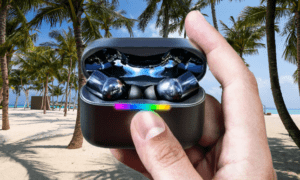

NextSense wants to change how you think about sleep tracking. Most sleep apps tell you how poorly you slept after you wake up. The company’s new Smartbuds earbuds take a different approach. They claim to effectively improve your sleep while you are sleeping.
The technology centers on brain sensing instead of simple motion tracking. Smartbuds contain six EEG sensors that monitor your brain activity directly.
EEG stands for electroencephalography, which measures the electrical signals your brain produces. These sensors detect which sleep stage you’re in and when you transition between stages.
Most consumer sleep trackers use motion sensors or heart rate monitors to guess your sleep stages. Your Fitbit or Apple Watch estimates when you’re in deep sleep based on how much you move and how your heart rate changes. This method provides rough approximations but misses the precise brain activity that defines actual sleep stages.
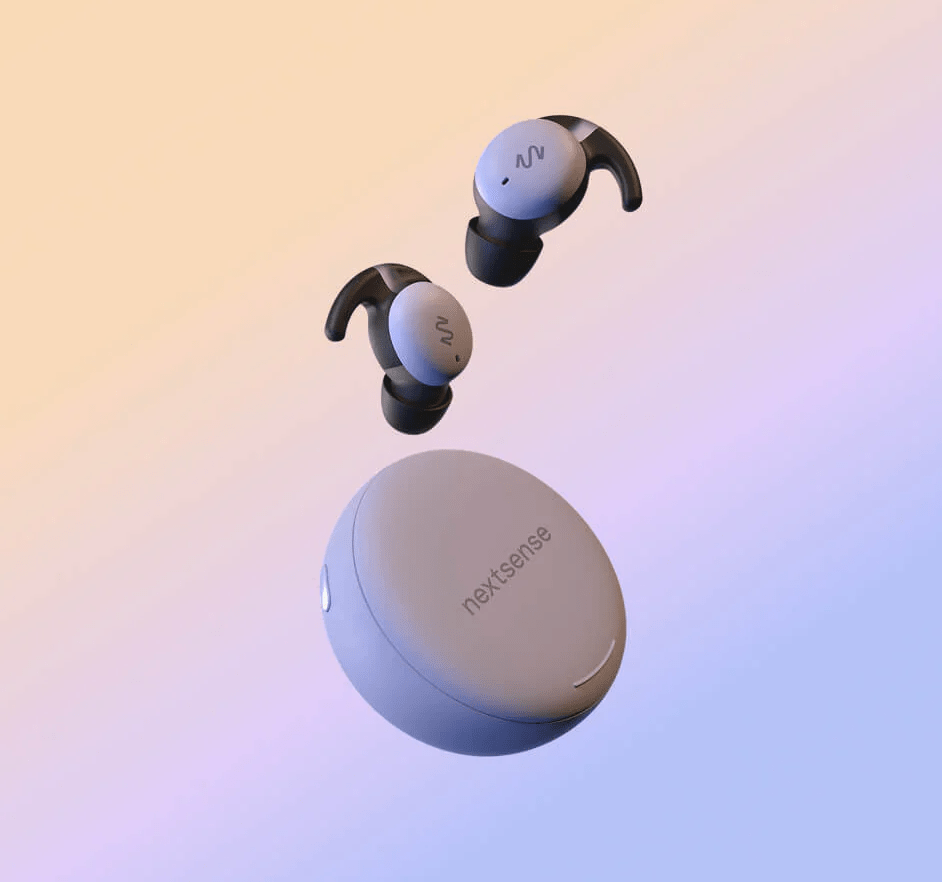
NextSense claims Smartbuds detect sleep stage changes in milliseconds. When the earbuds sense you entering a specific sleep stage, they play targeted audio stimulation. This audio aims to support deeper, better quality sleep in real time.
You may also like: ASUS ROG Cetra Open Wireless Earbuds for just $229.99
The company positions this as active sleep improvement rather than passive tracking. You don’t just get a score in the morning showing you slept poorly. The earbuds attempt to fix sleep problems as they occur during the night.
The system also adapts to your individual sleep patterns. NextSense says Smartbuds learn from your data over time. Each night provides more information about how your brain responds to different audio stimulation. The earbuds adjust their approach based on what works for your specific sleep biology.
You may also like: Moto Buds 2 Plus Leak Shows Redesigned Case and Bose Partnership
This personalization matters because sleep patterns vary between people. What helps one person achieve deep sleep might not work for someone else.
NextSense Smartbuds Sleep Earbuds Features and Pricing
The main feature is how Smartbuds work in real time. NextSense calls this a closed-loop approach. The earbuds monitor your brain’s EEG signals continuously throughout the night.
You may also like: Best Bose Headphones and Earbuds to Buy in 2026
When they detect the right moment, they play audio stimulation immediately. This differs from regular sleep trackers that collect data all night and give you a report in the morning.
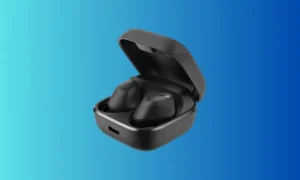
Most EEG devices feel cumbersome to wear. Sleep headbands are bulky. Wired setups tangle while you move, but NextSense designed Smartbuds as true wireless earbuds to solve this problem.
They want brain sensing to feel as simple as wearing AirPods. If the device is comfortable, you’ll actually use it every night instead of giving up after a week.
You may also like: Beats Studio Buds + Drop to $99.95 on Amazon (41% Off Regular Price)
The pricing structure has two parts. The earbuds cost $399.99 at regular retail price, but early buyers can get them for $249.
After your first three months, you need a Fit Kit subscription to keep using the system. This subscription starts at $29.99 per month.
NextSense positions this as a service, not just a product. The continuous changes in cost add up quickly. Three months cost about $90. A full year costs roughly $360 on top of the initial hardware price.
You may also like: Samsung Galaxy Buds Able: Bone Conduction Leaked
You need to calculate the total cost before buying. At the early bird price of $249 plus 12 months of subscription at $29.99, you spend around $609 in the first year. At retail price, the first year costs about $760.
Phone compatibility limits who can use Smartbuds right now. You need an iPhone 12 or newer running iOS 17 or later. Android users cannot use these earbuds at all. People with older iPhones are also locked out unless NextSense adds support later.
You may also like: Google Pixel Buds 2a New Colors Leak: Pink and Green Options Coming Soon
This makes your buying decision simple. You’re not just buying earbuds. You’re committing to NextSense’s entire ecosystem with monthly fees and specific device requirements.
NextSense Smartbuds Sleep Earbuds
NextSense provides some data to support their claims. The company ran a controlled beta test over 106 nights. Participants who used Smartbuds showed an average increase in slow-wave activity.
Slow-wave sleep is the deepest stage of sleep where your body repairs tissue and consolidates memories.
The company also collected user feedback on how Smartbuds affected their daily life. Users reported improvements in several areas, and the overall sleep quality felt better.
Mood improved during the day. Energy levels also increased. Focus and concentration got sharper. NextSense gathered this feedback across more than 1,400 nights of real-world use.
You may also like: Sennheiser ACCENTUM True Wireless Earbuds Deal: $100 Off at $119.99
These results sound promising but come with limitations. The beta test involved only 106 nights total, not 106 participants using the device for extended periods.
The sample size matters when evaluating effectiveness. User-reported improvements are subjective. People who spend $400 on sleep earbuds might want to believe they work, which can bias their perception.
Independent research would strengthen NextSense’s claims. Studies published in sleep medicine journals carry more weight than company-run beta tests. Third-party validation from sleep researchers who have no financial stake in the product would help establish credibility.
If you’re considering Smartbuds, approach them as a new product category rather than a proven solution. EEG sleep earbuds are different from standard sleep trackers. The technology has potential but needs more evidence.
You may also like: FLEXI: The Hair-Thin Flexible AI Chip That Could Transform Wearables
Compare the early bird price of $249 against the continuous subscription cost. Calculate what you’ll pay over six months or a year, and decide if that investment makes sense for your sleep problems and budget.
Wait for comprehensive device support if you use Android or an older iPhone. Watch for independent studies that verify NextSense’s claims. When those two things happen, Smartbuds move from an interesting experiment to a reliable sleep tool you can trust.