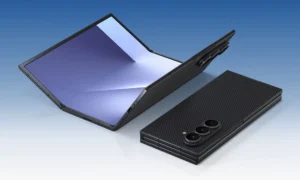

Samsung is working on a major screen improvement for the Galaxy Z Fold 8 that could make the fold line much less noticeable than current models. The news followed Samsung Display’s CES 2026 unveiling of a nearly wrinkle-free foldable OLED panel.
Industry experts believe this new panel will be used in the Galaxy Z Fold 8, which is expected to launch in the second half of this year. Compared to the current Galaxy Z Fold 7, the new display reduces crease depth by 20%. This should give you a noticeably smoother screen when you unfold the phone.
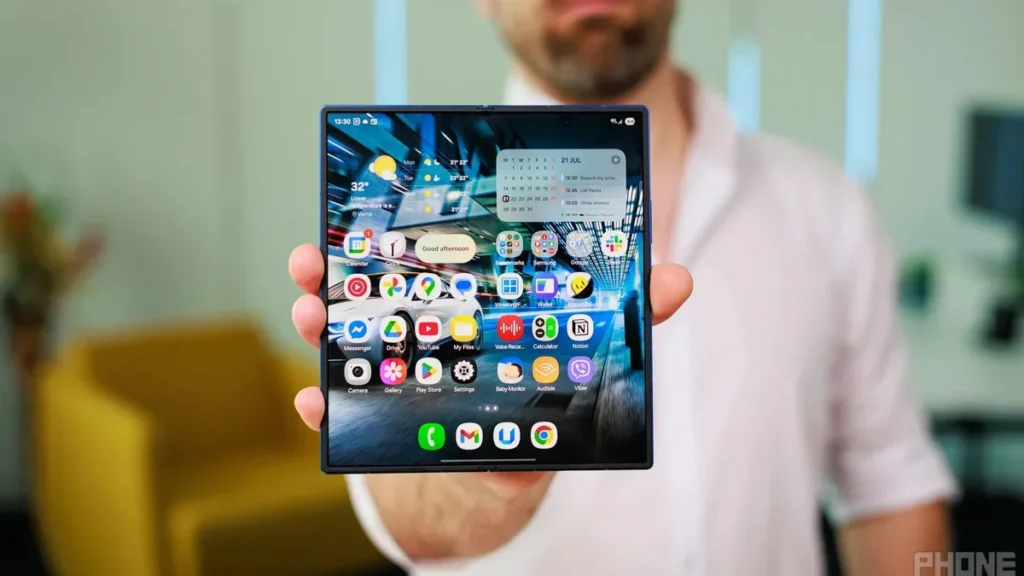
The crease has been one of the main complaints about foldable phones since they first appeared. You can see it and feel it when you run your finger across the screen. Over time and with repeated folding, the crease often becomes more visible.
A 20% reduction in crease depth might not sound like much on paper, but it could make a real difference in daily use. The screen should feel more like a regular tablet when opened. This improvement addresses one of the biggest issues preventing people from buying foldable phones.
You may also like: iPhone 18 Release Date, Price, Specs, and Features: Everything We Know So Far
Samsung has been refining its foldable display technology for several years now. Each generation has shown incremental improvements in durability and crease visibility. This latest advancement represents another step toward truly seamless foldable screens.
Samsung Galaxy Z Fold 8 Display Upgrade
The key change involves how Samsung builds the display layers. Traditional foldable panels use a single sheet of ultra-thin glass (UTG) on the top cover window. A Dealsite report says Samsung may be testing a dual-UTG structure. This adds another ultra-thin glass layer beneath the OLED panel.
Reinforcing both sides spreads the stress from repeated folding more evenly across the display. This reduces the chance of deep wrinkles forming over time. Samsung is also improving the backplate, which is the internal support layer between the OLED panel and the hinge.
Industry sources believe Samsung Display is using laser drilling on this backplate. The process creates tiny holes that help spread out stress when you fold and unfold the phone. This approach targets the exact spot where creases usually form. It makes the panel flex more easily without permanent damage.
You may also like: iPhone Air vs iPhone 17 Pro: Which Should You Buy in 2026?
Think of it like how engineers design bridges to flex slightly in the wind rather than stay completely rigid. The flexibility prevents cracks and failures. Samsung is applying the same principle to foldable screens.
The microscopic holes act as stress relief points. When you fold the phone, the material around these holes can compress and expand without causing visible surface damage. This should help the screen maintain its smooth appearance even after thousands of folds.
Samsung seems serious about adopting this dual UTG approach for the Galaxy Z Fold 8. The company hasn’t confirmed final specifications yet, but the technology makes sense from a business perspective. Ultra-thin glass costs less and is easier to source than alternative materials.
Samsung’s next foldable phones will likely improve beyond just reducing the display crease. The Galaxy Z Fold 8 should see overall usability improvements. The Galaxy Z Flip 8 might finally get the camera upgrades users have been requesting for years.
You may also like: Google Pixel 10a Release Date Leaked: Launching February 17 at Lower Price
If Samsung uses this new display setup, the Galaxy Z Fold 8 could feel like a real tablet when you open it. The less visible crease would make the screen look and feel more natural during use. You wouldn’t notice that dividing line running down the middle.
This matters because many people still hesitate to buy foldable phones due to the crease. Reducing it significantly removes one of the main objections potential buyers have. A smoother screen also improves the experience when watching videos, reading, or using apps that span the full display.
Samsung has dominated the foldable phone market for years, but competition is heating up. Chinese brands and potentially Apple are pushing into this space with their own solutions. Samsung needs to keep improving to maintain its lead.