
The Samsung Galaxy S26, OnePlus 15, and Google Pixel 10 share similar price points, run on Android, and are all targeting the same type of buyer. But when you use any of them for a few days, it will become obvious that each phone has a very different idea of what matters most.
This comparison cuts through the spec sheet overlap and focuses on where each phone actually earns its place, because it covers hardware, software, cameras, battery life, and everything that falls in between. That way, you can make a clear decision without having to test all three yourself.
Samsung Galaxy S26 vs OnePlus 15 vs Google Pixel 10: Price and Availability
The Galaxy S26 and OnePlus 15 start at the same price, $899 for 256GB. Storage upgrades push them apart as OnePlus charges $999 for 512GB, while Samsung asks $1,099 for the same jump. The S26 launched on February 25, with units hitting store shelves from March 11, 2026.
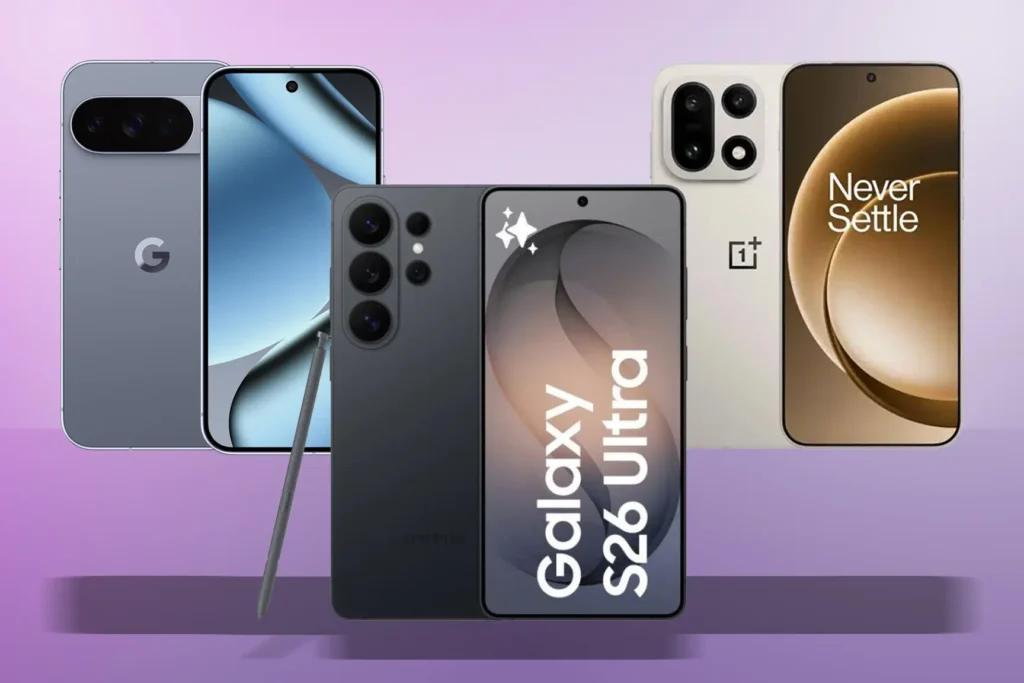
The Pixel 10 comes in cheaper at $799 for 128GB, and that’s the launch price from August 2025. With several months already on sale, real-world prices have dropped further, which widens the gap between it and the other two even more.
You may also like: Why the Google Pixel 10a Makes Sense Despite Minimal Upgrades Over Pixel 9a
Samsung Galaxy S26 vs OnePlus 15 vs Google Pixel 10: Specs
| Specifications | Galaxy S26 | OnePlus 15 | Pixel 10 |
| Dimensions | 149.6 x 71.7 x 7.2 mm | 161.4 x 76.7 x 8.1 mm | 152.8 x 72 x 8.6 mm |
| Weight | 167g | 211g / 215g | 204g |
| Build | GG Victus 2 front & back, aluminum frame | GG Victus 2 front, aluminum frame, glass/fiber back | GG Victus 2 front & back, aluminum frame |
| IP Rating | IP68 (1.5m, 30 min) | IP68 / IP69K (2m, 30 min) | IP68 (1.5m, 30 min) |
| Colors | Cobalt Violet, Sky Blue, Black, White, Silver Shadow, Pink Gold | Infinite Black, Ultra Violet, Sand Storm | Indigo, Frost, Lemongrass, Obsidian |
| Display Type | Dynamic LTPO AMOLED 2X | LTPO AMOLED (BOE X3) | OLED |
| Size | 6.3 inches | 6.78 inches | 6.3 inches |
| Resolution | 1080 x 2340 (411 ppi) | 1272 x 2772 (450 ppi) | 1080 x 2424 (422 ppi) |
| Refresh Rate | 1–120Hz adaptive | 1–165Hz adaptive | 1–120Hz adaptive |
| Peak Brightness | 2,600 nits | 1,800 nits (HBM) | 3,000 nits (peak) |
| HDR | HDR10+ | Dolby Vision, HDR10+, HDR Vivid | HDR10+ |
| Chipset (US) | Snapdragon 8 Elite Gen 5 (3nm) | Snapdragon 8 Elite Gen 5 (3nm) | Google Tensor G5 (3nm) |
| CPU | Octa-core (2 x 4.74 GHz + 6 x 3.62 GHz Oryon V3) | Octa-core (2 x 4.6 GHz + 6 x 3.62 GHz Oryon V3) | Octa-core (1 x 3.78 GHz X4 + 5 x 3.05 GHz + 2 x 2.25 GHz) |
| GPU | Adreno 840 | Adreno 840 | PowerVR DXT-48-1536 |
| RAM | 12GB | 12GB / 16GB | 12GB |
| Storage | 256GB / 512GB | 256GB / 512GB / 1TB | 128GB / 256GB |
| Storage Type | UFS 4.x | UFS 4.1 | UFS 3.1 / UFS 4.0 |
| OS | Android 16, One UI 8.5 | Android 16, OxygenOS 16 | Android 16 (Stock) |
| Update Promise | 7 major OS upgrades | 4 years OS, 5 years security | 7 major Android upgrades |
| Cameras – Main | 50MP, f/1.8, 1/1.56″, OIS | 50MP, f/1.8, 1/1.56″, OIS | 48MP, f/1.7, 1/2.0″, OIS |
| Ultrawide | 12MP, f/2.2 | 50MP, f/2.0 | 13MP, f/2.2 |
| Telephoto | 10MP, f/2.4, 3x optical | 50MP, f/2.6, 3.5x optical | 10.8MP, f/3.1, 5x optical |
| Video | 8K@24/30fps, 4K@30/60fps | 8K@30fps, 4K@120fps | 4K@60fps |
| Selfie Camera | 12MP, f/2.2, dual pixel PDAF | 32MP, f/2.4, AF | 10.5MP, f/2.2, PDAF |
| Selfie Video | 4K@30/60fps | 4K@60fps | 4K@60fps |
| Speakers | Stereo | Stereo, Hi-Res 24-bit/192kHz | Stereo |
| Wi-Fi | Wi-Fi 7 (tri-band) | Wi-Fi 7 (tri/dual-band) | Wi-Fi 6E (dual-band) |
| Bluetooth | 5.4 | 6.0 (aptX HD, aptX Adaptive, LHDC 5) | 6.0 (aptX HD) |
| NFC | Yes | Yes | Yes |
| USB | USB-C 3.2, DisplayPort 1.2 | USB-C 3.2, OTG | USB-C 3.2 |
| Satellite | Yes | No | Yes (SOS) |
| Fingerprint | Under-display, ultrasonic | Under-display, ultrasonic | Under-display, ultrasonic |
| Battery Capacity | 4,300 mAh | 7,300 mAh (Si/C) | 4,970 mAh |
| Wired Charging | 25W (55% in 30 min) | 120W (50% in 15 min) | 30W (55% in 30 min) |
| Wireless Charging | 15W | 50W (proprietary) | 15W (Qi2) |
| Starting Price | $899.99 (256GB) | $899.99 (256GB/12GB) | $799 (128GB) |
| Top Config | $1,099.99 (512GB) | $999.99 (512GB/16GB) | $899 (256GB) |
Samsung Galaxy S26: AI Features
At 7.2mm thick, the S26 is the slimmest of the three by a clear margin. The OnePlus 15 measures 8.1mm, and the Pixel 10 sits at 8.6mm. Normally, thinness isn’t something I prioritize, but the Samsung S26 pulls it off without sacrificing performance, which is harder to do than it sounds and does make an impression.
The 6.3-inch AMOLED display runs at 120Hz with a peak brightness of 2,600 nits. I have spent time with the Galaxy S25 screen and had no complaints in real-world conditions, so there’s good reason to expect the same here.
The chip inside is Qualcomm’s Snapdragon, but with a distinction worth noting. Samsung works directly with Qualcomm to modify the CPU, GPU, and NPU specifically for One UI.
It’s not an off-the-shelf configuration. That collaboration means the hardware and software are optimized together, which tends to show up in day-to-day responsiveness rather than just benchmark numbers.
You may also like: iPhone 17e: Release Date, Price, Specs, and Everything We Know So Far
Galaxy AI was already ahead of every other Android phone before the S26 arrived. One UI 8.5 builds on that further with several new additions: Now Nudge surfaces context-aware suggestions directly on your screen, Now Brief pulls together a personalized daily summary, and Photo Assist now accepts text prompts to edit images. Existing tools got upgrades, too.
The Audio Eraser was previously limited to Samsung’s own apps, but now it works inside third-party apps like Instagram and YouTube. Smart Call screening moved beyond basic filtering to full live transcription with the option to reply by text.
The honest truth is that Galaxy AI now has more features than most people will ever use regularly. But that’s not necessarily a bad position to be in. Having tools available when you need them is better than reaching for something and finding it missing. And looking at where competing Android brands currently stand on AI features, Samsung’s lead is real and noticeable.
DeX is another feature that sets the S26 apart. Plug it into a monitor, and you get a full windowed desktop experience, something neither the OnePlus 15 nor the Pixel 10 can offer. For anyone who wants their phone to occasionally function like a computer, there’s no equivalent on the other two.
You may also like: Samsung Galaxy S26 Ultra vs S23 Ultra: Worth Upgrading?
Samsung also commits to seven years of operating system updates. In practice, most people replace their phones every three to five years, so the full seven years may never come into play. But as a long-term ownership guarantee, it’s a strong commitment and one that adds real value if you tend to hold onto your devices.
OnePlus 15 Hardware Configuration
The OnePlus 15 isn’t trying to compete on AI features or software depth. Its argument is simpler when you look at what you get for $899.
Let’s start with the water resistance. The OnePlus 15 carries both IP68 and IP69K ratings. IP68 is standard on flagship phones, but IP69K means the phone can take high-pressure water jets without damage.
Neither the Samsung S26 nor the Google Pixel 10 can say the same. It’s not something most people will ever test deliberately, but having that extra protection costs you nothing extra here.
You may also like: Honor Magic V6 Brings IP69 Protection and a 2,800 MPa Steel Hinge to Take On Samsung’s Fold 7
The display is a 6.78-inch FHD+ AMOLED running at 165Hz, the highest refresh rate of the three phones in this comparison. It’s also the first display above 1080p resolution to hit that refresh rate, which is worth noting on its own.
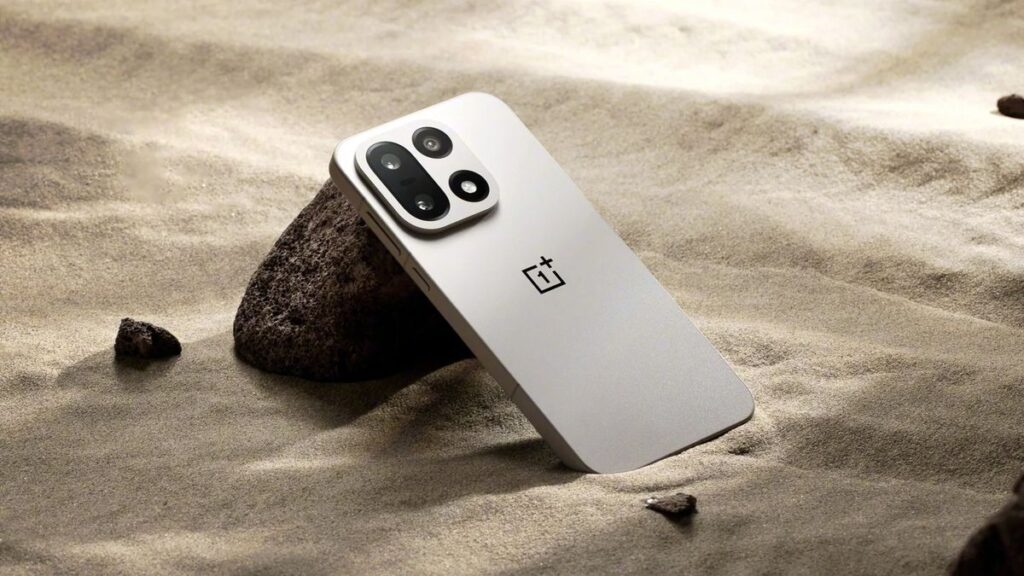
A dedicated 3200Hz touch sampling chip supports that screen, which translates to faster and more accurate input detection. If you play fast-paced games on your phone, that combination of high refresh rate and rapid touch response makes a real difference.
Under the hood sits the Snapdragon 8 Elite Gen 5, the same chip as the S26, though without Samsung’s custom prime core overclock applied on top.
The camera setup is where OnePlus makes a strong case for consistency. All three lenses, the main, ultrawide, and 3.5x periscope telephoto, use a 50MP sensor each. That kind of hardware uniformity across an entire camera system isn’t something the S26 or Pixel 10 can match.
OxygenOS 16 runs on top of Android 16, and like other Chinese Android skins right now, the visual direction draws comparisons to Apple’s Liquid Glass aesthetic from iOS 26.
The feature that stands out most is Mind Space, which integrates Google Gemini and acts as a personal knowledge hub built directly into the phone.
A three-finger swipe saves whatever is on your screen at that moment, whether it’s an article, a photo, a voice memo, or a screenshot. Everything lands in one place for you to revisit later.
The physical Plus Key on the side of the phone gives you instant access to Mind Space from anywhere, without unlocking or navigating through menus. It’s a small hardware addition that makes the feature feel genuinely useful rather than buried in settings.
You may also like: Samsung Galaxy Z TriFold US Release Date: $2,899 Price, January 30 Launch Date
Battery life is where the OnePlus 15 separates itself from the other two completely. Its 7,300mAh cell dwarfs the S26’s 4,300mAh and the Pixel 10’s 4,970mAh. It’s not a close comparison. Light to moderate use puts two full days between charges within reach, which neither of the other two phones can realistically claim.
OnePlus also includes a 120W charger in the box. Samsung and Google both leave you to source your own. That’s a meaningful difference when you factor in what a fast charger costs separately.
Google Pixel 10: Flagship With Most Consistent Cameras
At 204g and 8.6mm, the Pixel 10 is the heaviest and thickest phone in this comparison. Google clearly isn’t trying to compete on slimness or weight, and that’s a deliberate choice rather than an oversight.
The 6.3-inch 120Hz OLED display, IP68 water resistance, and Gorilla Glass Victus 2 protection are all present, though at this price point and tier, none of those features stand out as anything above what you’d expect.
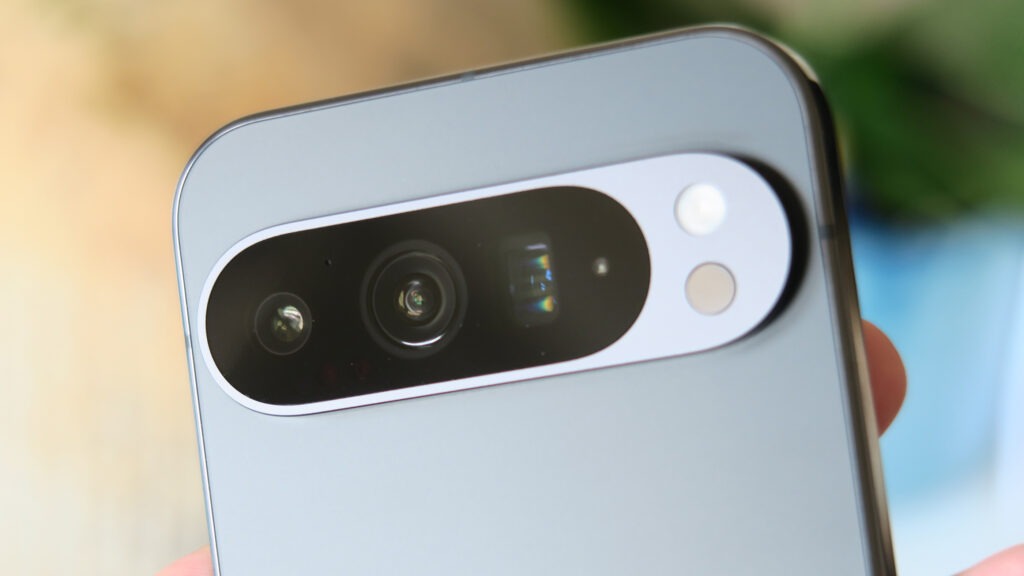
The Tensor G5 is where the Pixel 10 makes its most interesting case. Google moved production to TSMC’s 3nm node, stepping away from Samsung’s fabrication process that caused the overheating problems that followed earlier Tensor chips.
You may also like: Samsung Galaxy A57 Design Leaked: Thinner Profile, Better Specs Than Galaxy A56
In raw benchmark numbers, the G5 still sits behind the Snapdragon 8 Elite Gen 5. But that’s not the point Google was making when they designed it.
What Google built instead is a chip with an NPU that’s 60 percent more capable than the G4’s. It runs Gemini Nano 2.6 times faster and keeps more than 20 AI features processing locally on the device, without sending data to the cloud. That local processing approach has real implications for both speed and privacy.
The software story reinforces that same direction. The Pixel 10 runs pure Android with no manufacturer skin on top, which means a cleaner interface and no pre-installed apps you didn’t ask for. Security and OS updates land on Pixel devices first, before any other Android phone.
On top of that, Google runs quarterly Pixel Feature Drops, adding new capabilities between major OS releases. Samsung and OnePlus don’t do this. You either wait for a full OS update or you go without. On the Pixel, meaningful new features show up on a regular schedule throughout the year.
The Pixel 10’s AI feature set is built around practical, everyday usefulness. Magic Cue watches what you’re doing across apps and surfaces relevant suggestions without you asking.
Voice Translate handles real-time call translation directly on the device, in your own voice, with no cloud processing involved. Scam Detection uses Gemini Nano to screen calls and flag suspicious ones before you answer. Call Notes transcribes your calls automatically and surfaces suggested follow-up tasks once the call ends.
The Pixel Screenshots builds a searchable library of everything you’ve captured, connected to NotebookLM for deeper reference and retrieval.
The camera specs look modest on paper with a 48MP main lens, 13MP ultrawide, and a telephoto they always have. But specs alone have never been the right way to judge a Pixel camera.
Google has spent three years building a track record of producing natural, accurate photos straight out of the camera without any manual adjustment needed. No tweaking settings, no post-processing through an app.
You point, shoot, and the results consistently hold up against phones with more impressive numbers on the spec sheet. That reputation carries through to the Pixel 10.
You may also like: Xiaomi 17 Ultra Review: Best Camera Phone of 2026
If I were buying the Pixel 10, the clean Android experience and the cameras would be the reasons. Not the chip, not the design, not the battery. Those two things are where Google has built its strongest case, and they hold up well.
On battery, the Pixel 10 carries a 4,970mAh cell, which is reasonable but not remarkable given what the OnePlus 15 offers at a similar price.
Wired charging tops out at 30W, the slowest of the three phones here. Where it recovers some ground is wireless charging. It supports Pixelsnap, which is Qi2-compatible, so if you already use a Qi2 charger at home or on your desk, the Pixel 10 fits straight into that setup without any extra hardware.