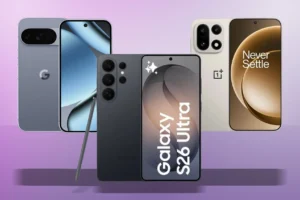

Samsung just launched the Galaxy S26 series, with the S26 Ultra sitting at the top of the lineup. If you’re still using the Galaxy S23 Ultra from 2023, the obvious question is whether three years of updates add up to enough of a reason to upgrade.
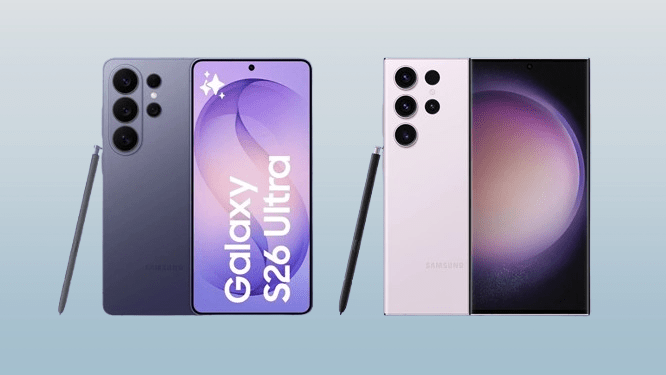
Below, we’ve compared the key specs between the two to help you work out where the S26 Ultra actually makes differences and where the differences are more modest. If you’re on the fence, the breakdown below should give you a clear answer.
Samsung Galaxy S26 Ultra vs S23 Ultra: Price and Availability
The Galaxy S26 Ultra is available for pre-order now and launches officially on March 11th. It starts at $1,299 in the US for the 12GB RAM and 256GB storage configuration.
The Galaxy S23 Ultra is three years old now, so Samsung no longer sells it directly. You can still find it through third-party retailers like Amazon, both as new old stock and as refurbished units.
You may also like: Best Samsung Galaxy S26 Accessories to Buy in 2026
Pricing varies depending on condition and seller, but at the time of writing comparison, it was available from around $500, which makes the price gap between the two worth factoring into your upgrade decision.
Samsung Galaxy S26 Ultra vs S23 Ultra: Design
The design differences between the two are noticeable from the moment you pick them up. The S26 Ultra uses a flat display with rounded corners, while the S23 Ultra has a curved screen. The curve on the S23 Ultra isn’t as pronounced as older Samsung flagships, but it still makes one-handed use feel less secure at times, particularly given the size of the phone.
The S26 Ultra addresses that directly. The flat display makes the edges easier to grip, and despite having a larger screen, the phone feels more manageable in hand.
At 7.9mm thick and 214g, it’s both thinner and lighter than the S23 Ultra, which comes in at 234g. That 20g difference is something you notice after holding the phone for an extended period.
Both phones include an S Pen that slots into the top of the device, and both use an aluminium frame. Those two details are carried over; they are the unchanged similarities between the generations.
Samsung Galaxy S26 Ultra vs S23 Ultra: Screen
Both phones deliver premium display quality, and the core specs are closely matched. Each uses a Dynamic AMOLED 2X panel with QHD+ resolution and an LTPO-enabled 120Hz refresh rate that adjusts dynamically based on what’s on screen.
Where they differ is the physical shape of the display. The S26 Ultra’s flat screen makes it easier to use across a wider range of tasks. Gaming, scrolling through social media, and writing or drawing with the S Pen all feel more natural on a flat surface where your inputs land exactly where you expect them to.
You may also like: Samsung Galaxy Z TriFold US Release Date: $2,899 Price, January 30 Launch Date
The S23 Ultra’s curved display is pleasant to look at, but the curve introduces a small amount of friction in day-to-day use that the S26 Ultra avoids entirely.
The S26 Ultra introduces a built-in Privacy Display, which is a first for a smartphone. It narrows the viewing angle of the screen so that anyone looking from the side sees a black display instead of your content.
Only the person looking directly at the screen can see what’s on it. The feature is also customizable, so you can set it to apply only to specific apps or notification types rather than locking down the entire screen at all times.
On top of that, the S26 Ultra uses anti-reflective screen technology and Gorilla Armour 2 coating, both of which improve visibility in bright conditions and add a layer of scratch and impact resistance.
The S23 Ultra uses Gorilla Glass Victus 2, which was Samsung’s screen protection standard in 2022. It’s still a capable coating, but it’s two generations behind what the S26 Ultra ships with.
Samsung Galaxy S26 Ultra vs S23 Ultra: Camera
The S23 Ultra was a good camera phone when it launched, and the S26 Ultra builds on that foundation with some meaningful upgrades. That said, the S26 Ultra’s camera system is starting to show its limitations compared to some current competitors.
Both phones share a 200MP main sensor as the foundation of their camera setups, each paired with an ultrawide and two telephoto lenses. The key difference in the main camera is the aperture.
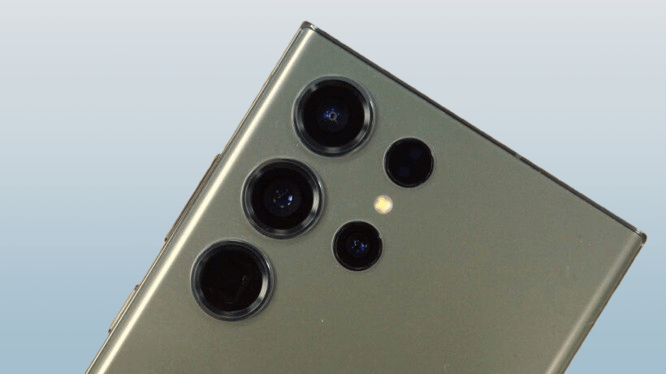
The S26 Ultra opens to f/1.4, compared to f/1.7 on the S23 Ultra. A wider aperture lets in more light, which benefits low-light photography and gives you more background separation when shooting portraits.
You may also like: Samsung Galaxy A57 Design Leaked: Thinner Profile, Better Specs Than Galaxy A56
In practice, both phones produce detailed, accurate images across most lighting conditions, but the S26 Ultra has a measurable advantage when the light gets difficult.
The ultrawide cameras differ significantly on paper. The S23 Ultra uses a 12MP ultrawide, while the S26 Ultra steps up to a 50MP sensor. That gap sounds substantial, but it’s worth keeping in perspective.
The S23 Ultra’s ultrawide produces clean, accurate images with minimal edge distortion, which is a problem that affects many ultrawide lenses. It’s a capable sensor despite the lower resolution.
The telephoto comparison is where the generational gap becomes more apparent. The S23 Ultra relies on dual 10MP telephoto lenses that struggle to hold up in low-light conditions.
The S26 Ultra replaces that with a 50MP periscope telephoto that delivers excellent results up to 10x zoom and stays usable up to around 30x before the image starts to look overprocessed. For anyone who uses zoom regularly, that improvement is one of the more practical upgrades between the two phones.
Samsung Galaxy S26 Ultra vs S23 Ultra: Performance
Both phones run on custom Qualcomm chips tuned specifically for Samsung’s Galaxy lineup. The S23 Ultra uses the Snapdragon 8 Gen 2 for Galaxy from 2023, while the S26 Ultra runs on the Snapdragon 8 Elite Gen 5 for Galaxy, Qualcomm’s current premium processor as of 2026.
The performance gap between a three-year-old chip and the current generation is exactly what you’d expect. The S26 Ultra posted strong benchmark scores in testing, and that translates directly into real-world use.
Apps open immediately, multitasking stays smooth under load, and demanding games like Call of Duty Mobile run without any signs of strain. The S23 Ultra was a capable performer in its time, but the S26 Ultra operates at a noticeably higher level across the board.
You may also like: Samsung Galaxy Z Flip7 Olympic Edition: Exclusive Phone for Milano Cortina 2026 Athletes
The S23 Ultra’s older chip naturally falls behind the S26 Ultra in benchmark testing, and there is a performance gap in real-world use too. That said, the S23 Ultra still feels fast and responsive for everyday tasks. Unless you’re running the two phones side by side, the difference in day-to-day use is unlikely to stand out in a way that feels urgent.
Where the gap becomes more significant is in software support. Samsung is committed to seven years of OS updates for the S26 Ultra, carrying it through to Android 23.
The S23 Ultra was promised four years of updates, which takes it only as far as Android 17. That means S23 Ultra owners have roughly a year of updates remaining before the phone stops receiving new Android versions.
That timeline is probably the strongest practical argument for upgrading now. The S23 Ultra still performs well, but a phone approaching the end of its software support window has a shorter useful life ahead of it. Moving to the S26 Ultra at this point gives you seven more years of updates, which is a meaningful difference in how long the phone stays current and secure.
Samsung Galaxy S26 Ultra vs S23 Ultra: Software
Galaxy AI has been a headline feature across Samsung’s recent lineup, first introduced with the Galaxy S24 series. The toolkit covers a broad range of AI-powered tools, including real-time translation, voice recording transcription, and photo editing features that go well beyond basic adjustments.
The S26 Ultra gets the full Galaxy AI package, including the latest additions to Photo Assist, which lets you add photorealistic elements directly into your shots.
The S23 Ultra currently supports an older version of the toolkit and misses out on some of the newer features that launched alongside the S26 series.
You may also like: Galaxy S26 Base Model Leaked with 256GB Storage: Price Increase or Better Value?
Samsung has a track record of rolling AI features back to older supported devices over time, so there’s a reasonable chance some of those additions will reach the S23 Ultra in the coming weeks, but nothing has been confirmed yet.
The S23 Ultra still has access to Circle to Search and the core Photo Assist tools, including the ability to remove unwanted objects from the background of your photos. Those features alone cover a lot of the everyday AI use cases, even if the newer additions aren’t available yet.
Samsung Galaxy S26 Ultra vs S23 Ultra: Battery
Battery capacity is one area where Samsung made no changes between the two phones. The S26 Ultra sticks with the same 5,000mAh cell found in the S23 Ultra, which is a missed opportunity given that several competing Android flagships now ship with batteries above 6,000mAh.
In practice, both phones handle a full day of use without trouble, though how far they stretch depends on your screen brightness, usage habits, and which features you have running in the background.
The difference shows up when it’s time to recharge. The S26 Ultra supports 60W wired charging, which brings the phone from empty to full in around 53 minutes in testing.
You may also like: Google Pixel 10a Launches with Tensor G4, Brighter Display, and Satellite SOS for $499
The S23 Ultra tops out at 45W, and that slower charging rate means a full charge takes over 90 minutes. If you’re someone who charges quickly between tasks rather than leaving the phone on overnight, that 37-minute gap is a meaningful practical difference between the two.
The S26 Ultra supports 25W wireless charging, which is a step up from the 15W wireless charging on the S23 Ultra. It’s worth noting that this isn’t Qi2, which requires built-in magnets like those found on the iPhone 17 and Pixel 10.
The S26 Ultra can reach Qi2 speeds through a compatible magnetic case, but the hardware support isn’t built into the phone itself. That distinction aside, 25W wireless is still a good improvement over what the S23 Ultra offers.
Samsung Galaxy S26 Ultra vs S23 Ultra: Verdict
The Galaxy S26 Ultra is a well-rounded upgrade over the S23 Ultra. The newer processor, updated flat display design, faster wired charging, and improved telephoto camera all represent real improvements over what the S23 Ultra offers. The seven years of software support commitment is the most compelling long-term argument for making the switch now.
That said, the S23 Ultra isn’t a phone that feels dated in daily use. The chip is still fast enough for most tasks, the camera holds up well in most conditions, and it has roughly one more year of Android updates ahead of it.
If your S23 Ultra is running smoothly and nothing feels like it’s holding you back, waiting another cycle is a reasonable choice.
If you’re noticing slowdown, if the camera limitations are starting to frustrate you, or if you want a phone with a long software support runway ahead of it, the S26 Ultra is a perfect upgrade worth making.