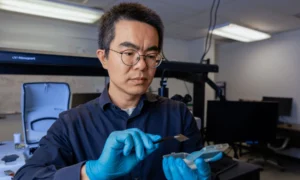

MIT researchers built a device that lets you change the appearance of physical objects such as clothing, furniture, or walls, the same way you’d swap a phone background.
The system is called ChromoLCD. It comes out of MIT’s Computer Science and Artificial Intelligence Laboratory (CSAIL), and it works by projecting high-resolution designs onto surfaces using light and a special ink that’s invisible to the naked eye.
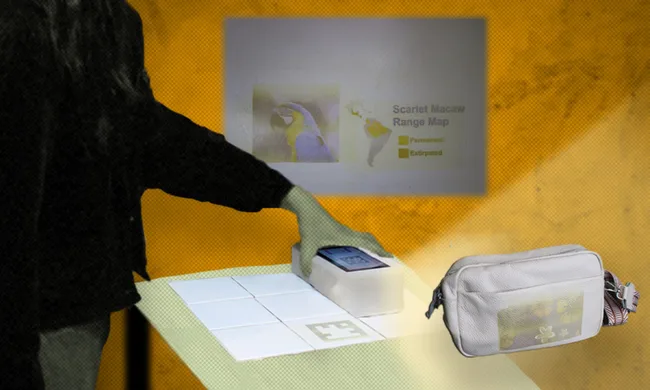
To use it is simple. You pick an image, place the device on the surface you want to update, and it transfers the design. No complicated setup. No 3D modeling. Just upload and apply.
How ChromoLCD Works on Physical Objects
The technology behind ChromoLCD combines LCD panels with LED lighting in a specific sequence. First, the device reads an image and converts it to black and white. Then, ultraviolet light activates a photochromic dye that is already on the surface. After that, red, green, and blue light layers add color and fine detail on top.
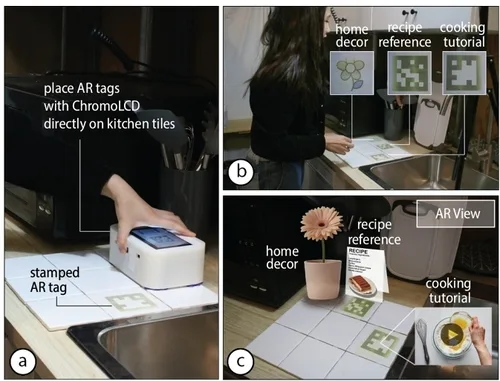
The result is a sharp, full-color image on almost any surface, clothing, furniture, whiteboards, and more. The components used are relatively low-cost, which means the researchers believe hobbyists could eventually build their own version at home.
You may also like: OLED Screens Have Hotspots That Shorten Their Lifespan
The team driving this work includes MIT researchers Yunyi Zhu, Qingyuan Li, and Stefanie Mueller. They are still testing how far this technology can go and what other surfaces or use cases it might work on.
How MIT ChromoLCD Technology Could Change How We Personalize Everything
The most practical thing about ChromoLCD is that you are not locked into one look. You can change the design on your clothing, furniture, or walls whenever you feel like it. That kind of freedom could shift how fashion and home decor work, two industries where getting a custom look usually means spending more time and money.

The team is already thinking bigger. They are looking at ways to cover larger surfaces like walls, possibly through a roller-based version of the device. They are also testing whether robots could use the same system to show graphics or pass along visual information in real time.
You may also like: Negative Luminescence: The Unhackable Data Transmission
ChromoLCD has been part of research at MIT for quite some time now. Earlier systems like PortaChrome and PhotoChromeleon were built around the same idea, which is making physical objects easier to change and update. Each version has pushed that goal a step further.
For now, you still need to come in with an image or design you want to use, but the researchers see that this can be changed. As AI tools improve, the vision is that you could simply type a description of what you want, and the system would generate a print-ready design on the spot, no design skills needed.