
You might think the iPhone Air’s thin design means it can’t match the iPhone 17 Pro. But you’d be wrong. These two phones share more in common than you’d expect.
Here’s what you need to know about how the iPhone Air stacks up against the iPhone 17 Pro in everyday use. We’ll cover how each phone feels in your hand, real-world performance, and actual battery life results.
iPhone Air vs iPhone 17 Pro: Spec comparison
| iPhone 17 Pro | iPhone Air | |
| Dimensions | 71.9 x 150 x 8.75mm | 74.7 x 156.2 x 5.64mm |
| Weight | 206g | 165g |
| Screen size | 6.3-inch | 6.5-inch |
| Refresh rate | 120Hz | 120Hz |
| Material | Aluminium | Titanium |
| Processor | Apple A19 Pro | Apple A19 Pro |
| Rear cameras | 48MP + 48MP + 48MP | 48MP |
| Selfie camera | 18MP | 18MP |
| Wired charge speed | 40W | 20W |
| MagSafe charge speed | 25W | 20W |
| Battery life | Up to 33 hours | Up to 27 hours |
iPhone Air and iPhone 17 Pro: Price
The iPhone Air costs $999 and comes with 256GB of storage. You can buy it now after its release on 19 September 2025.
The iPhone 17 Pro costs a bit more, $1099. It’s also available to purchase worldwide right now after launching in September 2025.
iPhone Air vs iPhone 17 Pro: Design
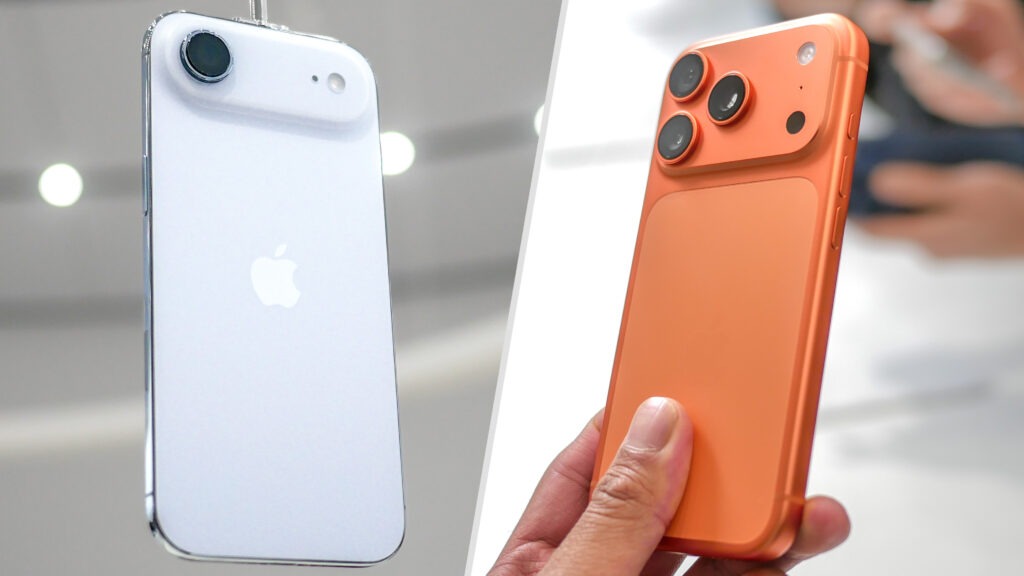
The iPhone Air looks better than the iPhone 17 Pro. The reason is simple: it’s incredibly thin and light. At just 5.64mm thick and 165g, it feels like a phone from the future the second you hold it. The 6.5-inch screen hits the perfect size. It’s big enough to watch movies during your commute but still comfortable to use with one hand.
The camera bar stretches across the top of the back. The weight distribution works well, so the phone never feels like it might tip over despite how it looks.
The titanium frame feels smooth and high-quality. The Ceramic Shield 2 on the front has prevented the tiny scratches that usually show up in the first week of use.
You may also like: Google Pixel 10a Release Date Leaked: Launching February 17 at Lower Price
One thing to note is that it only works with eSIM worldwide. So, you need to be okay with that before buying.
The Camera Control and Action Button are both present. However, the camera pad can feel awkward to use on such a thin edge. The Space Black color looks good, the lighter colors are nice, but they look too similar in certain light.
Most importantly, it doesn’t feel fragile. We expected a phone this thin to feel delicate, but that hasn’t been true at all.
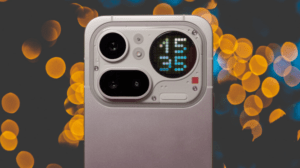
The iPhone 17 Pro takes a different approach with a completely new look. It swaps titanium for aluminum and weighs a bit more. The raised camera plateau stands out as a clear design choice, along with the rectangular glass panel on the back. The off-center logo will likely divide people’s opinions.
The durability matches what you’d expect from an Apple flagship. Ceramic Shield 2 on the front keeps small scratches away. IP68 protection is still there to guard against water and dust.
In some regions, including the UK, you get both a physical SIM slot and eSIM support. The US version doesn’t have the physical SIM slot.
The colors are more fun this year. Deep Blue and Cosmic Orange really stand out. It’s a bit surprising there’s no all-black option, though.
iPhone Air vs iPhone 17 Pro: Screen
Both phones are flagships, so they both have excellent displays. ProMotion at 120Hz is now standard across all iPhones. HDR content looks great, the always-on feature works well, and outdoor peak brightness reaches 3000nits.
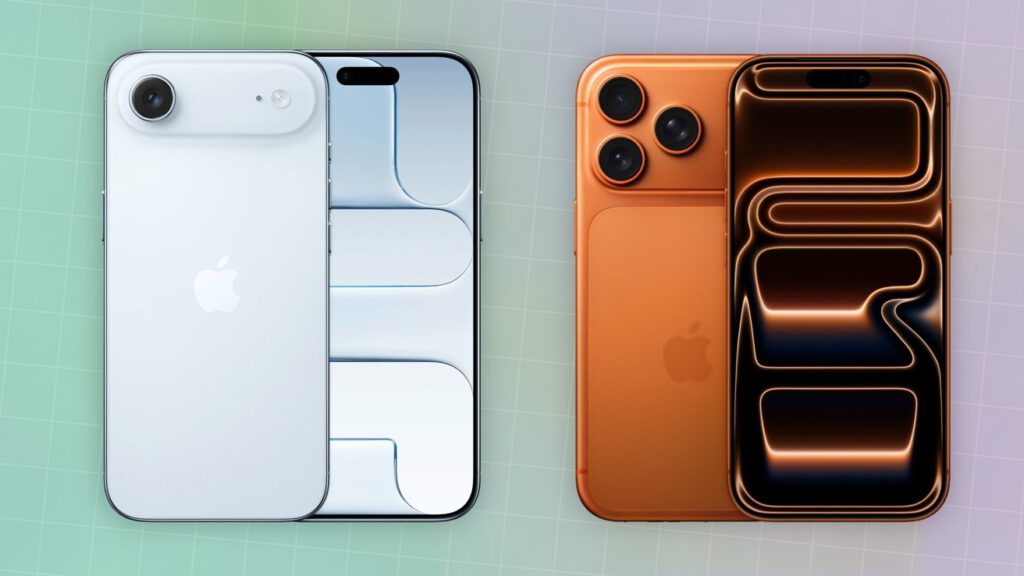
The iPhone Air has one size, and that is 6.5 inches. It’s the perfect size, and Apple’s larger layout elements work well on it. The Dynamic Island sits a bit lower and can block more of your full-screen videos, but you stop noticing it after a while.
You may also like: Samsung Galaxy A07 Promises Six Android Updates for Budget Phone Longevity
The iPhone 17 Pro has a 6.3-inch screen that works well for a smaller Pro model. The brightness is noticeably better than the previous version, which makes it easier to use in direct sunlight. There’s still more glare than on the best Android phones, but at least Apple didn’t reserve any special screen features for the Pro Max this year.
iPhone Air vs iPhone 17 Pro: Cameras
The cameras are where the iPhone 17 Pro clearly beats the iPhone Air. It has three 48MP cameras that cover everything you need. The new 18MP selfie camera works really well thanks to its square sensor. You can switch between portrait and landscape mode without rotating the phone.
The telephoto camera is the big upgrade this year. It now zooms to 8x. The 4x zoom still delivers the sharpest details, but the extra zoom range helps with both photos and videos.
Photos look consistent across all three lenses. Colors are accurate, and skin tones look natural whether you’re shooting in bright sunlight or dim bars.
Video quality is strong, too. You get dual-camera recording, Apple Log 2, Genlock, and direct-to-drive capture. These features turn it into a professional video tool.
The Air makes you accept a clear compromise with cameras. It only has one 48MP camera on the back. The good news is that it uses the same 18MP selfie camera as the Pro model.
You may also like: Samsung Galaxy S26 Privacy Display: AI-Powered Screen Protection Coming to All Models
The main camera is very good. It’s the same one used in the rest of the iPhone 17 lineup. It captures rich colors, natural skin tones, and handles low light well. The in-sensor 3x crop helps when you want a closer shot.
Photographic Styles let you adjust the look of your images to match your preferences. But this camera system is limited.
There’s no ultrawide lens, no real telephoto lens, and several shooting modes are missing. Some features you get on the cheaper iPhone 17 aren’t even available on the Air.
iPhone Air vs iPhone 17 Pro: Performance
On paper, both phones have the same A19 Pro chip. But in reality, they perform differently. The iPhone 17 Pro has a stronger GPU and much better cooling. It stays cooler, maintains high frame rates longer, and handles extended gaming or heavy use without issue.
The Air feels fast for everyday tasks and works well for short periods. But if you push it harder, the thin body heats up near the top, and performance drops off much sooner than the Pro.
Both phones come with 256GB of storage as standard. You can upgrade either one to 1TB if you need more space. Both also support the best connectivity options, including Wi-Fi 7, Bluetooth, Thread, and UWB.
The Air’s weak point is audio. The single speaker sounds harsh and tinny. It works fine for alarms, but you’ll want earbuds for podcasts or videos.
One more thing to note is that the Air’s USB-C port only supports USB 2 speeds for data transfer. That’s slower than the Pro model.
iPhone Air vs iPhone 17 Pro: Software
Both iPhones run iOS 26, and the Liquid Glass redesign looks good on both models. Apple’s apps feel updated, with nice touches like artwork sliding under the controls in the Music app. There are plenty of Apple Intelligence features to try.
However, Apple Intelligence isn’t essential to the iOS experience. The Clean Up tool works worse than Google’s and Samsung’s versions. The writing aids often sound robotic. The Playground’s generative features are fun to try once, but you won’t come back to them often.
iPhone Air vs iPhone 17 Pro: Battery life
The iPhone 17 Pro is the reliable choice for battery life. In our tests, it usually ends the day with 15-30% remaining. It also uses less power during gaming and streaming compared to previous iPhones.
Charging is faster, too. With a 40W charger, we got to 50% in just 20 minutes and a full charge in about 80 minutes. You also get faster 25W Qi2 wireless charging.
You may also like: The OnePlus Turbo 6 is here with a 9,000mAh battery
The Air’s battery performance depends more on how you use it. It’s not amazing, but it’s not terrible either. On light-usage days, you’ll end up with roughly 15-20% left. Heavy usage days will force you to charge by early evening. We typically get 4 to 5 hours of screen time before needing to plug in.
Charging is okay, not fast. We saw 50% charge in 30 minutes, which is 10 minutes slower than the Pro. A full charge takes about 87 minutes, even though the battery is much smaller. You do get Qi2 wireless charging, though.
Final thoughts
If you want an iPhone that excels at everything, buy the iPhone 17 Pro. It’s not the best-looking Pro Apple has made, and Apple Intelligence still misses the mark, but the core features are excellent.
You may also like: Pixel Watch Getting “Notify When Left Behind” Feature Like Apple Watch
Performance holds up better over time, the camera system offers real versatility with a useful telephoto and proper video tools, and battery life finally works well for a smaller Pro model.
If you want a phone that feels new every time you pick it up, the iPhone Air delivers. The thinness and balance change how you use it in small but constant ways, and the 6.5-inch screen feels just right.
You need to accept the compromises, though. You get one very good camera instead of three, decent but not great battery life, and some features are missing.
For most people, those compromises will be too much. That’s exactly why the iPhone 17 Pro exists. But for the right person, the Air is the most enjoyable iPhone you can buy.