
Apple fans always look ahead, and the iPhone 18 is the next flagship smartphone series we expect from the company. The iPhone 17 was launched 4 months ago and continues to age. Now seems like the right time to start thinking about what comes next.
Leaks and rumors about the iPhone 18 family started appearing online almost as soon as the iPhone 17 was released. This 2026 lineup could bring new features and major design changes based on what we’ve heard so far.
Some of these design changes might be quite noticeable in terms of size. Reports suggest Apple might introduce a new form factor that could compete with the present best iPhone. However, other rumors suggest Apple might discontinue one of the current iPhone models.
The competition is heating up, too. Samsung will likely launch the Galaxy S26 series within the first few months of the year. Will Samsung’s features outperform the iPhone 18 models, or will Apple introduce improvements that win customers over?
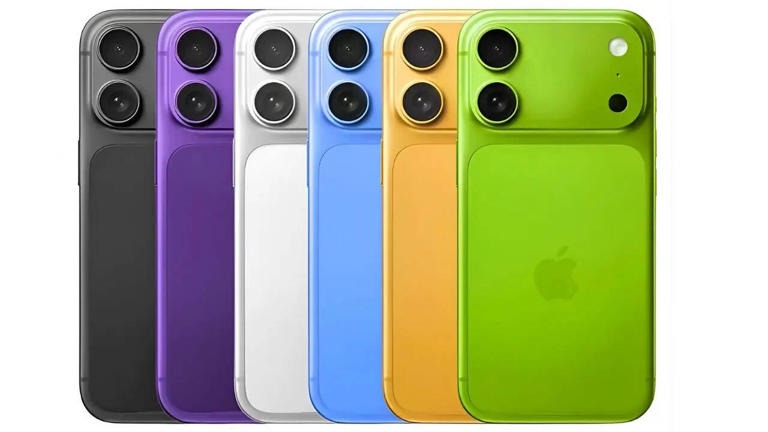
We can’t say yet, but based on the number of leaks we’ve seen, the iPhone 18 lineup looks promising.
We should have more concrete details about what Apple has planned for its 2026 smartphone release in the next few months.
iPhone 18 Design
All the reliable leaks so far suggest the iPhone 18 series will keep the same basic design as the iPhone 17 series. You might see a few small visual tweaks, but nothing major.
Digital Chat Station, a source on the Chinese platform Weibo, says the iPhone 18 Pro will look almost identical to the current model. This fits Apple’s pattern of sticking with a design for several generations before making big changes.
However, there might be one small difference worth noting. The leaker mentions that the plastic section on the back of the phone, located beneath the camera bump, will be slightly see-through rather than solid.
On the iPhone 17 Pro, this plastic piece is opaque and matches the rest of the phone’s body color. For example, the silver version features a white plastic block sitting atop the wireless charging coil.
You may also like: iPhone Air vs iPhone 17 Pro: Which Should You Buy in 2026?
We don’t yet know whether this switch to a translucent material is just for looks or serves a practical purpose. Apple might have technical reasons for the change, or it could simply be a design preference. More details should emerge as we get closer to the launch date.
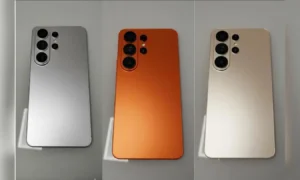
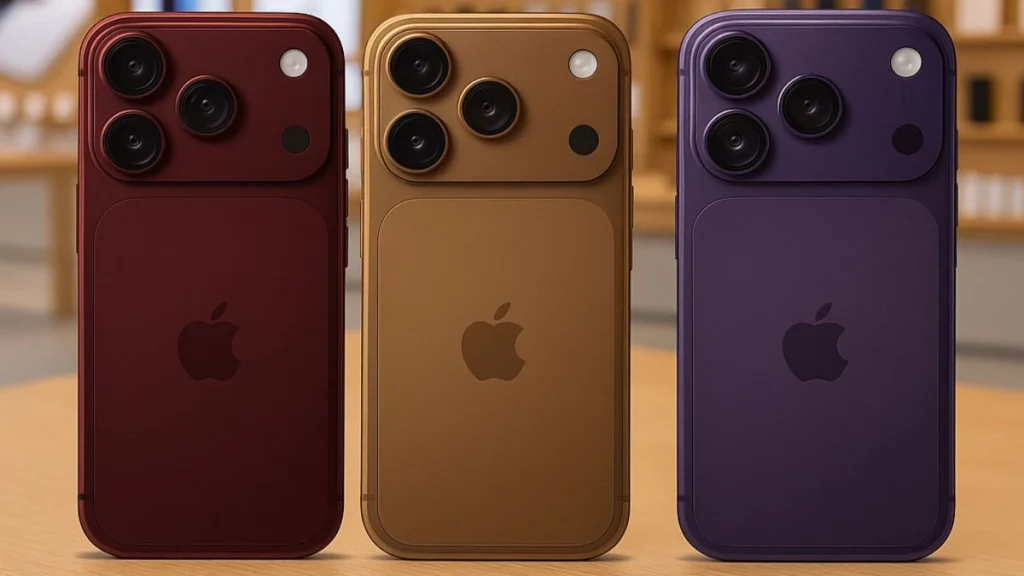
Apple might experiment with some bold color options next year. A leaker named Instant Digital on Weibo claims the iPhone 18 Pro will likely offer three new colors: coffee, purple, and burgundy.
However, the same source warns that only one of these colors might actually make it to the final product. That second scenario seems more likely.
Apple typically saves bright, eye-catching colors for the standard iPhone models. The Pro versions usually stick to more subtle, professional shades. But Apple changed that pattern this year with the iPhone 17 Pro by introducing a bright cosmic orange option.
This break from tradition suggests Apple might choose another bold color as the iPhone 18 Pro’s signature shade.
If Apple follows through, we could see one exceptional color option with the usual neutral choices. Coffee seems like the safest bet since it maintains some restraint while still offering something different. Purple or burgundy would be bolder moves that push further from Apple’s typical Pro color palette.
We’ll need to wait for official announcements to know which direction Apple takes with the iPhone 18 Pro colors.
Reports on the phone’s front are mixed right now. The Information said Apple has tested under-display Face ID technology for the iPhone 18 Pro. Other leakers have repeated this claim. Meanwhile, display analyst Ross Young predicts a smaller pill-shaped Dynamic Island cutout on the screen.
Some newer reports mention a similar change but suggest the phones might use Android-style punch-hole cameras instead. Apple could potentially use both designs, one for the standard model and another for the Pro versions.
Another leak suggests the iPhone 18 Pro Max will get slightly heavier. The phone could weigh over 240 grams, which is about 10 grams more than the iPhone 17 Pro Max.
The thickness might also increase slightly; this isn’t a huge change overall. Apple will likely use the extra space for a larger battery or another practical improvement that benefits users.
Weight increases usually mean Apple is adding something valuable inside the phone. A bigger battery would give you longer usage time between charges. The trade-off of carrying a phone that’s 10 grams heavier seems worth it if you get several more hours of battery life.
You may also like: Google Pixel 10a Release Date Leaked: Launching February 17 at Lower Price
We should learn more about the specific details of these design choices as the launch date approaches.
The standard iPhone 18 will probably look a lot like the current model. Expect a familiar 120Hz OLED screen with a pill-shaped Face ID cutout at the top.
The back will have a vertical camera bump housing two lenses. Apple will likely change up the color options, but rumors haven’t revealed what new colors we might see for the baseline iPhone 18.
The iPhone Air will probably keep the same design too. Apple typically reuses a design across multiple generations, so major changes seem unlikely.
However, some reports claim Apple’s ultra-slim phone hasn’t sold as expected, leading the company to cut down production. Still, canceling a product after just one generation would be very unusual for Apple. The company rarely gives up on a new product line that quickly.
Lower production numbers don’t necessarily mean the iPhone Air has an issue. Apple might just be adjusting to market demand after initial sales data came in. Companies often make these kinds of corrections in their second year with a new product.
We’ll need to see how things develop over the next few months to know if the iPhone Air has a future in Apple’s lineup or if the company plans to phase it out.
iPhone 18 Hardware
Apple made significant upgrades to the iPhone 17 series, so there’s less room for major hardware changes in the iPhone 18. But we are getting a new processor next year. A leak from Weibo says Apple has asked TSMC, its longtime manufacturing partner, to produce two versions of its next chip: the A20 and A20 Pro.
The standard iPhone 18 will probably use the A20 processor. The Pro and Air models will likely get the most powerful A20 Pro version. These will be the first Apple processors built using TSMC’s 2nm manufacturing process. The current A19 series chips use a 3nm process.
This manufacturing improvement should deliver noticeable gains. You can expect better raw performance and improved efficiency compared to the A19 chips in the iPhone 17.
Smaller manufacturing processes typically mean chips can do more work while using less power. This usually translates to faster performance and longer battery life in real-world use.
You may also like: Samsung Galaxy A07 Promises Six Android Updates for Budget Phone Longevity
The 2nm process represents a meaningful step forward in chip technology. Your iPhone 18 should handle demanding tasks more smoothly while potentially lasting longer on a single charge than current models.
These new processors will also use a different chip design. According to analyst Ming-Chi Kuo, Apple will switch to WMCM (Wafer-level Multi-Chip Module) packaging technology. Several other industry sources have backed up this claim.
This technology lets Apple integrate the processor core and other components, such as DRAM, into the same package during wafer manufacturing. Think of it as building everything together from the start instead of assembling separate pieces later.
This approach offers several benefits. It reduces material costs, improves manufacturing success rates, and boosts overall system performance. Apple plans to use the same technology later for its M6 series processors that power Mac computers.
TSMC has already begun building a dedicated production line to make these WMCM-based chips. This shows both companies are committed to the new manufacturing method.
For you as a user, this means the iPhone 18 should perform better while potentially costing Apple less to produce. Whether Apple passes those savings on to customers or uses them to improve profit margins remains to be seen.
Apple upgraded the iPhone 17 Pro to use larger sensors across all rear cameras. While competitors have moved to 200-megapixel sensors, Apple will apparently keep the same triple-camera setup with 48-megapixel sensors on the iPhone 18 Pro. However, the phone could gain an important imaging feature commonly found on professional cameras.
Both Digital Chat Station and Ming-Chi Kuo predict that the iPhone 18 Pro and Pro Max will add variable-aperture technology. We don’t yet know whether the standard iPhone 18 will also get this feature. Sony and Samsung already offered this technology on smartphones years ago, so Apple would be catching up rather than leading.
Variable aperture lets you control how much light reaches the camera sensor. This works similarly to how your eye’s pupil expands in dim light and contracts in bright conditions. With this control, you can adjust settings based on your shooting environment.
In bright sunlight, you can narrow the aperture to prevent overexposure and increase depth of field. In low-light situations, you can open the aperture wider to let in more light and capture better photos.
This gives you more creative control over your images and helps the camera perform better across different lighting conditions.
Professional photographers have used variable aperture for decades. Adding it to the iPhone 18 Pro would give users more flexibility when taking photos.
The camera achieves this by controlling the blades in front of the lens or by switching the physical opening size. This gives you better control over your photos.
You can reduce light intake to prevent washed-out images in bright environments. When you need more light, opening the aperture wider helps the camera gather more light data and capture clear photos in dark settings.
You may also like: Samsung Galaxy S26 Privacy Display: AI-Powered Screen Protection Coming to All Models
Variable aperture also lets you control depth-of-field effects and subject sharpness in bokeh shots. You can adjust how blurry the background appears and how sharp your subject looks.
Leaker Instant Digital posted on Weibo that Apple might simplify the Camera Control button. The new version would only respond to pressure, removing support for capacitive touch gestures.
This would make the button work more like a traditional camera shutter; you press it to take photos rather than swiping or tapping on it.
The change could make the Camera Control button easier to use. Some users found the current version confusing with its multiple gesture types. A pressure-only button would be easier to understand and harder to activate accidentally.
Whether this simplification improves the user experience depends on how you currently use the Camera Control button. If you rely on the gesture features, you might miss them.
Supply chain analyst Jeff Pu predicts the iPhone 18 series will use Apple’s new C2 modem. Beyond faster performance and better battery efficiency, it should add support for mmWave 5G, the faster version of 5G technology. The current C1 modem in the iPhone 16e and the C1x modem in the iPhone Air don’t support mmWave 5G.
The Information reports that the iPhone 18 Pro will also support satellite-based 5G internet connectivity. Other sources have confirmed this separately. The service will reportedly use Starlink satellites operated by SpaceX, Elon Musk’s company. Development is already in progress, though 5G satellite internet isn’t available to consumers yet.
Scientists in China completed the world’s first 5G satellite-to-smartphone broadband video call in May. This proved that the technology can work in real-world conditions. A French startup, Constellation Technologies & Operations (CTO), is also developing satellite-linked 5G millimeter-wave (5G mmWave) technology.
If Apple adds this feature, you could potentially get 5G internet access in remote areas where traditional cell towers don’t reach. This would be useful for travel, emergencies, or outdoor activities in places without standard cellular coverage.
The technology still needs to become commercially viable before Apple can offer it to customers. Pricing and data speeds for satellite 5G are currently unknown.
The foldable iPhones
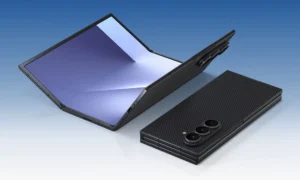
The biggest attraction next year will likely be Apple’s first foldable phone. Most supply chain analysts and leakers predict a fall launch. We don’t know yet what Apple will call it.
Options include the iPhone 18 Fold (similar to the Google Pixel 10 Pro Fold) or simply the iPhone Fold (like the iPhone Air). Whatever the name, this looks like a serious first attempt from Apple.
You may also like: The OnePlus Turbo 6 is here with a 9,000mAh battery
The design sounds impressive, as Bloomberg reported in September, describing it as “two titanium iPhone Airs side-by-side.” The phone will be very thin and represent a design achievement.
You can expect a slim, premium-looking device. Analyst Jeff Pu says Apple might combine aluminum and titanium in the construction. This material mix could help keep the weight down while maintaining durability.
Apple faces serious competition, though. Samsung has years of experience making foldable phones. Chinese brands like Honor and Oppo have also released compelling foldable devices at competitive prices and with features.
Apple’s advantage is its reputation for polish and ecosystem integration. The company typically waits to enter new product categories until it can deliver a refined experience. This patient approach has worked for previous products like the Apple Watch and AirPods.
The foldable iPhone will need to justify its likely premium price against established competitors.
Current foldable phones from these brands are already less than nine millimeters thick. They also pack impressive camera systems and fast battery charging technology. Apple needs to build a thin body while also fitting powerful components inside. The company appears to be making progress on this challenge.
TFI Securities analyst Ming-Chi Kuo wrote in an investor note that the foldable iPhone will have a display with virtually no visible crease on the inner screen. No brand has completely eliminated the crease along the vertical fold line yet. Seeing how Apple solves this problem will be interesting.
The crease is one of the main complaints about current foldable phones. You can see and feel it when you run your finger across the screen. It becomes more noticeable over time as the phone gets used. If Apple can truly minimize or remove the crease, that would be a significant advantage over competitors.
Apple likely developed new hinge technology or screen materials to achieve this. The company filed several patents related to foldable displays over the past few years. Some of these patents describe methods for reducing stress at the screen’s fold point.
A crease-free display would make the foldable iPhone feel more like using a regular tablet when unfolded. This could be the difference that convinces people to pay Apple’s premium pricing.
Kuo provides some specific measurements for the device. The phone will be 9 to 9.5 millimeters thick when folded and about 4.5 to 4.8 millimeters when opened. The inner flexible screen will measure 7.8 inches diagonally. The outer cover display will be 5.5 inches across.
The camera setup might disappoint some users. The phone will only have two rear cameras. Most competing foldable phones, including Google’s, already offer three rear cameras. One report suggests Apple might include Touch ID and dedicate a chip specifically for AI features.
Kuo predicts Apple will use the same high-density battery cell technology in the foldable iPhone as it does in the iPhone 17. This should provide good battery life despite the thin profile.
The price will likely be high. Estimates range from $2,000 to $2,500. This makes it one of the most expensive phones on the market.
That price point will be hard for many people to justify, especially when Samsung’s foldable phones offer more cameras and similar features at lower prices. Apple will need to prove the foldable iPhone delivers enough value to warrant the premium.
The crease-free display and tight iOS ecosystem integration might be enough for loyal Apple customers. For others, the high price and limited camera setup could be deal breakers.
The iPhone 18 series will focus mostly on internal improvements rather than obvious external changes. You won’t see dramatic design differences, but the upgrades should provide meaningful benefits that make the phones worth considering if you’re due for an upgrade.
The foldable model will be the real showstopper. If Apple avoids supply chain problems, this phone will dominate tech conversations next year. A foldable iPhone has been rumored for years, and Apple finally seems ready to enter this market.
The standard iPhone 18 models will offer good incremental improvements. Better processors, improved cameras with variable aperture, and enhanced connectivity through the new modem should make daily use smoother and more capable. These aren’t headline-grabbing features, but they add up to a better overall experience.
Whether you should upgrade depends on which iPhone you currently own. If you have an iPhone 16 or 17, the improvements might not justify the cost. For users with older models like the iPhone 14 or earlier, the jump in performance and features will be more noticeable.
The foldable iPhone represents Apple’s biggest risk and opportunity. Success could open up a new profitable category. Failure could damage Apple’s reputation for quality and polish. Based on the leaks, Apple seems committed to getting it right.