
Do you remember BlackBerry phones with physical keyboards? iKKO thinks you might want that experience back. They’re launching MindOne, a phone about the size of a credit card built for typing with your thumbs.
This phone targets people who want something smaller and more focused. Instead of encouraging you to scroll for hours, the design pushes you toward quick, purposeful use.
iKKO is solving a problem that old keyboard phones never faced. Back then, you either had a cell signal or you didn’t. Today, you bounce between spotty Wi-Fi at coffee shops, weak cellular in buildings, and unknown networks when you travel. Your connection drops constantly.
MindOne uses a MediaTek processor and something called SIMO connectivity to handle this better. The goal is to keep your data flowing even when your main connection fails. If Wi-Fi cuts out, it switches to cellular. If cellular gets weak, it finds another option.
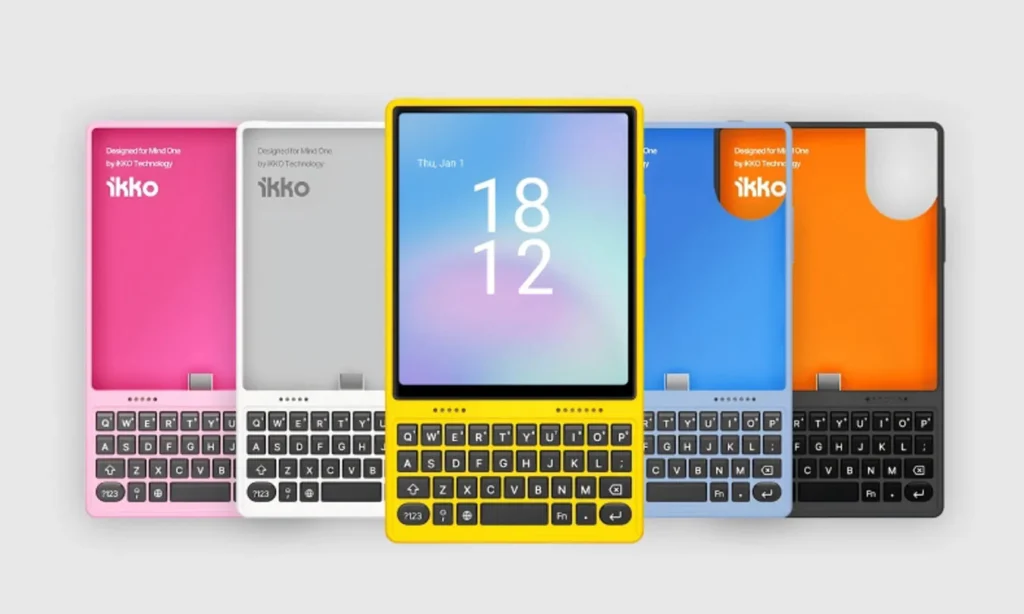
The keyboard layout lets you type with both thumbs as you did on old phones. No more pecking at a touchscreen with one finger or fighting autocorrect.
This isn’t trying to replace your main phone. It’s positioned as a secondary device for people who miss physical keys or want something that doesn’t tempt them into mindless app hopping. Small screen, real buttons, stays connected. That’s the pitch.
The Modern Phone with a BlackBerry Vibe
The keyboard is the main feature here. Everything else supports it. You can buy a snap-on case with the keyboard built in as an extra accessory.
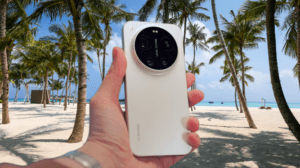
Photos show a compact body with a 50 megapixel Sony camera that rotates. This gives you flexibility for different shooting angles without holding the phone awkwardly.
MindOne runs Android as its OS system, and iKKO adds its own AI OS layer on top. The AI features handle practical tasks you actually do every day. It handles translation when you’re traveling, recording meetings, or voice memos. It can also be used to do a quick search for the information you need.
This phone sells a specific experience. Fast typing with your thumbs like the old days. Fewer things that are pulling your attention away. Its a device that works like a tool instead of an entertainment center.
You pull it out when you need it. Type your message or email quickly. Take a photo. Do your task. Then put it away and move on with your day.
The whole design philosophy centers on being useful without being addictive. Physical keys give you tactile feedback. The small size makes it less tempting to waste time, and the AI features help you finish tasks faster.
This targets people tired of phones that demand constant attention. MindOne positions itself as the opposite. A phone that helps you stay productive and then gets out of your way.
MindOne: The always-online Phone
SIMO’s Virtual SIM support is what makes this phone different on the connectivity side. iKKO claims MindOne can access backup data through vSIM in over 140 countries. The idea is simple. When your Wi-Fi stops working, or your regular SIM loses signal, the phone switches to this backup connection. Your email, maps, and messaging apps keep working.
Here’s what iKKO hasn’t explained yet. Do you get this backup data included with the phone? How do you turn it on? Is there a monthly data limit? What happens when you hit that limit? Most importantly, how much does it cost after the initial purchase?
These details matter because they determine if this feature actually saves you money and hassle or just adds another subscription bill.
The 140-country claim sounds impressive, but it needs context. Coverage quality changes based on which country you’re in and which local networks SIMO partners with. You might get fast, reliable backup data in major cities, but weak or no coverage in rural areas.
Real-world testing will show whether this system actually works when you need it. A feature that promises seamless connectivity but fails during an important work trip or emergency isn’t worth much.
Buyers should wait for concrete information about pricing and data limits before counting on this as a major selling point. The technology exists and could be genuinely helpful. The business model behind it will determine if it’s practical for everyday use.
MindOne Release Date
MindOne was launched at CES 2026 and goes on sale globally on February 8, 2026. iKKO prices it between $329 and $499. That range puts it firmly in secondary phone territory for most people, not something that replaces your main device.
If this phone interests you, you’ll need more details before buying. iKKO hasn’t released the full spec sheet yet. Screen size matters when you’re typing and reading. Battery capacity determines if it lasts through your day. Storage options affect how many apps and files you can keep on it.
The keyboard experience is the biggest question mark. Modern apps expect touchscreens. How well does a physical keyboard work with Instagram, Gmail, Slack, and everything else you actually use? Can you navigate menus easily? Do shortcuts speed things up or get in the way?
These details separate a phone you’ll actually use from one that sits in a drawer after a week.
MindOne could become your daily phone if the specs and experience deliver. Or it might end up as a beloved backup device you use for specific tasks. A writing tool. A distraction-free communication device. Something you take on trips when you want to stay reachable without carrying your main phone.
If physical keyboards appeal to you, Clicks makes keyboard accessories for regular smartphones. That gives you another option worth checking out while you wait for more information about MindOne.
The concept is solid. Now we need the details to know if the execution matches.