
We’ve all done it. You feel strange pain in your side or receive confusing test results from your doctor, and the first thing you do is search Google.
You’re not trying to become a medical expert. You just want a quick answer to “Am I okay?” But recently, Google had to stop its AI search summaries because asking a robot for medical advice might actually be dangerous.
Google quietly removed many AI-generated health summaries from search results after an investigation found they provided inaccurate, frankly frightening information.
This started after The Guardian published a report pointing out that these “AI Overviews,” the colorful boxes appearing at the top of your search results, were serving incomplete and misleading data.
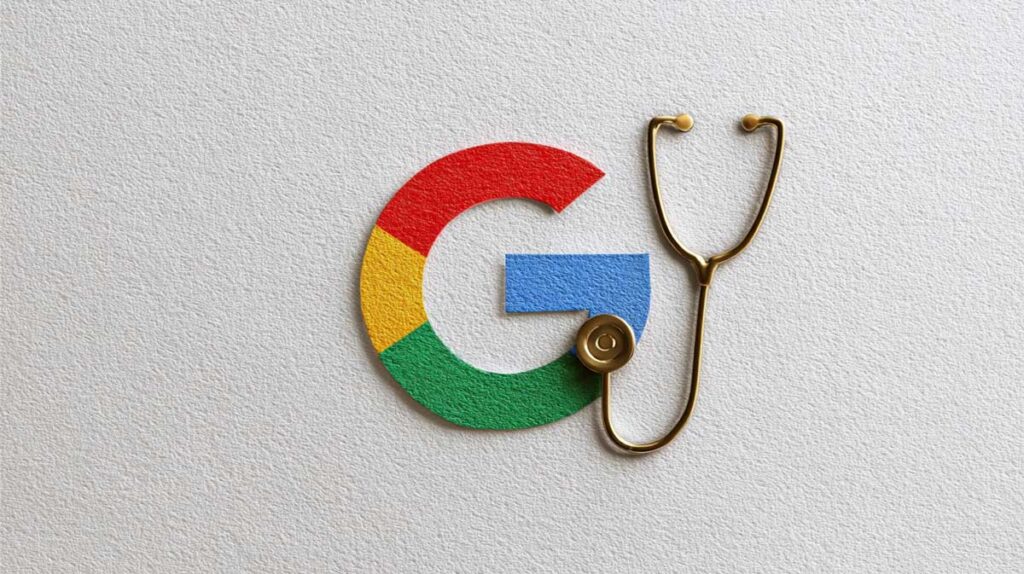
AI Overviews are Google’s attempt to save you time. Instead of clicking through multiple websites, the AI reads sources and generates a summary right at the top of your results.
When it works well, you get your answer immediately. When it fails, especially with health information, the consequences can be serious.
The problem is that AI doesn’t understand context the way humans do. It finds patterns in text and generates responses based on those patterns. It can’t distinguish between authoritative medical sources and random forum posts. It doesn’t know when information is outdated or applies only to specific situations.
Health information requires nuance. A symptom might be harmless in one context and dangerous in another. Treatment advice depends on individual medical history, current medications, and other factors an AI summary can’t account for. Incomplete information can lead people to ignore serious symptoms or try inappropriate treatments.
Google faced pressure to act after The Guardian’s investigation showed real examples of harmful AI summaries.
Using Liver Blood Tests as an Example
If you asked the AI for “normal ranges” for medical tests, it would just list numbers. It didn’t ask if you were male or female. It didn’t consider your age, ethnicity, or medical history. It just provided flat numbers. Medical experts reviewed this and said it was dangerous.
The problem isn’t just that the AI was wrong. It was dangerously misleading. Imagine someone with early-stage liver disease looking up their test results. The AI tells them their numbers fall within the “normal” range it found on some random website.
That person might think they’re fine and skip their follow-up appointment. In reality, a “normal” number for a 20-year-old might signal a warning for a 50-year-old. The AI lacks the ability to understand this, and that gap in context can have serious real-world consequences.
You may also like: Google Turning Now Playing Into Dedicated App for Pixel Users
Medical test interpretation requires understanding individual circumstances. Normal ranges vary by age, sex, pregnancy status, underlying conditions, and even time of day.
A number that’s perfectly healthy for one person might indicate disease in another. Doctors spend years learning to interpret test results in context. An AI summary can’t replace that expertise.
Google’s response followed a predictable pattern. They removed the specific search queries that were flagged and insisted their system is usually helpful. But here’s the problem: health organizations like the British Liver Trust found that if you simply reworded the question slightly, the same bad information appeared again.
It’s like playing digital whack-a-mole. You fix one error, and the AI generates a new version of the same mistake seconds later.
This reveals a fundamental problem with AI-generated health information. You can’t fix it by removing individual bad examples because the AI doesn’t actually understand medicine.
Google Removed AI Health Summaries Because of Trust Issues
AI summaries appear at the top of the page, above actual links to hospitals or medical journals. This placement gives them an air of authority.
We’re trained to trust the top search result. When Google shows an answer in a clean box, our brains unconsciously treat it as the correct answer. But it’s not correct. It’s just a prediction engine that guesses which words should come next based on patterns in the text.
The AI doesn’t know whether the information is accurate, up to date, or applicable to your situation. It just knows these words often appear together in documents about this topic. That’s fundamentally different from understanding medicine.
This positioning creates a dangerous illusion of expertise. People assume Google verified the information before prominently displaying it. They assume the AI consulted authoritative sources and synthesized expert consensus.
Neither assumption is true. The AI scraped text from various websites and generated a summary without understanding medical accuracy or context.
For now, this situation serves as a massive wake-up call. AI works well for summarizing emails or planning travel itineraries. Those tasks have low stakes. If the AI gets your hotel recommendation wrong, you’re mildly inconvenienced. If it gets health information wrong, you might ignore serious symptoms or pursue harmful treatments.
AI clearly isn’t ready for medical advice. Until these systems can properly understand context, or until Google implements stricter guidelines, it’s safer to scroll past the AI summary and click an actual link from a real medical source.
Look for information from hospitals, medical schools, government health agencies, and established medical organizations.
Speed feels convenient, but accuracy is the only thing that matters when it comes to your health. Taking an extra two minutes to read information from a trusted source beats getting a fast but wrong answer.