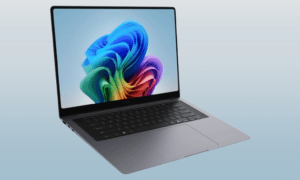

Dell has refreshed its Precision lineup with four new laptops, covering two series and two screen sizes. The Dell Precision 5 Series is available in 14-inch and 16-inch configurations, and the more capable Precision 7 Series offers the same size options. All four are built for professional workloads that go beyond what a standard business laptop can handle.
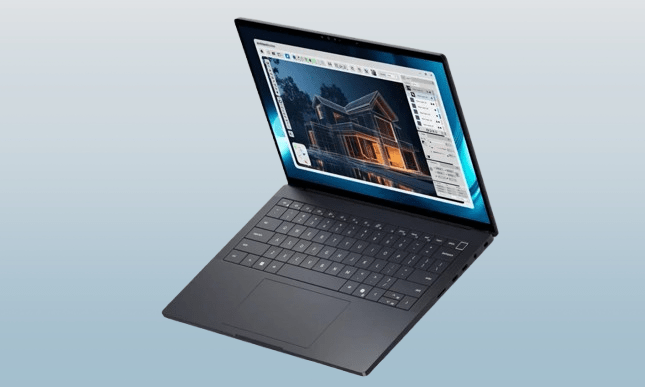
Every model in the new lineup runs on Intel’s Series 3 Core Ultra processors, each with a built-in NPU capable of handling local AI tasks at up to 50 TOPS.
The Precision 5 laptops are available with Core Ultra 5, Ultra 7, and Ultra 9 chips, depending on your performance needs. The Precision 7 laptops step up to Core Ultra 7, Ultra 9, and higher-end Ultra X7 for users who need maximum processing power.
Both the Precision 5 and Precision 7 series support up to 64GB of RAM, though the Precision 7 uses onboard memory rather than the socketed configuration found in the Precision 5.
The practical difference is that onboard RAM is soldered directly to the motherboard, which affects upgradeability down the line, so it’s worth configuring the Precision 7 with the right amount of memory from the start.
You may also like: Galaxy Book 6 Lineup Is Now Official in the US: Here’s Everything You Should Know Before Buying
Graphics across the entire lineup come from NVIDIA’s RTX PRO Blackwell range. The Precision 7 reaches further up that stack, with the option to configure it with the RTX PRO 3000 and 12GB of dedicated video memory.
For workloads that rely heavily on GPU performance, such as 3D rendering, simulation, or video production, that top-end GPU option gives the Precision 7 a meaningful advantage over the Precision 5 configurations.
Dell Precision 5 and 7 Series: Which One Should You Pick?
The Precision 5 is the more accessible starting point in the new lineup. The 14-inch version weighs 3.98 lbs and comes with a QHD+ non-touch display option, up to 2TB of Gen5 NVMe storage, and a 72Wh battery.
The 16-inch model shares the same core spec sheet but adds the option for a more powerful NVIDIA RTX PRO 2000 Blackwell GPU, a larger screen, and a bigger 96Wh battery to match.
The Precision 7 is where the specs become more serious. The 14-inch model weighs just 3.51 lbs, which is notable given the hardware packed inside.
The display options include a QHD+ Tandem OLED panel with VESA HDR TrueBlack 500 support, which is a high-end display choice that suits color-critical professional work.
For anyone doing visual work where display accuracy matters as much as processing power, the Precision 7’s screen options push it into a different category from the Precision 5.
The 16-inch Precision 7 takes the display further with a 4K Tandem OLED panel running at 120Hz with HDR TrueBlack 1000 certification. For professionals working with color-accurate content, whether that’s video editing, graphic design, or visual effects, that screen specification is a good consideration on its own.
Both Precision 7 models support up to 4TB of Gen5 NVMe SSD storage, which gives you fast local storage headroom for large project files.
You may also like: HP Victus Gaming Laptop Drops to $999.99 for Presidents’ Day (RTX 5060, 16GB RAM)
Thunderbolt 5 ports come standard on both Precision 7 models, which is a notable step up from Thunderbolt 4.
If you regularly move large files between devices or depend on high-bandwidth peripherals, that bandwidth increase translates directly into faster transfer speeds and more reliable performance with demanding accessories.
Connectivity across all four new Precision laptops includes Wi-Fi 7, Bluetooth 6.0, and an 8MP IR camera. The IR camera supports Windows Hello facial recognition, which covers secure login without needing a fingerprint reader.
Are Dell Precision 5 and 7 Series Worth Buying?
The hardware across the new Precision lineup is good, but the value case depends entirely on where Dell sets the pricing, and that hasn’t been announced yet.
The Precision 7 Series, in particular, with its premium GPU options, Thunderbolt 5, and 4K Tandem OLED display, will almost certainly carry a premium price. The question is how that premium compares to what Apple’s M5 Pro and M5 Max MacBook Pro models offer at similar price points.
Apple’s silicon has set a high bar for professional laptop performance and efficiency, and Dell will need to price the Precision 7 competitively to make a compelling case against it.
Once pricing is confirmed, the value proposition will become much clearer. Until then, the specs give a strong indication of what these laptops can do, but whether they represent the right investment depends on the number Dell puts on them.