
Canon keeps blocking third-party manufacturers from making lenses for its RF-mount full-frame cameras (though not for APS-C models). This decision makes more sense when you see how Canon fills gaps in its own lens lineup.
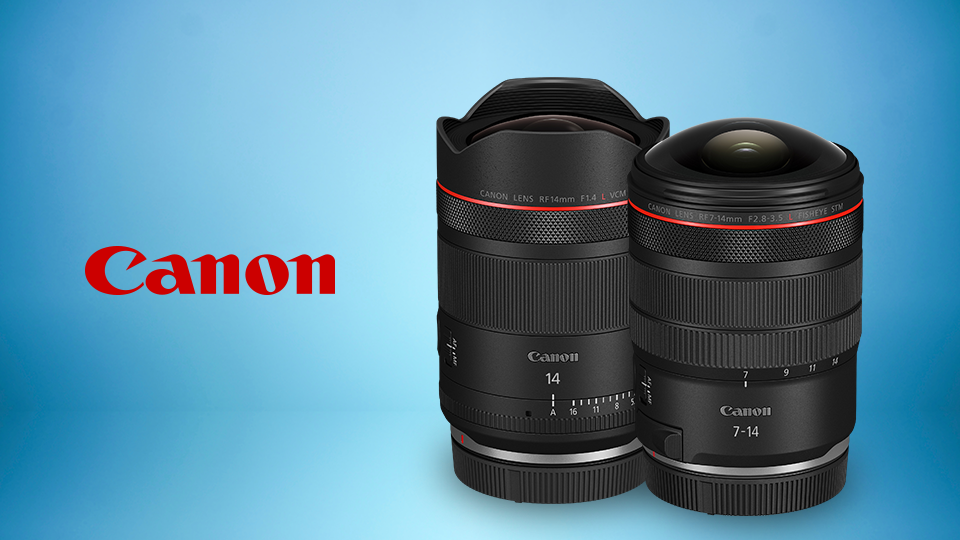
The latest pair of mirrorless lenses, the Canon RF 14mm F1.4L VCM and Canon RF 7-14mm F2.8-3.5 Fisheye STM, proves that the company is really filling the gaps. Both are specialized ultra-wide lenses that address specific needs in Canon’s range. The 14mm works fine for astrophotography, while the fisheye works best for extreme sports shooting.
I tested both lenses before their official announcement. The testing conditions weren’t ideal for showing what these lenses do best, but I still got a good feel for them. My brief time with the 14mm f/1.4 left me genuinely impressed.
The exclusivity issue frustrates many Canon users who want more affordable third-party options. Companies like Sigma and Tamron make quality lenses at lower prices for other camera systems. Canon’s decision to restrict RF-mount access means users pay premium prices for Canon glass.
However, Canon’s argument is that maintaining control over the mount lets them design lenses that work better with their cameras.
Features like faster autofocus and better communication between lens and body supposedly justify the exclusivity. Whether you accept this reasoning depends on your priorities and budget.
Canon RF 14mm F1.4L VCM Features and Specs
The new 14mm F1.4L VCM is the sixth prime lens in Canon’s hybrid lens range, which also includes two zooms. It’s the widest lens in the collection. The 14mm full-frame coverage appeals especially to astrophotographers, but it also works well for landscape photography, interior architecture, weddings, and video work.
The size and weight impressed me right away. The 14mm f/1.4 weighs just 20.4oz or 578g. That’s about half the weight of the Sigma 14mm F1.4 DG Art and roughly 10% lighter than the Canon EF 14mm F2.8L II USM for DSLR cameras, which only opens to f/2.8.
You may also like: 4K DJI Mini 3 Drone Fly More Combo Deal: $575 (20% Off Limited Time)
It’s slightly larger than other VCM lenses, but it weighs about the same. It’s the only one with a built-in petal lens hood. This hood is necessary because of the bulbous front lens element. This same bulbous element means there’s no filter thread for attaching screw-on lens filters. You’ll need an optional adapter if you want to use filters.
The weight advantage matters for real-world use. Carrying camera gear for hours makes every gram count. A lighter lens means less fatigue during long shooting sessions, whether you’re hiking to a dark sky location for astrophotography or covering a full-day wedding.
The built-in hood saves you from carrying and attaching a separate piece. One less thing to lose or forget. The bulbous front element is a tradeoff that comes with ultra-wide lenses at fast apertures.
These lenses work for both photo and video. They use a Voice Coil Motor (VCM) for autofocus that’s fast and almost silent. The aperture ring can be set to clicked or smooth mode. Photographers prefer clicked feedback when changing apertures, while the smooth option works better for subtle transitions during video recording.
You can customize the ring closest to the front of the lens, plus the control button on the side of the barrel. As a professional L series lens, the build quality is excellent, and it’s weather-sealed.
I paired the RF 14mm F1.4L VCM with a Canon EOS R5 Mark II (some product photos below show it with the EOS R6 Mark III). The combination felt perfectly balanced.
The optical design includes 18 elements in 13 groups. These include Canon’s BR, UD, and Fluorite elements. Canon fans will notice the inclusion of expensive Fluorite elements, which Canon typically reserves for professional super-telephoto lenses.
Fluorite elements matter because they reduce chromatic aberration better than standard glass. This means sharper images with less color fringing, especially at the edges of the frame where ultra-wide lenses often struggle.
The weather-sealing protects against dust and moisture, which matters when shooting outdoors in unpredictable conditions. Astrophotographers often work in damp nighttime environments. Landscape photographers face rain, mist, and blowing dust.
The customizable controls let you set up the lens to match your workflow. Assigning frequently used functions to the ring or button speeds up shooting and reduces menu diving.
The lens also includes GMo aspheric elements. Canon says these suppress sagittal coma flare, a distortion that frustrates astrophotographers. Considering everything (the ultra-wide focal length, extremely bright maximum aperture, coma flare suppression, and lightweight weather-resistant build), the RF 14mm F1.4L VCM looks perfect for astrophotography.
Unfortunately, my hands-on time was limited, so I haven’t pushed the lens anywhere near its limits yet. Still, my sample images show it handles lens flare well with the sun in frame. Corner distortion stays minimal with the lens wide open at f/1.4, and sharpness looks impressive.
Canon’s in-camera lens corrections work hard to fix the ultra-wide-angle image. For the most part, you barely notice their impact. I see slight corner softness, but not much. One unavoidable drawback is the 0.24m close-focusing distance, which limits maximum magnification to 0.11x. This is definitely not a macro lens.
Despite excellent optics and low weight, the RF 14mm F1.4L VCM costs £2,399.99 in the UK, US, and Australia; pricing to be confirmed. This means the Sigma 14mm f/1.4 wins on value, costing about 35% less. Canon’s lens goes on sale on February 26.
The price difference is substantial. If budget matters more than weight savings and Canon-specific features, the Sigma offers similar performance for less money. However, the Canon lens integrates better with Canon bodies and weighs significantly less for extended shooting sessions.
Canon RF 7-14mm F2.8-3.5L Fisheye STM
During my Canon visit, I focused mainly on the 14mm F1.4L VCM lens. Canon also revealed its first fisheye zoom lens for mirrorless cameras: the RF 7-14mm F2.8-3.5L Fisheye STM. It’s wider than the RF 10-20mm F4L USM and different from the RF 5.2mm F2.8L Dual Fisheye Lens designed for 3D VR imaging.
Canon says this new fisheye lens is wider, faster, and optically better than its EF 8-15mm F/4 L Fisheye USM for DSLR cameras from 2012. At 16.8oz or 476g, it’s also lighter (the 8-15mm weighs 19oz/540g). It includes a drop-in filter slot near the rear of the barrel (a feature I wish the 14mm F1.4L VCM had). The lens comes with a clear filter. Canon sells a circular polarizer and a variable ND separately.
At its widest setting, the 190-degree angle of view creates a true fisheye effect with a circular image inside a visible black frame. Zoom to 14mm, and you get a regular ultra-wide-angle lens with the image filling the entire frame. You can convert the fisheye image to a 2D VR 180-degree format, but not 3D like the 5.2mm lens offers.
As an L series professional lens, the 7-14mm fisheye is weather sealed. Its close focusing distance is just 15cm, delivering a solid 0.35x maximum magnification. Canon says focus breathing is suppressed.
The RF 7-14mm F2.8-3.5L Fisheye STM arrives in stores on February 26 and costs £1719.99 or AU$3,899 (US pricing to be confirmed).