
Smartphone battery life has come a long way, but having a power bank on hand for those moments when you need a top-up is still a smart move. The problem is that the market is packed with options across a wide range of prices, which makes narrowing it down harder than it should be.
There’s more to consider than just capacity. Design matters, the number of USB ports available matters, and features like fast charging support and interactive screens are worth factoring in, depending on how you plan to use it.
One detail that often gets overlooked is whether the output drops when multiple ports are in use at the same time, which can catch you off guard if you’re charging more than one device.
Picking the right power bank without a good understanding of battery technology can feel overwhelming, but that’s exactly why this list exists. Every option here has been tested and backed by benchmark data from our team.
The picks are also broken down by category so you can focus on what matters most to you, whether that’s portability, iPhone compatibility, or something else entirely. Here are the best power banks for smartphones available in 2026.
Best Power Bank: Anker Prime 20,000mAh Power Bank
If you want a power bank that covers every feature worth having, the Anker Prime 20,000mAh is the one to look at. It’s one of the pricier options on this list at $129, but for what it offers, the cost is easy to justify.
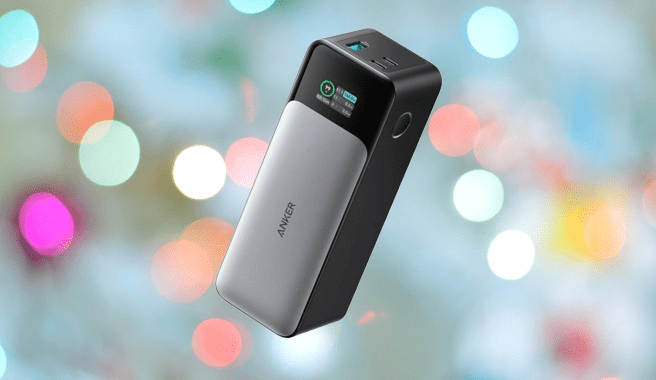
The first thing that stands out is the built-in screen, and it’s not a basic display. It’s a full-color screen that shows you available battery capacity, the specific charging speeds running through each port, and more. You get two USB-C ports and one USB-A, giving you three devices running simultaneously if needed.
You may also like: DJI Power 2000 Deal: 2048Wh Power Station at $799
Both USB-C ports top out at 100W, making them fast enough to charge phones and laptops without slowing things down. Benchmark testing confirmed that the Prime can deliver full 100W output from both USB-C ports simultaneously, which is not something every power bank can manage. The USB-A port runs at up to 65W with support for USB-C PD and QuickCharge 3.0.
The 20,000mAh capacity is enough to charge most large smartphones at least twice before the power bank itself needs recharging. Efficiency came in at 82% during testing at full 100W output, which is a good result. Several other power banks tested in the same conditions dropped well below that figure.
Despite the large capacity, the Prime recharges itself in as little as 56 minutes when connected to a 100W USB-C charger. The size is worth noting, though. This is not a pocket-friendly option. It’s better suited to a backpack than anything you’d casually carry on your person.
Pros |
Cons |
| Handy screen, with a menu system | Some buggy behaviours at maxed-out charging |
| Awesome power output | Dodgy level reporting out of the box |
| Fast charging with a 100W adapter | High price for a 20K battery |
Best Value Power Bank: Ugreen Nexode 100W 20000mAh Power Bank
The Ugreen Nexode 100W lines up closely with the Anker Prime in several key areas. It matches the 20,000mAh capacity and delivers the same 100W output through its USB-C port.
There’s a screen included, though it only shows remaining battery life rather than the more detailed port-by-port information the Anker Prime displays.
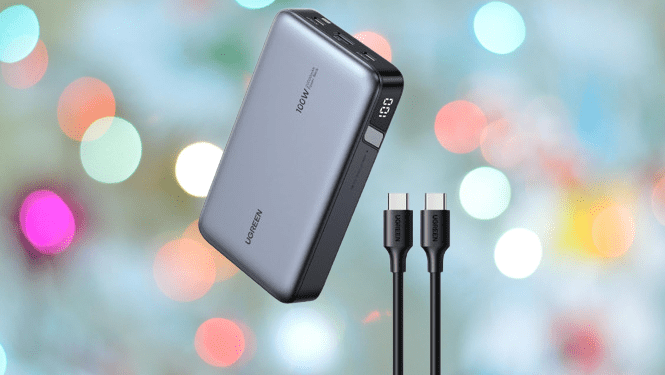
The meaningful difference is the price. At $79.99, it comes in significantly cheaper than the Prime and drops even further during sales. For the main performance it delivers, the value is hard to beat.
Performance doesn’t quite match the Anker Prime in every area. The Nexode has two USB-C ports and one USB-A, but the full 100W output, which came in at 98W during testing, is only available from the primary USB-C port when charging a single device. Efficiency sat at around 81%. The secondary USB-C delivers 30W, and the USB-A handles 22.5W.
You may also like: Marantz AV 30 and AMP 30: Premium Home Theater Components Explained
Charging three devices at once is possible, but the primary USB-C drops to 60W in that scenario, while the secondary ports share the remaining output, splitting into roughly 13W from USB-C and 7W from USB-A based on testing results. For most people, charging a single smartphone is a practical concern.
The design is simpler than the Anker Prime, with a plain rectangular shape and curved edges that won’t turn any heads. But for something that spends most of its time sitting in a backpack, how it looks is unlikely to factor into your decision. Practically speaking, it doesn’t need to.
Pros |
Cons |
| 100W charging | Limited display functionality |
| Good efficiency | Scuff-prone finish |
| Fairly convenient shape and size | Secondary outputs’ power is limited when used together |
Best Portable Power Bank: Anker Nano Power Bank 10K 45W
Anker sells enough power banks that picking the right one from their lineup can feel confusing. The simplest way to describe the Anker Nano Power Bank 10K 45W is this: it’s for anyone who wants a full day of backup power in something small enough to actually carry without thinking about it.
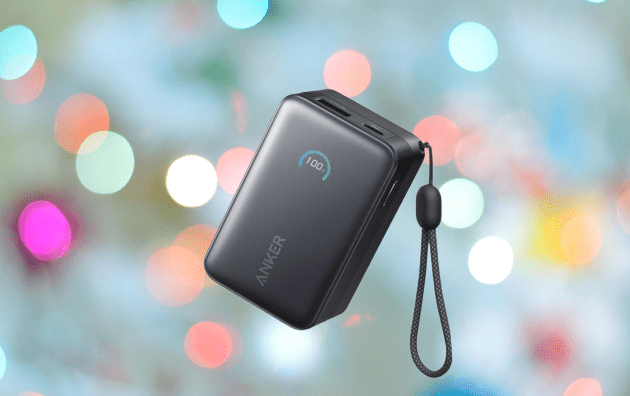
The 10,000mAh capacity is substantial, but the physical size stays compact enough to fit in a jacket pocket without any bulk. Add it to a backpack, and you’ll barely know it’s there. That combination of capacity and portability gives you a lot of flexibility throughout the day without committing to carrying something heavy.
You may also like: Anker Solix E10 Launches as World’s First Smart Hybrid Home Backup System
The Nano has enough capacity to fully charge a laptop or top up your phone with a charge to spare. Depending on your usage, you may also have enough left over for accessories like a camera or earbuds. Having it on hand removes any concern about running low on battery during a full day out.
The onboard display shows you exactly how much capacity remains at any point, so there’s no guessing involved. The built-in retractable USB-C cable is a genuinely useful addition. You don’t need to carry a separate cable, and the retractable design keeps it from getting tangled or coming loose inside a bag.
The Nano outputs up to 45W when charging other devices, though the actual speed adjusts based on what’s connected and how much battery the power bank itself has remaining. For keeping your essential devices topped up throughout the day, it covers the job reliably without asking much of you in return.
Pros |
Cons |
| Clear, informative built-in screen | Fairly rapid thermal throttling of charge rate |
| Packs a lot into a dinky casing | Takes a couple of hours to recharge |
| Handy integrated cable | Not quite powerful enough to fast charge many laptops or Chinese phones |
Best Power Bank for iPhone: Anker MagGo Power Bank 10K
If you own a MagSafe-enabled iPhone and want a charging option that just clicks into place, the Anker MagGo Power Bank 10K makes a lot of sense.
It snaps directly onto the back of your iPhone through MagSafe, so there’s no cable to deal with. For desk use, a built-in flip-out stand converts it into a mobile dock, which works well for gaming sessions or watching content without draining your phone battery.
At 20mm thick and 250g, it stays within a reasonable size and weight range for something you would carry daily.
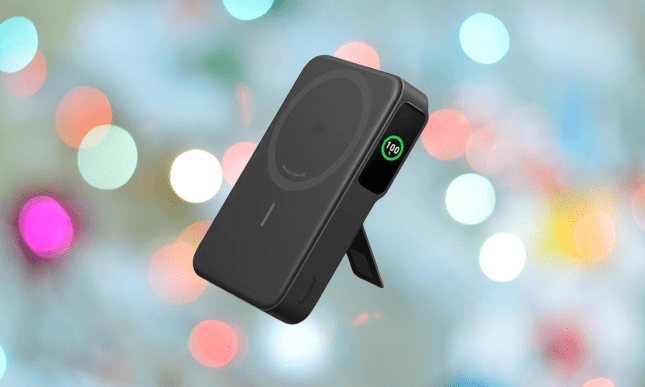
A screen is included, though it’s more basic than what you get on other Anker models, displaying only the current charge percentage. It’s still more informative than a row of LED dots, giving you a clearer read on how much capacity is left.
You may also like: Anker’s new Nebula portable projector has removable wireless speakers
MagSafe output runs at 15W, matching first-party Apple accessories and stepping above the 7.5W that most third-party alternatives deliver. The secondary USB-C port outputs at 27W, which keeps charging speeds at a reasonable level for iPhones connected by cable.
Despite the advertised 10,000mAh capacity, testing recorded an input of 11,483mAh and an output of 10,072mAh from the USB-C port. That works out to 87% efficiency, the highest of any power bank currently on this list. The internal components clearly match the premium exterior.
The price reflects that. At $89.99, you’re paying for the efficiency and build quality. MagSafe power banks are available at lower price points, but the ones tested so far don’t match this level of performance. Whether that gap justifies the cost difference depends on how much the efficiency advantage matters to you.
Pros |
Cons |
| Excellent efficiency | Quite pricey for its output power |
| Faster Qi2 wireless charging for iPhones | Can be picky with some devices |
| Handy battery indicator | Not quite powerful enough to fast charge many laptops or Chinese phones |
Final Thoughts
Picking the right power bank comes down to being honest about how you actually use it day to day.
If you want the most complete package available right now, the Anker Prime 20,000mAh is the one to beat. The full-color screen, dual 100W USB-C output, and fast self-recharging make it the strongest all-round option on this list. The price is high, but the feature set justifies it for anyone who needs serious charging capability on the go.
If that price is harder to swallow, the Ugreen Nexode 100W gives you the same main capacity and near-identical output speeds at a significantly lower cost. The screen is more basic, and the multi-device performance drops off more noticeably, but for most people charging a single device at a time, it covers everything that matters at a price that makes more sense.
You may also like: Belkin’s Qi2 power banks and a Switch 2 charging dock
For portability, the Anker Nano Power Bank 10K 45W is the pick. The capacity is impressive for the size, the built-in retractable cable removes the need to carry extras, and the onboard display keeps you informed without any guesswork. If you want something you can carry without thinking about it, this is it.
iPhone users with MagSafe devices have a clear answer in the Anker MagGo Power Bank 10K. The snap-on convenience, 15W MagSafe output, and 87% efficiency rating make it the most polished MagSafe option tested so far. The built-in stand adds genuine everyday usefulness beyond just charging. The price is on the higher side, but the experience backs it up.
Across the board, the power bank market has improved considerably. Fast charging is now standard at most price points, efficiency numbers are climbing, and features like screens and built-in cables are becoming more common without pushing costs up dramatically. Whatever your budget or use case, there’s a strong option on this list worth buying.