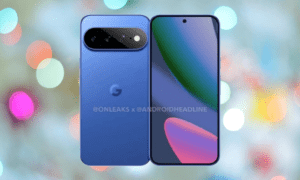

Google appears to be working on a new way to transfer files between Android phones, and an early look at the interface has surfaced online.
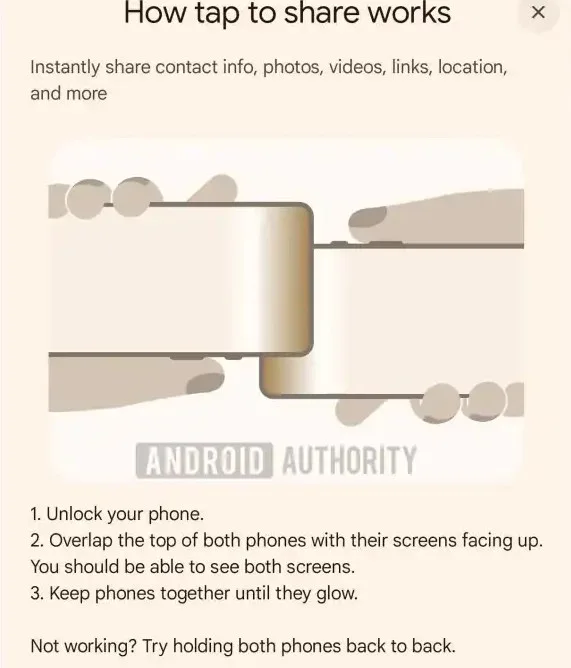
The feature seems designed for quick, physical transfers between two devices held close together. Contacts, photos, videos, links, location data, and other content all appear to be supported.
The overall approach draws clear comparisons to Apple’s AirDrop, something Android has never had a clean equivalent of.
What stands out about this leak is how developed the flow already looks. According to the screens that have emerged, both phones need to be unlocked, placed face up, and positioned near each other at the top before the transfer starts. That level of detail suggests this is further along than a rough concept.
Google hasn’t made any official announcement yet, but this doesn’t look like a distant feature buried somewhere in an Android 17 wish list. It looks close to something real.
How Android 17’s File Sharing Feature Works
The range of supported content is what makes this more than a novelty. If it works the way the screens suggest, you could use it for the kinds of transfers that come up regularly, sharing a photo album, passing along a saved location, or handing over a link quickly without opening a messaging app.
You may also like: Google Android 17 Beta Reveals a Smarter Way to Charge Your Phone
There is some friction built into the process, though. Both phones reportedly need to stay close together until a visual confirmation appears on screen. If the connection drops, the suggested fix is to place the devices back-to-back and try again.
The concept is simple enough, but how useful it actually feels in daily use will come down to how consistently it connects. A feature like this only works if it’s reliable. One failed attempt in front of someone else is enough to make you reach for a different method.
Android’s Hardware Issues
The instruction to overlap the two phones might be the most revealing detail in the entire leak. On iPhone, NFC hardware sits in a consistent location across every device, which is what makes tap-to-share feel seamless.
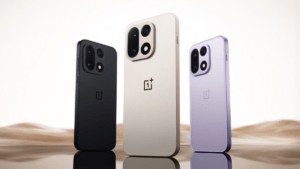
Android doesn’t have that. NFC placement varies by manufacturer, with some phones putting it near the camera and others positioning it closer to the top edge.
You may also like: Google Messages Is Getting Real-Time Location Sharing: Here’s How It Will Work
That inconsistency likely explains why Google is leaning toward an overlap approach rather than a clean tap. It’s a practical solution to a real hardware problem, but it comes with a cost.
Features built around physical gestures only feel effortless when they work the first time. If you have to adjust, retry, or explain the correct position to someone, the experience starts to feel more like a workaround than a feature.
Android 17 File Sharing Feature Leaks
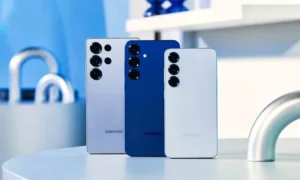
The leaked interface has been tied to Google Play Services version 26.15.31, with Android 17 looking like the most likely window for a public release. Beyond stock Android, the feature has reportedly shown up in experimental form on Samsung’s One UI 8.5, and Oppo is said to be planning support for it on the Find X9 series.
You may also like: Google Turning Now Playing Into Dedicated App for Pixel Users
That wider adoption is what will determine whether this becomes a genuinely useful addition to Android or fades into the background like plenty of features before it.
Google has the right idea here. Android has needed a fast, low-effort sharing gesture for a long time. But making it work reliably across a fragmented ecosystem of devices, with different hardware layouts and software layers from different manufacturers, is the harder part. The concept is good. The execution across a broad range of phones is what still needs to be proven.